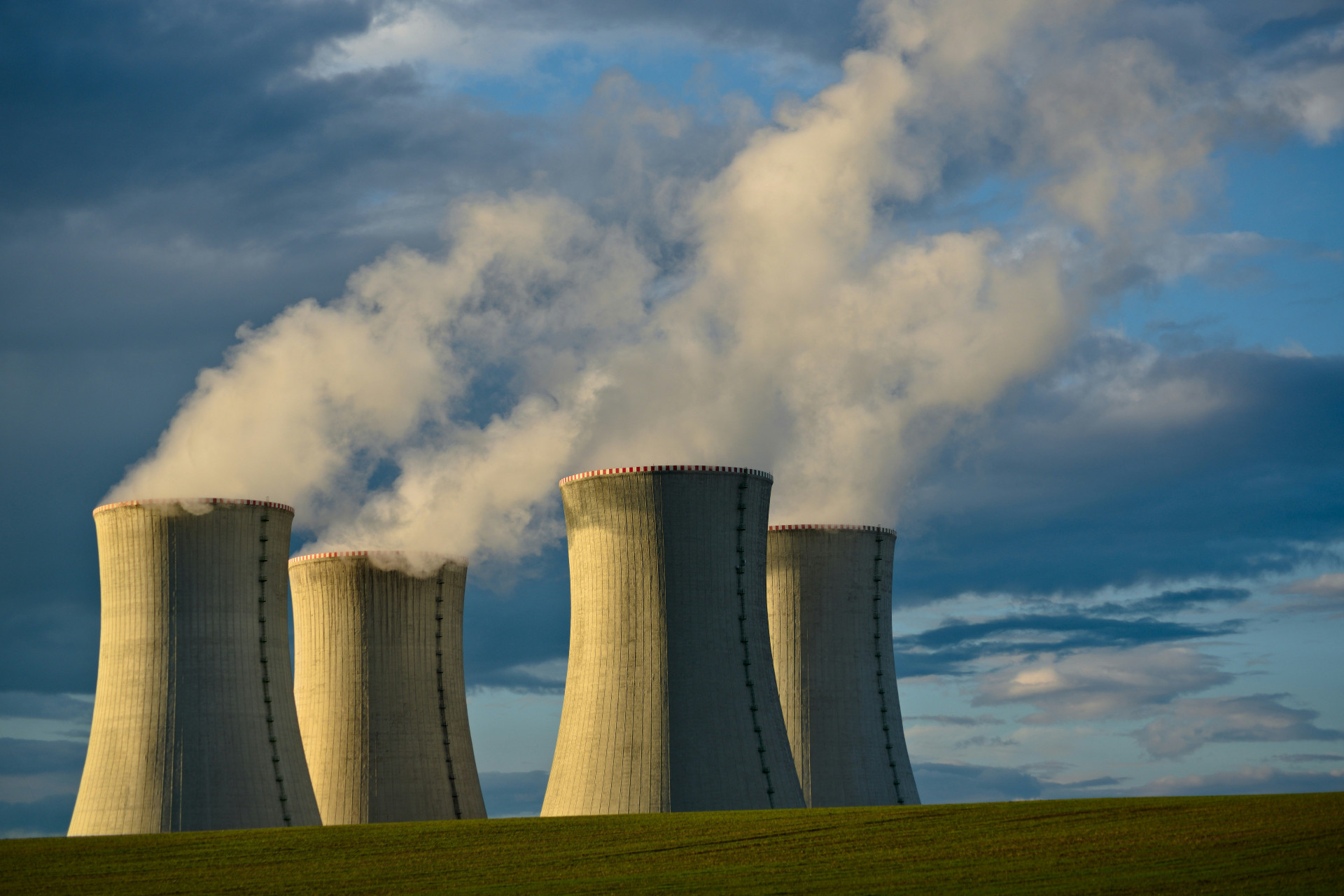
Rwanda plans to begin generating 110 megawatts (MW) of electricity from nuclear energy between 2030 and 2033, as part of a broader push to expand generation capacity and secure reliable, low‑carbon power for industry and households.
Infrastructure Minister Damien Murwanashyaka announced the timeline, while appearing before the Senate Committee on Economy and Finance on September 22, according to the Rwanda-based The New Times.
He said authorities are advancing the regulatory and technical steps needed to establish nuclear facilities, including securing international approvals and finalizing site selection.
“So far, we are working on the approval of the two sites where the plants will be established and on the progress being made. Between 2030 and 2033, we expect to start generating 110MW from nuclear energy,” Murwanashyaka told senators.
The 110MW target aligns with earlier government planning that outlined a 110MW nuclear program to be developed over about a decade from 2025, with feasibility and partnership work already underway.
Rwanda’s nuclear strategy centers on small modular reactors (SMRs), which are smaller, factory‑buildable units that can be deployed more quickly and with smaller footprints than conventional large reactors.
Lassina Zerbo, chair of the Rwanda Atomic Energy Board (RAEB), has argued that industrialization requires stable, dispatchable power that intermittent sources like solar cannot alone provide. SMRs are seen as a practical entry point for countries new to nuclear, allowing earlier generation while building regulatory, financing and human‑capacity foundations for larger projects later.
Kigali has moved quickly on partnerships. In May 2026, RAEB signed a comprehensive development agreement with U.S. firm Holtec International on potential deployment of SMR‑300 units, and later agreed an SMR roadmap with Russia’s Rosatom covering training, infrastructure and future deployment. Analysts now size Africa’s SMR market at up to $105 billion and 15 gigawatts by 2035, with Rwanda among the leading programs alongside South Africa, Ghana and Kenya.
Over the remaining three years of the second National Strategy for Transformation (NST2), the government intends to add 523MW from hydropower, methane gas and solar. Hydropower, including battery‑supported generation, is expected to contribute about 300MW, methane gas around 165MW, and the balance from solar. To improve access and distribution, 381 kilometers of new electricity networks and 13 substations are under construction.
Several hydropower schemes are advancing in parallel: the 43.5MW Nyabarongo II project is reported at 75 percent completion and due by end‑2027, while the Rukarara hydropower project and Muvumba Multipurpose Dam are also scheduled for completion next year.
Rwanda’s electricity access has risen sharply in recent years, with household access now around 85–88 percent depending on the metric, up from roughly 64% five years ago. Per‑capita consumption, however, remains low by middle‑income standards, and officials have set ambitious targets to reach universal access and significantly higher kWh per capita by 2035 and 2050.
Domestic resources alone are not expected to meet projected demand of 2.5–4.5GW by mid‑century, underpinning the case for nuclear as a firm, scalable component of the mix. Beyond power generation, Kigali emphasizes peaceful applications of nuclear science in health, agriculture and water management, including work at the Rwanda Cancer Centre and the planned Centre for Nuclear Science and Technology. As an IAEA member, Rwanda stresses that its programme is strictly for civilian use under international safeguards.