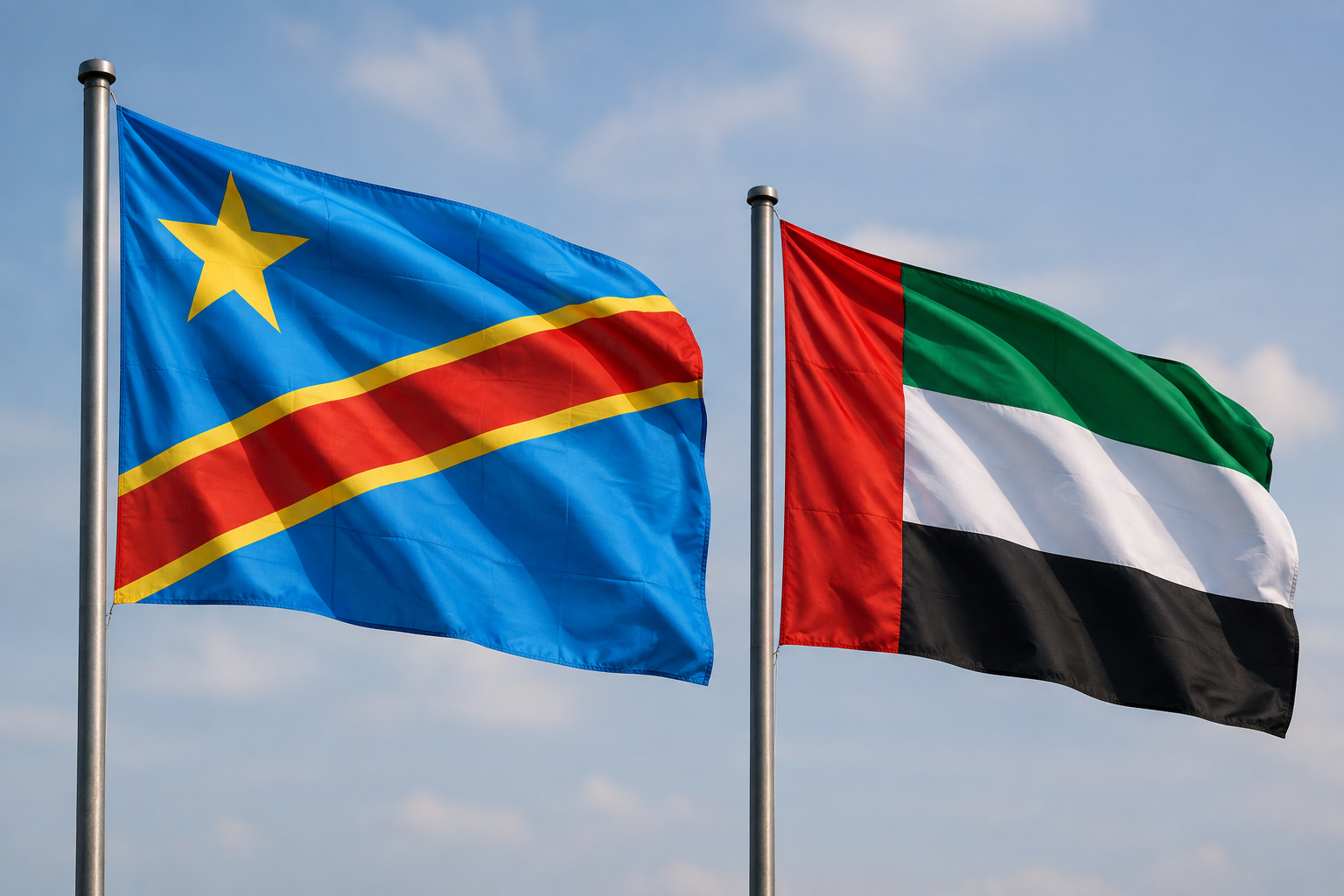
Abu Dhabi is returning to the race for one of Gécamines’ remaining copper and cobalt assets as the Democratic Republic of the Congo seeks greater control over its mineral wealth and new sources of capital for its mining sector.
Kinshasa and Abu Dhabi have re-engaged over Musonoï East, a copper-cobalt deposit in Lualaba Province that belongs to the state-owned mining company Gécamines, according to a report published by Africa Intelligence on September 21. The renewed interest comes despite the fact that the deposit’s reserves have not been certified.
Musonoï East has been under discussion for more than a year. In 2025, Gécamines was considering different options for developing the asset, including potential involvement from International Resources Holding (IRH), the Abu Dhabi-based natural resources investment platform. President Félix Tshisekedi also intervened in the dispute over the project’s development after Gécamines moved to end its cooperation with South African businessman Robert Gumede.
The renewed talks matter because Gécamines is changing the way it approaches its mineral assets. Rather than relying solely on traditional joint ventures, the state miner has been seeking greater control over production and sales from projects in which it holds interests.
That strategy became more visible in January, when Gécamines Trading announced its first direct purchase of production reserved for the state company from Tenke Fungurume Mining. The transaction covered 100,000 tonnes of copper from TFM’s 2026 production and was intended for the US market. Gécamines said the move was part of a broader effort to develop a competitive marketing system for production from its partnerships.
Musonoï East therefore has significance beyond the value of a single mining project. Bringing in a new investor could give Gécamines access to capital, technical expertise and development capacity while allowing the state company to retain a stronger position in a strategically important part of the Copperbelt.
Abu Dhabi already has a broader mining presence in the region. IRH says it operates in the DRC as part of a wider African portfolio that also includes Zambia, Angola, Burundi, Zimbabwe and Tanzania. Its mining business covers exploration, mine development, processing and related infrastructure.
That expansion has accelerated in the country. Africa Intelligence reported in March that several mining licences in Greater Katanga, including the Kabulungu deposit, had come under Emirati control. The development reflects a wider push by Abu Dhabi-linked investors to establish a position in the region’s copper and cobalt sector.
For the DRC, the attraction is not difficult to understand. Copper and cobalt remain central to the country’s mining economy, while Kinshasa is increasingly seeking to diversify its pool of international investors. A strategic minerals partnership with the US is already being implemented, with Reuters reporting in September that the government had created a task force to accelerate the deal and attract more Western investment into the sector.
Musonoï East is also significant because of its location. A 2026 academic study identified the Musonoi copper-cobalt deposit in Lualaba as an established mineralized area around 6 kilometers from Kolwezi, although the study focused on the environmental impact of mining activity rather than establishing a new resource estimate.
The immediate question is therefore not whether Abu Dhabi has secured the asset. It has not. The more important issue is whether renewed discussions can produce a structure that gives Gécamines the capital and expertise needed to develop Musonoï East while preserving the state company’s growing influence over the country’s copper and cobalt value chain.
For Kinshasa, that balance is becoming increasingly important. The DRC is seeking foreign investment, but it is also trying to move beyond a model in which international companies control most of the financing, production and marketing around its strategic minerals. Musonoï East offers another test of how far that strategy can go.