Central Africa is trying to move beyond exporting raw materials. The Democratic Republic of Congo wants to expand mineral processing, while Angola, Cameroon and Gabon are pursuing broader industrial diversification. But these ambitions depend on an input the region has struggled to provide consistently: dependable electricity.
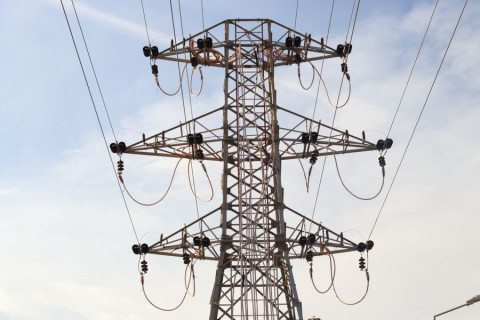
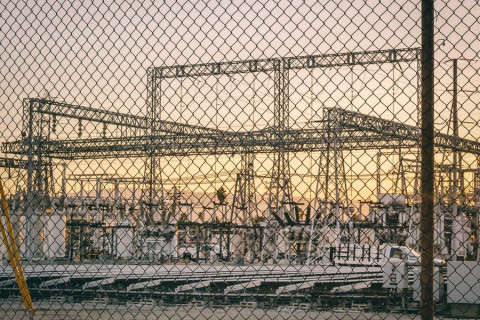
The problem is not simply a shortage of generation. New power plants take years to develop, transmission networks remain uneven, and many mining and industrial projects are located far from major grids. For energy-intensive operations, interruptions translate into higher operating costs, production losses and continued reliance on diesel generators.
Battery storage cannot remove these constraints. But it can make renewable generation more useful and give industrial projects another way to manage power while larger infrastructure is being built.
From More Power to More Flexible Power
The shift is already visible in Africa's larger electricity markets. South Africa has procured about 1,744 MW and nearly 7,000 MWh of grid-scale battery storage, while around half of its 220 GW renewable-energy pipeline now incorporates storage, according to African Energy Week. Egypt is also moving toward large solar-plus-storage projects, including a 1.95 GW solar development paired with 3.9 GWh of batteries.
The significance goes beyond the size of those projects. Batteries allow electricity generated at one point in the day to be used later, helping renewable projects respond more closely to demand. They can also provide short-term grid support and reduce the need for conventional backup during periods of supply stress.
For Central Africa, that flexibility could be particularly valuable because industrial development is creating demand in places where grid expansion may not keep pace.
The Mining Connection
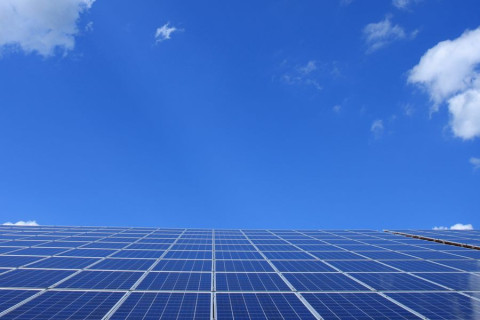
The DRC offers a useful test case. A 600-MW hybrid platform planned for Lualaba and Haut-Katanga combines solar, wind and battery storage and is being developed around the needs of the country's mining-heavy economy. The project remains under development, with technical and financial due diligence underway.
Its significance is less about the headline capacity than the model. Instead of treating generation, storage and industrial demand as separate investments, the project brings them into the same proposition.
That approach could become increasingly relevant as Central African countries seek to process more copper, cobalt, lithium and other minerals locally. Processing facilities require more predictable electricity than extraction alone, and interruptions can quickly undermine the economics of an otherwise attractive project.
A hybrid system combining renewable generation, batteries, existing grid supply and, where necessary, conventional backup could provide a more controlled power profile without waiting for every transmission upgrade to be completed.
Storage as a Bridge, Not a Substitute
This does not mean batteries can replace the region's need for major infrastructure. Central Africa will still require new generation, transmission lines, distribution networks and regional interconnections. Storage needs electricity to charge and is most valuable when it is integrated into a broader power system.
Its potential advantage is speed and flexibility. An industrial project can potentially deploy a solar-and-storage system at or near the point of consumption while larger grid projects are still under construction. For a mine, processing plant or industrial zone, that could reduce exposure to interruptions and diesel costs while allowing production to begin earlier.
Africa is already experimenting with different versions of this model. Malawi commissioned a 20 MW/40 MWh battery system in July to stabilize its grid, support renewable integration and reduce load shedding. South Africa, meanwhile, is seeing growing use of batteries behind the meter by commercial and industrial users.
The Central African version may ultimately be driven less by national grid management and more by large industrial consumers.
A Different Investment Equation
That could matter for investors.
The traditional sequence for an industrial project is straightforward: build the facility, connect it to the grid and begin production. In regions where grid infrastructure is developing slowly, that sequence can become a bottleneck.
A hybrid power system offers another possibility: secure part of the required supply at the project level, use storage to manage fluctuations and gradually integrate additional grid capacity as it becomes available.
The economics will vary by location. Batteries remain capital-intensive, their performance depends on utilization and financing conditions, and they cannot compensate for a fundamental lack of generation. But the relevant comparison for an industrial investor is not the cost of a battery alone. It is the cost of reliable electricity versus the cost of outages, diesel backup, lost production and delayed investment.
That is where storage could become more than an energy technology.
The Next Step for Central Africa
The region's energy challenge has often been framed around how to generate more electricity. As industrial ambitions grow, the question is becoming more specific: how can that electricity be delivered in a form that mines, processing plants and factories can actually depend on?
South Africa and Egypt show that storage is moving into the mainstream of large renewable projects. Malawi demonstrates its value for grid stability. The emerging DRC project points toward another application — using batteries alongside new generation to support industrial demand.
For Central Africa, storage will not replace the grid or solve the region's power deficit. Its value may lie elsewhere: giving industrial projects a way to use renewable power more reliably while the larger energy infrastructure catches up with the region's ambitions.