Africa possesses one of the strongest agricultural foundations of any region in the world. The African Union estimates that the continent holds about 60% of the world's uncultivated arable land, alongside vast water resources and conditions suitable for expanding agricultural production. Agriculture already provides livelihoods for a large share of Africa's population and remains central to the continent's long-term development strategy. Yet possessing agricultural potential is not the same as converting it into reliable food supplies, competitive industries and export capacity.
That gap remains one of Africa's defining economic challenges. According to the latest UN food security assessments, 56.6% of Africa's population experienced moderate or severe food insecurity in 2025, while around 307 million people were estimated to have faced hunger in 2024. At the same time, the continent continues to spend tens of billions of dollars importing food every year, with cereals, rice and other staple products accounting for a significant share of those purchases.
The question is therefore not whether Africa has the resources to grow more food. It is why those resources have yet to translate into sufficient domestic food production and a much larger role in global agricultural trade.
Agricultural potential is only the beginning
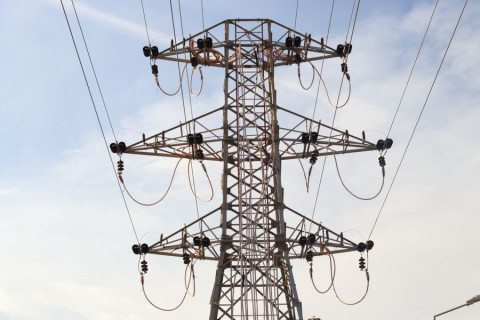
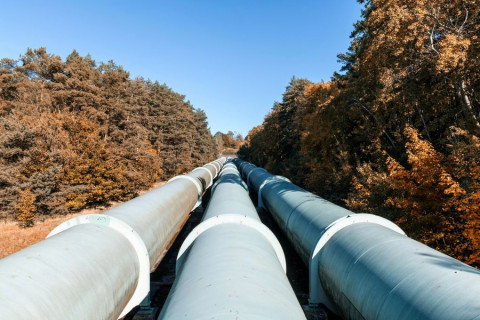
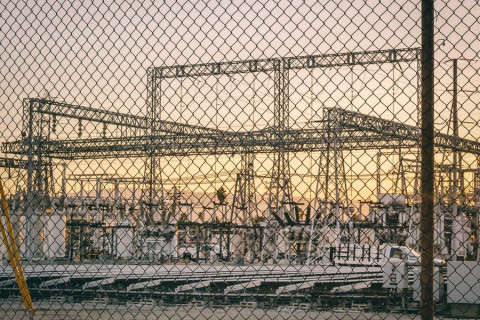
Land is the starting point of agriculture, not its final measure of success. Turning fertile soil into food requires an entire economic ecosystem built around farmers, irrigation, seeds, fertilizers, machinery, storage facilities, electricity, roads, processing plants and functioning markets.
Across many African countries, these links remain uneven. Farmers often operate with limited access to finance and modern agricultural inputs, while weak transport infrastructure raises the cost of moving crops from rural areas to urban consumers. Post-harvest losses further reduce the amount of food that actually reaches markets, particularly where storage and cold-chain facilities remain insufficient.
The result is that agricultural potential frequently produces less value than it could. In some cases, economies continue exporting raw agricultural commodities while importing substantial volumes of staple foods and processed products. That limits both food security and the continent's ability to capture more value from global agricultural markets.
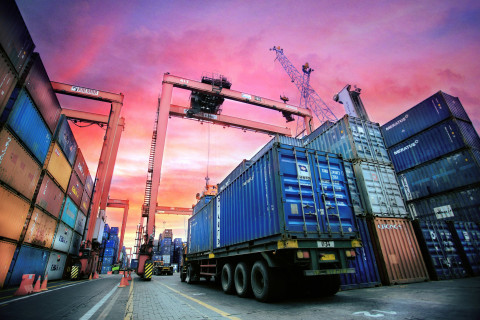
This is why African agriculture is increasingly discussed not simply as a farming issue, but as an industrial and infrastructure challenge. Producing more food matters, but so does building the systems capable of preserving, processing and distributing it efficiently.
Conflict turns productive regions into food crisis zones
Among the factors widening this gap, armed conflict is particularly damaging in regions with significant agricultural potential because it can disrupt several parts of the food economy at the same time. Unlike a single drought or temporary market shock, prolonged insecurity can repeatedly interrupt planting seasons, displace farming communities, restrict access to land and discourage investment in agriculture.
The latest FAO and WFP assessments continue to identify conflict and violence as leading drivers of acute food insecurity across many of the world's most vulnerable food crisis areas, with several African countries remaining at the center of those warnings. Conflict does not simply reduce harvests. It weakens transport networks, disrupts local trade, raises food prices and makes it more difficult for humanitarian assistance and commercial supplies to reach affected populations.
The economic consequences extend well beyond immediate hunger. Agriculture depends on long investment cycles. Irrigation systems, warehouses, rural roads and processing facilities require years of stable investment before they begin generating higher productivity. Where insecurity repeatedly interrupts economic activity, countries struggle to build the agricultural value chains needed to move from subsistence production toward competitive food industries.
Sudan shows how quickly food systems can collapse
Sudan provides one of the clearest recent examples of how conflict can overwhelm agricultural potential. The country has historically been regarded as one of Northeast Africa's most important agricultural economies, with extensive fertile land and major opportunities for cereal and livestock production. Yet the continuing war has pushed millions of people into severe food insecurity.
According to the Integrated Food Security Phase Classification, nearly 19.5 million people — approximately 41% of Sudan's population — are currently facing crisis levels of acute food insecurity or worse. The assessment also noted that famine conditions (IPC Phase 5) have already been confirmed in several areas, while famine risks remain across dozens of other localities under a worst-case scenario shaped by intensified fighting and restrictions on the movement of people and goods.
Sudan is important not because it represents Africa as a whole, but because it demonstrates how rapidly a country with substantial agricultural resources can lose the capacity to convert those resources into food security when conflict affects production, markets and logistics simultaneously.
Similar dynamics are visible elsewhere on the continent, including parts of the Sahel, eastern Democratic Republic of Congo and South Sudan, where insecurity compounds existing weaknesses in agricultural productivity and infrastructure. The common pattern is not a shortage of land alone, but the inability to sustain the economic conditions required for agriculture to function normally over time.
Food security and export capacity are part of the same equation
Africa's food challenge is often framed as a humanitarian issue, but it is equally an economic one. A continent that produces enough affordable food for its growing population is also better positioned to expand agro-processing, create rural employment, strengthen regional trade and increase agricultural exports.
Those objectives are closely connected. Greater domestic production reduces dependence on costly imports, while stronger processing industries allow countries to export higher-value products rather than primarily raw commodities. Expanding intra-African agricultural trade can also help move food from surplus-producing areas to food-deficit markets more efficiently, reducing some of the structural imbalances that persist across the continent.
The African Union's long-term agricultural strategy reflects this broader vision. Its objective is not merely to increase harvests, but to build food systems capable of supporting industrial development, improving food security and expanding Africa's participation in agricultural trade. Achieving that vision will depend as much on infrastructure, investment and market integration as on the availability of fertile land itself.
Africa already has many of the natural advantages associated with future agricultural leadership. The challenge is converting those advantages into sustained productivity, resilient food systems and competitive export industries. Until that happens, the continent's agricultural potential will remain significantly larger than its ability to provide sufficient food for its population and fully benefit from global food markets.