A solar-and-battery baseload facility at the Kamoa Copper mining complex in the Democratic Republic of Congo reached commercial operation on August 12, 2026, creating what its developer describes as Africa’s first solar-battery facility capable of delivering firm renewable electricity around the clock.
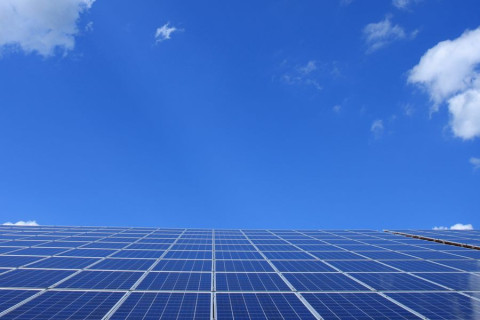
Developed and operated by independent power producer CrossBoundary Energy, the facility combines 233 MWp of solar photovoltaic capacity with a 526 MWh battery energy storage system. The battery system is rated at 123 MVA/526 MWh, allowing solar power generated during daylight hours to be stored and dispatched when production from the solar array declines.
The system guarantees at least 30 MW of firm, dispatchable power for the Kamoa Copper complex, one of Africa’s largest copper mining operations. During its initial operation, the solar plant has already been producing more than 150 MW, with around 50 MW supplied directly to the mine while the remainder is used to charge the batteries. The facility has an expected maximum output of 180 MW.
For Kamoa Copper, the project provides more than additional renewable generation. CrossBoundary Energy said round-the-clock solar power can reduce the mine’s exposure to diesel fuel price volatility and supply disruptions while lowering carbon emissions. The system has a guaranteed availability factor of 95%.
The project was developed under a power purchase agreement between CrossBoundary Energy and Kamoa Copper, signed in April 2025. The facility reached commercial operation just 16 months later, according to the developer. More than 350,000 solar modules, along with hundreds of battery enclosures and power-conversion systems, were installed as part of the project.
The new system adds to an existing clean-power base at Kamoa-Kakula. The mining complex draws on hydroelectric capacity developed with DRC’s state-owned electricity company, SNEL, which provides a combined 250 MW of clean power. Adding solar and battery storage gives the mine another source of electricity while reducing reliance on diesel and other conventional backup generation.
The development comes as reliable electricity remains a major constraint on mining and industrial expansion in the DRC. Large mining operations require stable power to maintain production, while grid shortages can force companies to rely on expensive diesel generation. Solar combined with storage is increasingly being considered for industrial sites where dependable electricity is difficult to secure from the grid.
Kamoa Copper is a joint venture involving Ivanhoe Mines, Zijin Mining Group, and the government of the DRC. Copper production began at the complex in 2021, and the site commissioned what is now Africa’s largest copper smelter in 2025, with annual capacity of 500,000 metric tons.
The project illustrates how falling solar and battery costs are opening new options for Africa’s energy-intensive industries. For the DRC’s mining sector, the significance goes beyond reducing emissions: reliable renewable generation could become increasingly important as new mining and processing capacity drives demand for electricity.