China is reinforcing the financial infrastructure behind its trade with Africa as Industrial and Commercial Bank of China prepares to raise as much as 100 billion yuan, or about $15 billion, to strengthen its capital base.
The significance for Africa lies in ICBC’s 19.7% stake in South Africa-based Standard Bank Group, Africa’s largest banking group by assets. The Chinese lender is Standard Bank’s largest shareholder, giving ICBC a major position in a bank with operations across more than 20 African markets. Their relationship has increasingly focused on creating financial channels for trade and investment between China and the continent.
A major step came in June, when the People’s Bank of China authorized Standard Bank and ICBC to operate jointly as the Renminbi Clearing Bank of Africa. The arrangement allows renminbi transactions to be cleared across 19 African countries, connecting businesses and financial institutions on the continent more directly to China’s payments infrastructure.
Standard Bank had already become the first African bank to join China’s Cross-Border Interbank Payment System, or CIPS, in November 2025. The system provides a direct mechanism for cross-border payments in renminbi, reducing the need for some China-Africa transactions to pass through intermediary currencies and financial institutions.
Payment volumes are beginning to show the potential of the connection. Standard Bank said in 2026 that more than 8 billion yuan, equivalent to about $1.2 billion, had been processed through CIPS. The bank has also developed China-focused trade services covering payments, foreign exchange, trade finance, guarantees and letters of credit.
For African companies importing Chinese machinery, equipment, consumer goods and industrial inputs, those services can make yuan-denominated transactions easier to execute. African exporters can use the same financial network to receive payments from Chinese buyers, while companies with significant China exposure can reduce their reliance on multiple currency conversions.
ICBC’s planned capital raise is not an African investment package. The bank is raising funds as part of a broader effort by China’s major financial institutions to strengthen their balance sheets. ICBC and Agricultural Bank of China are seeking a combined $39 billion, according to Reuters, as Beijing supports the capitalization of its largest state-owned banks.
Africa’s relevance comes from what that financial strength can support. ICBC is not simply a shareholder in an African bank; through Standard Bank, it is connected to a large banking network serving companies across the continent. As trade between China and African economies expands, the ability to finance, settle and manage those transactions becomes an increasingly important part of the relationship.
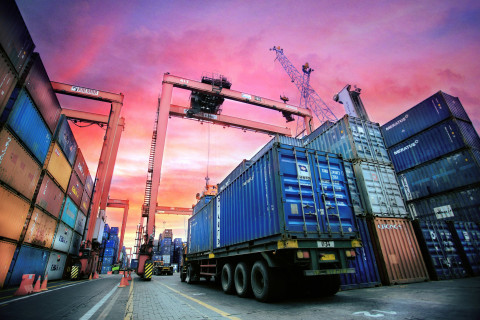
Shipping routes and commodity markets remain central to China-Africa trade. The financial infrastructure behind them is becoming just as important.
Standard Bank provides the African distribution network, while ICBC connects that network to China’s financial system. The expansion of renminbi clearing suggests that the next stage of China-Africa trade will be shaped not only by what the two sides buy and sell, but also by how those transactions are financed, settled and denominated.