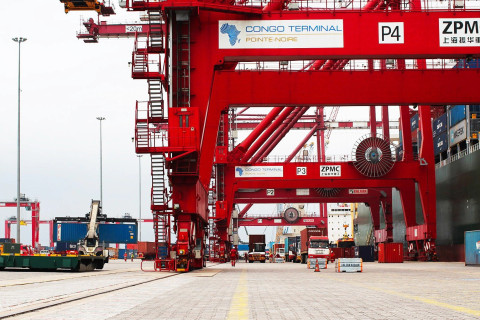
Angola is putting new money into Barra do Dande as it seeks to build a stronger link between industrial production and maritime trade. A new port terminal and supporting infrastructure are set to receive $900 million in private investment, adding another major component to the growing industrial zone in Bengo Province.
In July, the state-owned Sociedade de Desenvolvimento da Barra do Dande (SDBD) signed agreements with Huatong Angola Industry and Berkshire Waterhouse Infrastructure Development covering the development of a new port terminal inside the Barra do Dande Integrated Development Free Zone. About $450 million is allocated to the terminal itself, with another $450 million going toward supporting infrastructure.
Construction will be carried out in three phases. The first is expected to take around 24 months, while the second and third phases are scheduled to run through 2029 and 2030. Once fully developed, the terminal is expected to handle vessels of up to 80,000 tonnes and around 20 million tonnes of cargo a year.
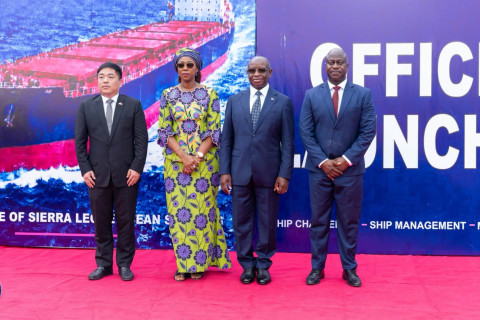
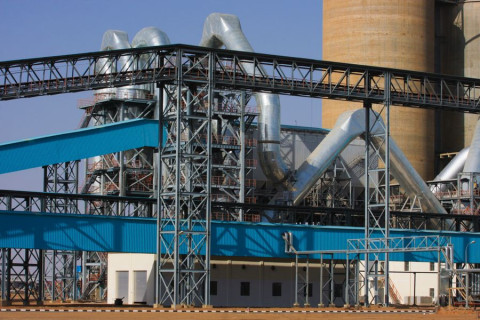
Industrial activity is already growing around the planned port. In January, President João Lourenço inaugurated the first phase of Huatong’s aluminum plant, representing about $250 million in investment. Initial production capacity stands at 120,000 tonnes of electrolytic aluminum annually, with the first aluminum ingots produced in January.
Port infrastructure has become an important part of Huatong’s expansion plans. Company chairman Zhang WenDong said existing logistics capacity was limiting the movement of materials and products from the industrial park. A new port could give manufacturers operating in Barra do Dande a more direct route for bringing in raw materials and sending finished goods to domestic and international markets.
The development also includes energy systems and access roads, creating a wider logistics network around the industrial zone. Angola’s Transport Ministry has described the port as part of a broader effort to increase cargo-handling capacity and connect infrastructure more closely with production and trade.
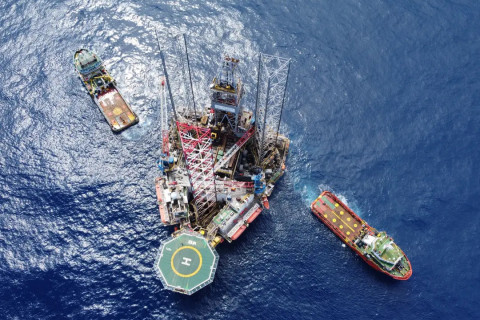
Barra do Dande already has another major piece of infrastructure: the Barra do Dande Ocean Terminal, built to strengthen Angola’s fuel storage and distribution capacity. Its first phase opened in February 2025 with about 582,000 cubic meters of storage for diesel, gasoline and LPG. In February 2026, the terminal completed its first gasoline loading operation for the domestic market.
The two projects serve different purposes, but their proximity is significant. Fuel storage, manufacturing and maritime logistics are gradually being concentrated in the same economic zone, giving Barra do Dande a much broader role than originally planned.
Angola is therefore betting on more than a new port. Its strategy is to create an industrial base with its own logistics gateway, allowing companies in the free zone to connect production with regional and international markets.
Execution will now determine whether that strategy delivers. Much of the new investment will be released in stages and remains subject to regulatory approvals. If construction stays on schedule, Barra do Dande could emerge by the end of the decade as one of Angola’s most important industrial and logistics centers.