Africa’s economic corridors need stronger cross-border coordination, diversified financing and closer alignment with regional priorities to turn infrastructure investment into trade, industrial growth and local value creation, according to a recent report by the Africa Center for Strategic Studies.
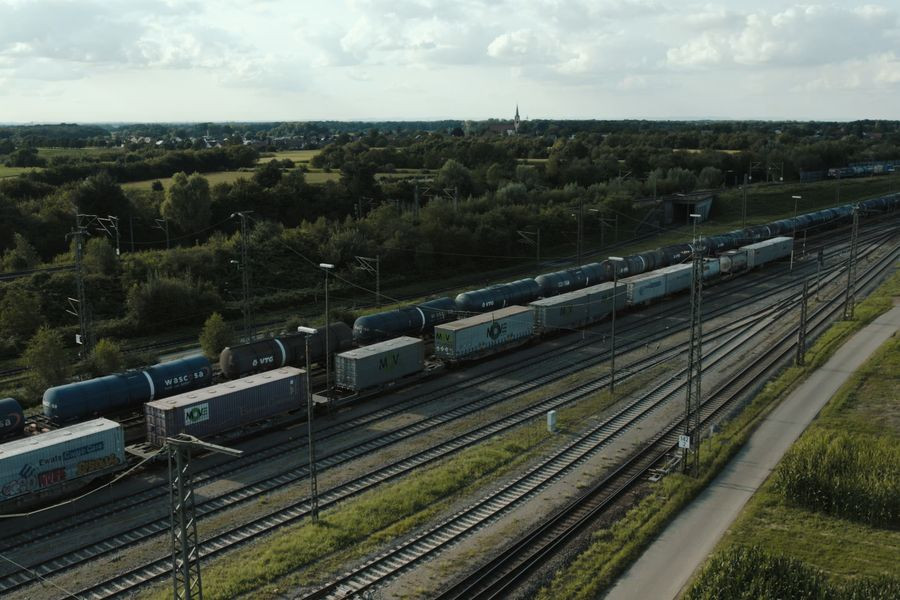
In an analysis published on October 7, the research center argued that roads, railways, ports, pipelines, energy networks and industrial zones must function as integrated economic systems rather than isolated infrastructure projects. Without effective coordination, corridor development risks reinforcing the export of unprocessed commodities instead of supporting manufacturing, mineral processing and trade within Africa.
The issue is gaining attention as the African Union reviews progress under the second phase of its Programme for Infrastructure Development in Africa (PIDA). On October 6, the AU announced the launch of a midterm review of PIDA’s Priority Action Plan 2, which covers regional infrastructure projects for 2021–2030. The review will assess implementation delays, financing gaps and the economic benefits of projects, including their contributions to trade and industrial development.
Infrastructure investment faces governance challenges
The Africa Center for Strategic Studies identified fragmented governance, duplicated investments and weak coordination between governments and investors as obstacles to effective corridor development. It warned that foreign participation should support regional priorities without undermining African governments’ policy autonomy.
Financing remains a major challenge. The African Development Bank (AfDB) and other development institutions are important sources of capital, alongside national budgets, private investment and public-private partnerships. Diversifying these sources can reduce dependence on individual external partners, but financing alone cannot ensure that infrastructure delivers lasting economic benefits.
The report argues that corridor planning should link transport networks with energy systems, industrial zones, processing facilities and domestic businesses. Such integration can help countries capture more value from their natural resources and strengthen trade between African markets.
Douala–Bangui corridor highlights Central Africa’s challenges
The importance of coordinated infrastructure development is particularly clear along the Douala–Bangui corridor, a major trade route connecting Cameroon’s port infrastructure with the Central African Republic (CAR). More than 80% of the CAR’s external trade passes through the corridor, which stretches for more than 1,400 kilometers, according to the World Bank.
In June, the World Bank approved a $1.12 billion program to modernize the route. Its first phase, worth $525 million, will focus on priority infrastructure rehabilitation, road safety and maintenance reforms in Cameroon, the CAR and the Central African Economic and Monetary Community (CEMAC).
The bank identified transport costs of up to $270 per tonne and journey times of nine to 12 days under normal conditions. It also reported 38 checkpoints in Cameroon, 17 of which involve informal payments. These obstacles increase the cost of moving goods and limit access to markets.
The modernization program is intended to improve road conditions, reduce bottlenecks and strengthen trade facilitation. Its wider impact will depend not only on infrastructure upgrades but also on more efficient border procedures, maintenance systems and coordination among the countries and institutions involved.
Regional priorities must shape corridor development
The Africa Center for Strategic Studies highlighted the Walvis Bay and Maputo corridors in Southern Africa as examples of regional infrastructure systems where coordination, financing and shared priorities play important roles. Its broader argument is that governments should align investment plans with regional trade and industrial strategies from the outset.
The challenge extends beyond moving commodities to international markets. Connecting ports and transport routes to reliable electricity, manufacturing, mineral processing and agricultural production can help African economies retain a greater share of the value generated along supply chains.
The African Union’s midterm review of PIDA provides an opportunity to assess whether regional projects are delivering on these goals. The review is expected to identify implementation bottlenecks, financing needs and measures to accelerate projects with clear regional benefits.
Ultimately, the success of Africa’s economic corridors will depend on whether governments and their partners can manage infrastructure as an integrated system. Coordinated investment, effective institutions and predictable cross-border rules will be essential if these corridors are to deepen regional trade, support industrialization and advance Africa’s economic priorities.