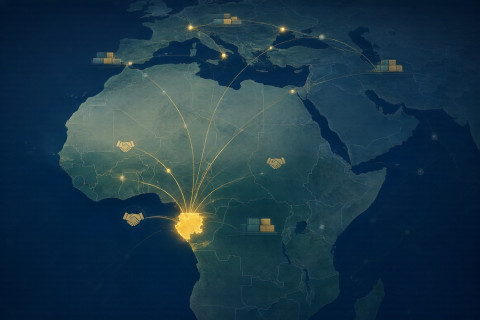
Traditional statecraft in Central Africa is dead. The classic diplomatic playbook—once dominated by formal bilateral summits, symbolic presidential handshakes, and foreign ministry protocols—has been permanently displaced by transactional resource diplomacy. Today, the real gravitational centers of foreign influence in Luanda, Kinshasa, and Brazzaville are not the ministries of foreign affairs, but the offices governing mining licenses, energy quotas, and logistical infrastructure. The global race for critical minerals and energy security has compressed the diplomatic cycle. Visiting foreign delegations no longer lead with political alignment requests; they lead with a single, transactional question: Who controls the allocation of strategic concessions?
Central Africa's geological wealth has effectively transformed its domestic ministries into high-stakes geopolitical arenas. In the DRC, the Ministry of Mines controls the world’s most critical choke point for cobalt and high-grade copper, making its leadership a primary target for both Western supply-chain strategists and state-backed Chinese conglomerates. In Angola, the Ministry of Mineral Resources and Petroleum dictates the terms for deep-water oil blocks and burgeoning greenfield investments, drawing intense bidding wars from Washington to Beijing. Meanwhile, the Republic of the Congo’s Energy Ministry has become a vital hub for European powers scrambling to secure long-term Liquefied Natural Gas (LNG) off-take agreements. As a consequence, economic diplomacy no longer serves as a tool to support political alliances. Instead, commercial contracts dictate the boundaries of political alignment.
Multi-Vector Hedging: Stacking the Partners
The standard narrative suggests that Central African states are passive victims of a new "Scramble for Africa." The reality is far more cynical: regional elites have masterfully turned intense foreign competition into a mechanism for political survival and fiscal leverage. The entry of aggressive new players—most notably Middle Eastern sovereign wealth funds from the UAE and Saudi Arabia, alongside India, Türkiye, and South Korea—has broken the old Western-Chinese duopoly.
Rather than choosing a single patron, states like Angola and the DRC are practicing aggressive multi-vector hedging. They utilize Chinese state capital for heavy infrastructure, lock in US financing for transport corridors like the Lobito Link, and lease out maritime port management to UAE operators like DP World. This structural redundancy ensures that no single foreign power gains complete veto power over a nation's sovereign choices, while allowing the ruling regimes to maximize incoming capital flows.
The Myth of Transparency vs. The Reality of Predictability
International financial institutions frequently argue that Central Africa’s resource boom depends on creating Western-style transparent governance and anti-corruption frameworks. This is an analytical misreading of how capital actually behaves in high-risk environments. Foreign investors—whether Western corporations under strict regulatory scrutiny or state-shielded Chinese entities—do not look for flawless democratic governance. They look for contractual durability and predictability. The fundamental challenge for Central African regimes is not convincing the world they are clean, but proving that a mining concession or an infrastructure lease signed today will survive the next cabinet reshuffle, regional conflict, or presidential transition.
In contemporary Central Africa, protocol has been completely subordinated to logistics and geology. The priority seating at the diplomatic table is no longer determined by historical ties or ideological solidarity, but by the volume of capital a delegation can deploy into critical supply chains. For global powers aiming to project power into the sub-continent, the lesson is clear: influence is no longer brokered through embassies. It is bought and sustained in the technical backrooms where resource concessions are mapped, signed, and enforced.