On paper, Africa's electoral calendar has never looked busier. Over the past two years, several countries have held presidential elections or completed political transitions, reinforcing an image of growing institutional stability. Yet while ballots are becoming more frequent, political competition is not necessarily becoming stronger. This shift highlights a broader reality: regular elections and democratic change are no longer moving in parallel.
According to V-Dem and Freedom House, elections remain the dominant mechanism for transferring or confirming political authority across Africa. However, many countries continue to experience declining levels of political pluralism, judicial independence and civic participation despite maintaining regular electoral cycles.
Recent elections across the region illustrate this trend.
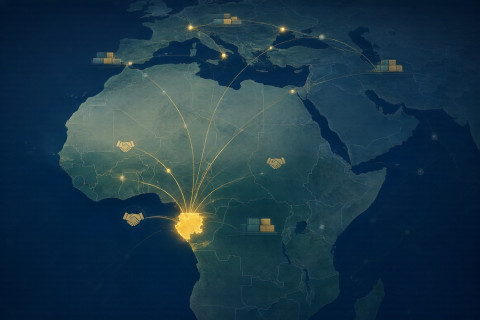
In Gabon, transitional authorities completed the political roadmap established after the 2023 military takeover. Presidential elections held in April 2025 formally restored constitutional government. International observers broadly welcomed the peaceful conduct of the vote, yet the political system remains dominated by the coalition that emerged during the transition. Institutional continuity returned, but political competition remains limited.
Chad followed a similar trajectory. The country completed its military-led transition through presidential elections in 2024, allowing civilian institutions to resume formal governance. Nevertheless, power remains concentrated within the same political and military elite that had overseen the transition.
Elsewhere, elections have reinforced existing leadership rather than produced political turnover.
In Cameroon, President Paul Biya secured another term, extending one of Africa's longest-serving presidencies. In the Republic of the Congo, Denis Sassou Nguesso was re-elected in March 2026 with 94.82 percent of the vote after major opposition parties declined to participate, citing concerns over electoral transparency. In the Central African Republic, elections held in late 2025 proceeded as scheduled and maintained institutional continuity under President Faustin-Archange Touadéra. Viewed individually, these elections differ significantly in their political context. Viewed collectively, however, they reveal a common trend: elections increasingly function as mechanisms for preserving stability rather than producing leadership change.
V-Dem notes that while electoral institutions remain largely intact across much of Africa, broader measures of liberal democracy—including judicial independence, media freedom and checks on executive power—have stagnated or declined in several countries. Freedom House similarly concludes that electoral processes continue to exist even where political competition has narrowed considerably. This does not necessarily imply that elections have become meaningless. Rather, their role is evolving. For many governments, regular elections primarily provide institutional legitimacy, constitutional continuity and domestic stability. International partners likewise tend to prioritize predictable political processes over uncertainty, particularly in regions already facing security, humanitarian and economic pressures.
The United Nations has repeatedly acknowledged this dual reality. During its June 2026 briefing to the Security Council, the UN Regional Office for Central Africa (UNOCA) welcomed successful electoral milestones across the region while simultaneously warning about shrinking civic space and increasing restrictions on political freedoms. In other words, electoral regularity and democratic openness are no longer advancing at the same pace. The distinction matters because elections remain essential to legitimacy, but they are no longer sufficient indicators of democratic progress on their own.
Ultimately, the question facing observers is no longer whether elections take place. In most cases, they do. The more important question is whether those elections expand political competition or simply reinforce existing systems of power. Central Africa's political landscape is therefore entering a different phase. Institutional stability is becoming more predictable across the region. Whether that stability eventually creates space for greater political competition remains the question that future elections—not simply the next electoral calendar—will answer.