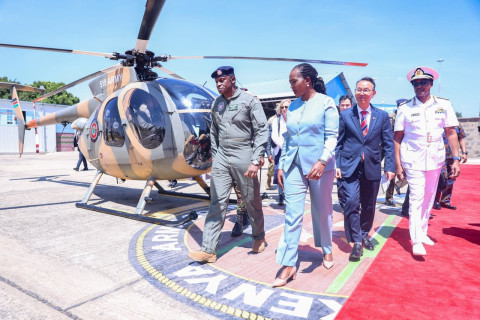
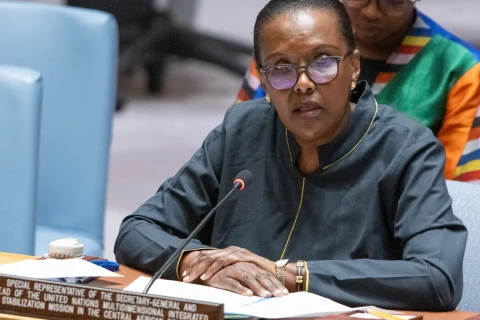
On June 9, the UN Security Council held its latest briefing on the Lord's Resistance Army. Ambassadors were updated on UNOCA's strategy for civilian protection, humanitarian access, and cross-border cooperation. Statements were made. The meeting adjourned. Joseph Kony remained at large.
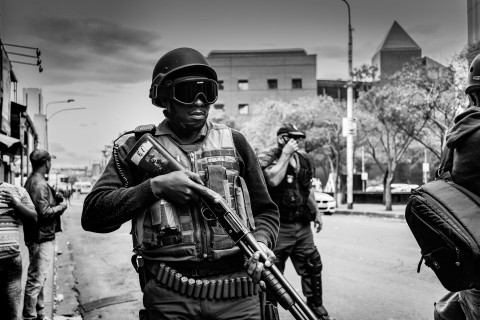
This has been the rhythm for nearly two decades. The LRA was founded in Uganda in the late 1980s. It has since killed more than 100,000 people, abducted tens of thousands of children as soldiers and sex slaves, and displaced millions across Uganda, the DRC, the Central African Republic, and South Sudan. The International Criminal Court issued an arrest warrant for Kony in 2005. The US Congress passed the Lord's Resistance Army Disarmament and Northern Uganda Recovery Act in 2010. Hundreds of millions of dollars were spent on multinational pursuit operations. In 2017, the US withdrew its military advisers from the hunt. Kony has not been seen in public since 2008.
The group he leads — if he still leads it — is a shadow of what it was. At its peak, the LRA fielded thousands of fighters. Today, UN estimates put the remaining force at somewhere between 300 and 500 combatants, scattered across the dense forests of eastern CAR and the Darfur region of Sudan. By conventional metrics, the LRA has been militarily degraded beyond the point of strategic relevance. Yet it continues to abduct, loot, and kill in the communities unlucky enough to sit along its remaining corridors of movement. Three hundred fighters with machetes and decades of experience in forest survival can cause an enormous amount of suffering.
What the June 9 Security Council meeting actually revealed — beneath the diplomatic language — is a more uncomfortable truth about how the international community handles threats that are too small to justify a major military response and too persistent to simply ignore. The LRA occupies exactly that uncomfortable middle ground. It is no longer capable of destabilizing a government. It is entirely capable of terrorizing a village. And in the borderlands between CAR, DRC, and South Sudan — some of the least-governed terrain on the planet — there is no state capacity and no military presence consistent enough to close that gap.
UNOCA's cross-border cooperation strategy is the right framework in theory. In practice, the CAR army is stretched thin by its own security commitments, South Sudan is managing its own fragile peace process, and the DRC's military bandwidth is consumed by M23 in the east. The African Union's Regional Task Force, created in 2011 specifically to coordinate pursuit of the LRA, has been chronically underfunded and operationally constrained. The ICC warrant for Kony is 21 years old. His senior commander Dominic Ongwen was convicted in 2021 — a genuine accountability milestone — but Ongwen was captured in 2015. Nobody has managed to get close to Kony since.
The Security Council will hold another briefing in six months. It will be similarly inconclusive. The communities in Haut-Mbomou and the Chinko basin will continue to live with the consequences of a threat the world has chosen to manage rather than resolve.