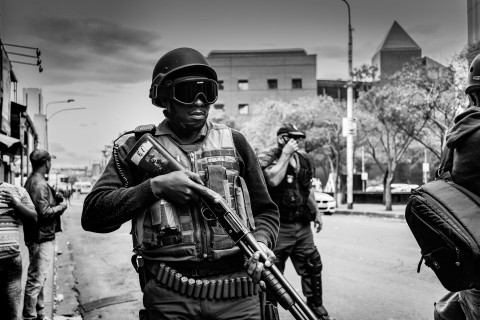
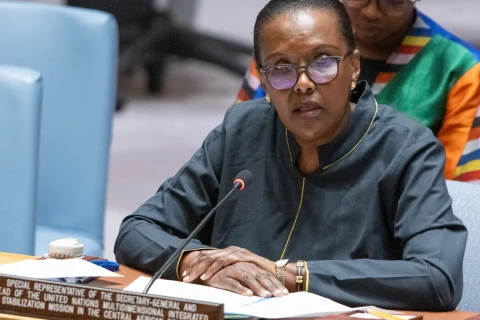
Security across Central Africa is continuing to deteriorate, with violence in conflict zones becoming increasingly interconnected and harder to contain, according to recent UN updates and field reporting from the region.
In eastern Democratic Republic of the Congo (DRC), insecurity remains concentrated in North Kivu and Ituri, where armed groups continue to operate despite ongoing military pressure and regional diplomatic efforts. Civilians remain the most affected, with repeated attacks reported in remote areas where state presence is limited and roads remain difficult to access. Analysts say the conflict is no longer driven by a single actor, but by a fragmented landscape of militias competing for territory and resources.
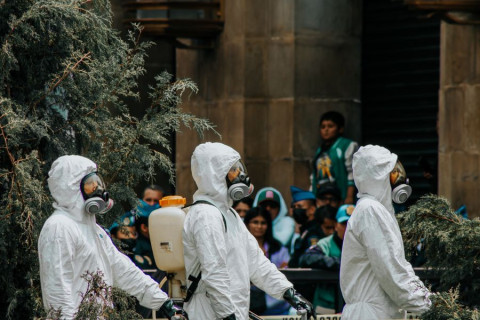
At the same time, humanitarian and health pressures are adding another layer of instability. Local authorities and international partners are currently responding to an Ebola outbreak in parts of the east, placing additional strain on already stretched medical services. In some areas, health teams are operating under security protection as movement restrictions and insecurity continue to complicate access to affected communities.
In Cameroon, the Anglophone crisis remains unresolved, with sporadic clashes still reported in the North-West and South-West regions. While large-scale fighting has decreased compared to earlier years, insecurity persists at a lower intensity, shaped by ambushes, targeted attacks, and military operations. Civilian populations continue to face uncertainty, particularly in rural zones where administrative presence remains weak.
The Central African Republic (CAR) is also facing persistent instability, particularly along its border regions. Armed group activity, combined with population displacement from neighboring countries, continues to place pressure on local authorities and humanitarian agencies. Despite ongoing support from international partners, control over remote areas remains limited, and security conditions can shift quickly.
Across the region, observers say the main concern is not just individual conflicts, but how they are beginning to overlap. Armed group movements, cross-border trafficking routes, and displacement flows are increasingly linking crises in the DRC, CAR, Cameroon, and beyond.
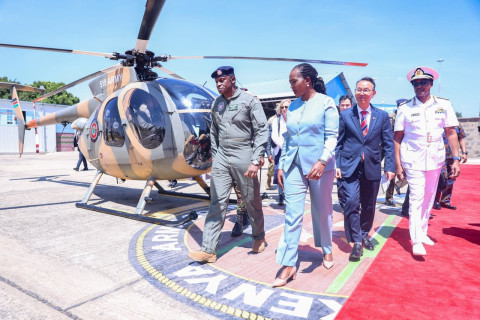
Diplomatic and peacekeeping efforts continue under regional and UN frameworks, but progress remains uneven. For now, Central Africa remains in a fragile security balance — where localized violence, humanitarian stress, and regional instability increasingly reinforce one another rather than move toward resolution.