When international security analysts discuss the civil war in Sudan, they inevitably focus on Khartoum, Port Sudan, or the humanitarian tragedy unfolding in Darfur. However, the true geopolitical fault line of this conflict has quietly shifted westward. Today, the most volatile security dynamic in Central Africa is not inside Sudan itself, but along its porous 1,400-kilometer border with Chad.
For the past three years, N’Djamena has performed a high-stakes balancing act, functioning as the primary humanitarian sanctuary for over 1.3 million newly arrived Sudanese refugees and Chadian returnees. But by June 2026, the sheer weight of the Sudanese collapse has broken through Chad’s containment strategy. What began as a refugee crisis has evolved into an existential security threat, characterized by cross-border drone strikes, armed incursions, and the rapid militarization of Chad's eastern provinces.
The Border Closure Mirage and Drone Warfare
In late February and March 2026, following violent clashes between the Sudanese Armed Forces (SAF) and the Rapid Support Forces (RSF) near the twin border towns of Tiné, Chad officially announced the complete closure of its eastern frontier. It was a clear signal of resolve from President Mahamat Déby, aimed at insulating his country from the chaos next door.
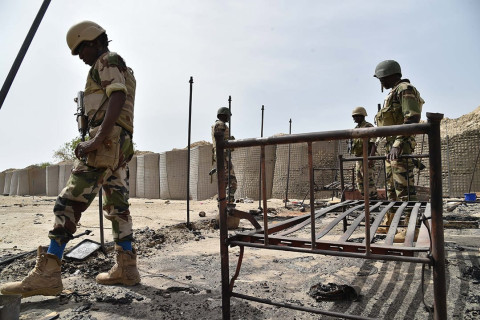
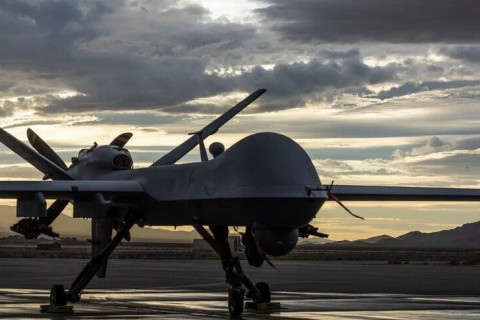
But on the ground, the frontier cannot be sealed. Instead of stopping the war, the formal border closure has merely altered its mechanics. Armed actors from both sides of the Sudanese conflict have routinely violated Chadian sovereignty. Throughout April and May 2026, multiple cross-border drone strikes and missile attacks targeted strategic nodes along the border system—including a devastating strike on fuel stocks at the Adikong market near the key Chadian border hub of Adré.
These are no longer accidental spillovers. The RSF and various Darfuri rebel factions are actively projecting force into Chadian territory to secure, disrupt, or tax the illicit supply corridors that sustain their war economies. The Chadian military has been forced to rapidly reallocate elite units to provinces like Ouaddaï and Sila, stretching its domestic defense framework to its absolute limit.
Checkpoint Capitalism: The Rise of the Frontier Criminal Economy
As the official economy along the border collapsed due to the war, it was instantly replaced by a highly lucrative, militarized black market. Security assessments from international monitors highlight that the Chad–Sudan boundary has transformed into a "movement economy."
In this new reality, the primary commodity is no longer grain or livestock, but permission itself. Transnational criminal networks, working in tandem with fragmented armed groups from Darfur, have embedded themselves within humanitarian mobility systems. They control porous crossing points, charging exorbitant fees for escort services, weapon smuggling, and fuel transport.
This presents a massive long-term threat to N’Djamena. The immense financial wealth generated by these border checkpoints is going directly into the pockets of local militias and peripheral tribal leaders. As these actors gain logistical and financial muscle, the central authority of the Chadian state in its eastern borderlands is being systematically hollowed out.
The Local Decompressive Shock: Water and Radicalization
Compounding the external military threat is a dangerous internal social decompression. The influx of hundreds of thousands of displaced people into Chad's most impoverished provinces—such as Wadi Fira and Ennedi Est—has placed a catastrophic strain on basic survival resources.
In late April 2026, a brutal reminder of this vulnerability occurred in the Guéréda sub-prefecture, where a violent intercommunal clash over access to a vital water point resulted in at least 42 deaths, forcing the Chadian Vice-Prime Minister to personally lead a high-level security delegation to stabilize the area.
History shows that where state architecture fails to protect basic resources, external actors thrive. The UN High Commissioner for Refugees (UNHCR) and intelligence agencies have warned that informal border sites, such as Koulbous and Korabo, are rapidly becoming hotspots for armed group transit and radicalization. Young, desperate Chadians and Sudanese returnees, facing total economic ruin during the current June lean season, are being actively recruited by opportunistic armed factions operating in the border vacuum.
For a country where the balance between frontier control and national sovereignty is treated with absolute seriousness, Chad's situation is a textbook warning for global security architecture.
The international community is treating the Chad-Sudan border primarily as a logistics challenge for aid distribution. This is a fatal analytical error. If the current trajectory continues, the militarized border economy and cross-border drone incursions will erode Chad’s relative internal stability. Should N’Djamena lose control of its eastern periphery, the international community will not just face a refugee crisis—it will witness the creation of a continuous, uninterrupted belt of armed instability stretching from the Atlantic coast of Mali all the way to the Red Sea.