If you spend too much time reading Western policy papers, you’d think the security landscape in Central Africa is a simple, ideological movie: the old European powers are packing their bags, and new flag-waving state actors are taking over the empty bases.
But talk to anyone managing supply chains or corporate risk on the ground right now, and they will tell you a completely different story. As we cross into the summer of 2026, Central Africa isn’t seeing a vacuum—it’s seeing a vicious, commercialized turf war. The grand geopolitical speeches about "sovereignty" and "traditional alliances" have been replaced by a brutal market reality. Today, keeping a regime alive or a mining corridor open is just a matter of who submits the most aggressive contract bid.
The French Pivot to Private Contracting
Take Chad, for instance. For the past year, headlines insisted that Paris was losing its grip on N'Djamena. But look closer at what’s actually happening behind the wire. France isn’t leaving; it’s changing its business model.
Instead of deploying regular heavy infantry units that attract massive local political backlash and protests, Paris has quietly greenlit a surge of specialized, discrete projects and private military contractors (PMCs) staffed by European veterans. These agile, corporate security outfits aren't interested in fixing Chadian domestic politics or lecturing anyone on human rights. They are there for one reason: to secure critical infrastructure, airports, and border hubs. By operating under corporate covers, they give local regimes exactly what they want—hard tactical capabilities—without the public embarrassment of looking like colonial puppets.
The Gold Gridlock
This corporate shift has set off an incredibly tense, silent collision with existing private security networks operating out of Eastern Europe and the Gulf.
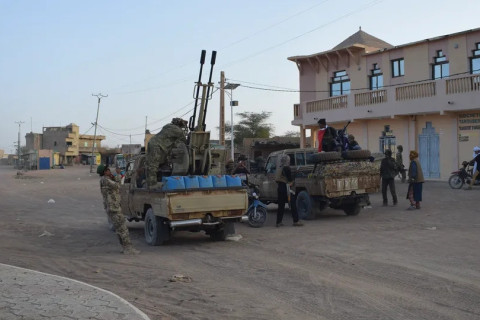
The battlefield isn't a frontline; it’s the compliance offices and jungle airstrips of the Central African Republic and northern Chad. The business of protecting gold mines and securing logistics routes from the interior to the coast has become deeply fragmented. Local authorities have realized they don't need to pledge exclusive loyalty to any single foreign capital. Instead, they are playing a brilliant, cynical game of split-contracting: hiring one group to secure the capital city, another to run internal electronic surveillance, and a third—often tied to dynamic corporate entities from the UAE—to handle the actual transport logistics of high-value minerals.
It’s an environment where yesterday’s bitter geopolitical rivals end up sharing the same airport tarmac, ignoring each other while checking their respective cargo.
From the perspective of anyone who understands how modern conflict actually works, the current chaos in Central Africa is the future of global security. The era of the state-sponsored "security umbrella" is coming to an end, exposed by high maintenance costs and diplomatic liabilities.
Sovereignty in the region has become fully privatized and unbundled. Security is no longer an ideological alliance sealed with a handshake between presidents; it is an operational expense billed monthly. For international businesses and regional leaders alike, the rules of the game have evolved. You don't look for a superpower protector anymore. You look for the contractor with the best logistics, the lowest profile, and the most reliable supply of ammunition.