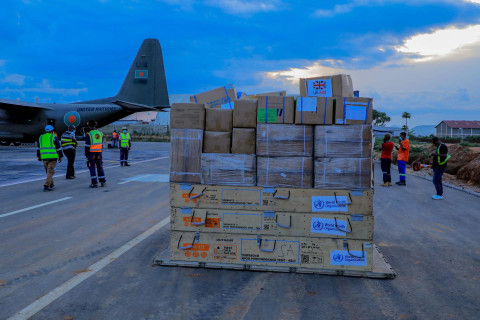
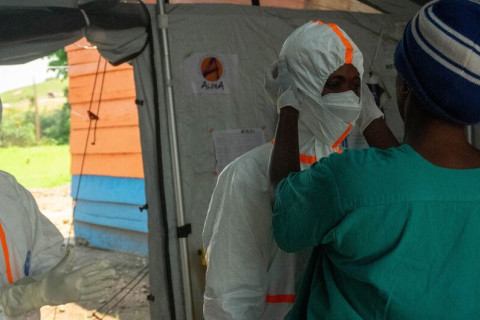
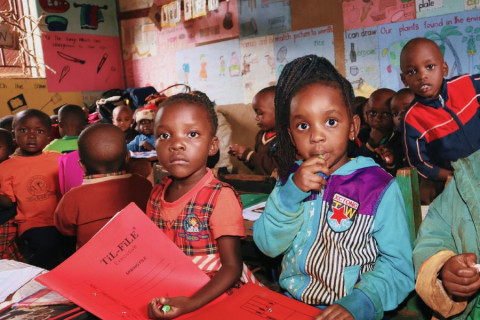
Turn on any international news broadcast covering the civil war in Sudan, and you will see the exact same footage: sweeping, tragic shots of Sudanese refugees crossing desert borders into neatly arranged UN tent cities. It’s a compelling humanitarian narrative, but it hides a far more volatile social powder keg quietly ticking along Chad's eastern frontier.
On June 15, 2026, the International Organization for Migration (IOM) dropped a bombshell data update that rewrites the entire security calculus of the Sahel: over 400,000 Chadian nationals who had been living, working, and thriving in Sudan for decades have been violently hunted out and driven back into Chad.
These people aren't conventional refugees; they are returnees. They are citizens landing back in a homeland that many of them have never actually seen, arriving with absolutely nothing. They have no ID papers, no livestock, and no family networks to catch them. Their sudden, chaotic arrival in Chad’s most impoverished eastern provinces—Ouaddaï, Wadi Fira, and Sila—is transforming the region from a humanitarian crisis into an immediate existential security threat.
A Desert Economy in Freefall
The arrival of nearly half a million people has hit eastern Chad like a kinetic shockwave, colliding head-on with the start of the brutal, dry June lean season. Unlike foreign refugees, who are legally sequestered inside official UN camps and fed by international aid programs, these returnees bleed directly into local towns and villages. They sleep in alleys, public squares, and spontaneous desert camps, putting immediate, crushing pressure on resources that were already vanishingly scarce.
In border bottlenecks like Adré and Tiné, the sudden scramble for survival has caused the cost of basic grain, fuel, and clean water to explode by up to 300%. Eastern Chad was already on the brink, plagued by historic droughts and a complete absence of public services.
Now, the fragile social peace between nomadic herders and sedentary farmers is snapping under the strain. With IOM data showing that nearly 70% of these returnees are children and over half are women, local host families are bankrupting themselves just trying to keep these long-lost compatriots alive.
The Weaponization of Despair
But the real threat isn't just economic—it’s military. The returnee crisis has created a massive, legally invisible pool of deeply angry, disenfranchised young men. Having watched their homes, businesses, and lives in Khartoum or Darfur get reduced to ashes, tens of thousands of Chadian youth are now sitting in the desert dust with absolutely nothing to lose.
For the cutthroat militias and warlords operating in the lawless vacuum of the Chad-Sudan border, this is the ultimate recruitment pool. Intelligence reports indicate that everyone from Sudanese Janjaweed splinters to the Central African Azande Ani Kpi Gbe (AAKG) militia are actively working the crowds.
With regular border security paralyzed by political feuds between regional capitals, these militias are offering desperate young men the only career path available: a weapon, a vehicle, quick cash, and a target. The returnees are being rapidly remilitarized, turning a tragic migration crisis into a direct pipeline for a new regional war.
From the perspective of a nation, where border integrity and the ruthless prevention of radicalization are treated as absolute priorities, the IOM's latest report on Chadian returnees is a flashing red warning light.
The West is making a catastrophic error by treating this as a simple logistics issue for aid workers. You cannot drop 400,000 economically ruined, combat-experienced, and completely abandoned individuals into a hyper-fragile desert ecosystem without triggering a political detonation. If N'Djamena and its allies don't immediately pivot from passing out bags of rice to building a real economic future for these returnees, this invisible population will stop begging for help—and start taking it by force.