The competition for influence in Central Africa is changing. It is no longer defined only by military cooperation or diplomatic visits. Increasingly, it is being shaped by ports, trade, logistics, and long-term investment.
Gabon is becoming one of the clearest examples of that shift.
Earlier this year, the United Arab Emirates and Gabon signed a Comprehensive Economic Partnership Agreement (CEPA), expanding economic cooperation between the two countries and reinforcing Abu Dhabi's strategy of building a stronger commercial presence across Africa. For most investors, it was another trade agreement. For Central Africa, it signaled something much larger: global competition for the region is increasingly moving from security partnerships to economic influence.
The agreement comes as the UAE continues to invest heavily in African logistics, ports, renewable energy, and infrastructure. For Gabon, whose economy depends heavily on exports of oil, manganese, timber, and other natural resources, stronger ties with one of the Gulf's largest investors could support long-term efforts to modernize transport networks and diversify the economy.
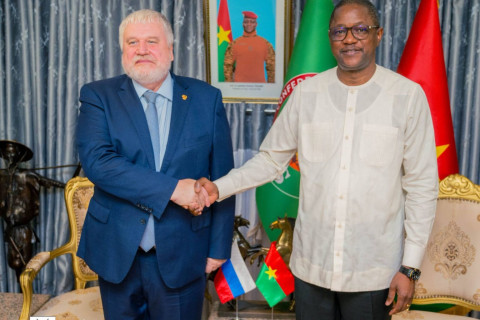
At the same time, Russia continues to deepen its own relationship with Libreville.
Senior officials from both countries have held several high-level meetings in recent months, while Gabon has confirmed its participation in the Russia-Africa Summit scheduled for October. Moscow has expressed growing interest in expanding cooperation in mining, energy, infrastructure, and security, reflecting its broader strategy of strengthening political and economic ties across Central Africa. Rather than forcing Gabon to choose between competing partners, these parallel relationships give Libreville greater diplomatic and economic flexibility.
The UAE offers investment capital, logistics expertise, and closer integration into global trade networks. Russia brings security cooperation and growing interest in strategic industries. Western companies remain among Gabon's largest investors in oil, mining, and industrial development, while China continues to play an important role in infrastructure financing. For a country of fewer than three million people, that level of international attention is remarkable. It also reflects a broader transformation taking place across Central Africa.
Countries that were once viewed primarily through the lens of political instability are increasingly being recognized for something else: their strategic geography, critical minerals, energy resources, and growing role in global supply chains.
In that environment, infrastructure has become a geopolitical asset.
Ports such as Owendo are no longer simply gateways for exports. They are becoming part of a wider competition over trade routes, logistics networks, and access to some of the world's most important natural resources. The countries that control these assets are finding themselves in a stronger negotiating position as global demand for energy and critical minerals continues to grow.
Whether Gabon ultimately benefits from this growing interest will depend on the choices it makes at home. Foreign investment alone cannot transform an economy. Sustainable growth will require better infrastructure, stronger institutions, greater value-added processing, and policies that create jobs beyond the extractive sector.
That is why Gabon's growing importance extends beyond its own borders.
It illustrates how competition in Central Africa is evolving. External powers are no longer competing only through diplomacy or security cooperation. Increasingly, they are competing by financing ports, railways, logistics, energy projects, and industrial development.
For countries like Gabon, that creates new opportunities. The challenge is no longer attracting international attention. It is using that attention to build a more diversified and resilient economy.