Railways move cargo. Economic corridors move economies.
For years, the Lobito Corridor was viewed primarily as a transport route linking Angola's Atlantic coast with the copper and cobalt belts of the Democratic Republic of the Congo and Zambia. Today, that description is becoming too narrow.
What is emerging is not simply a railway connecting mines to a port, but the foundation of a broader economic corridor where transport, energy and industry are beginning to develop together.
The rehabilitation of the Lobito railway and the expansion of the Port of Lobito have attracted strong backing from the United States, the European Union and international financial institutions seeking to diversify critical mineral supply chains. Yet the corridor's long-term value extends well beyond moving copper and cobalt to global markets.
Infrastructure attracts infrastructure.
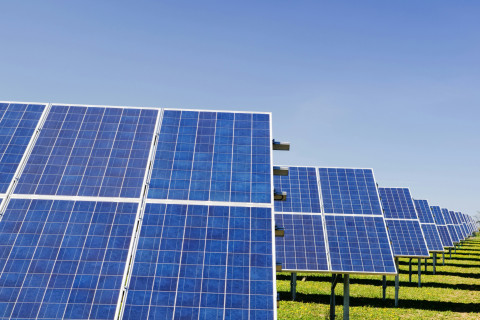
Reliable transport creates demand for electricity, logistics hubs, warehouses, industrial parks and processing facilities. Angola's recently commissioned Luau solar park, near the border with the Democratic Republic of the Congo, illustrates this wider transformation. While the project was not built specifically for the corridor, it reflects the broader wave of energy investment accompanying economic development across the region.
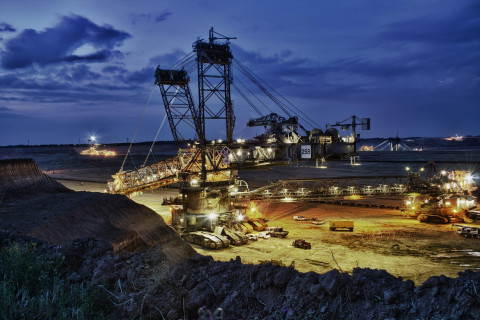
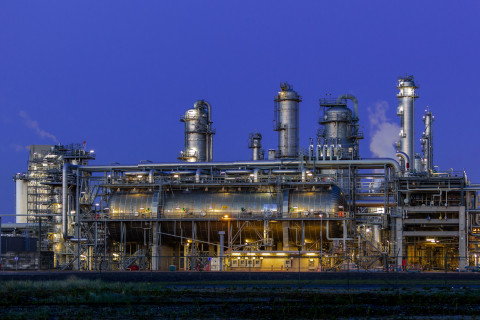
Mining is evolving as well. For decades, Central Africa exported raw minerals while most value-added processing took place overseas. The Lobito Corridor offers an opportunity not only to shorten export routes but also to attract industries that refine, process and manufacture closer to the source of production.
That shift could prove more important than the railway itself.
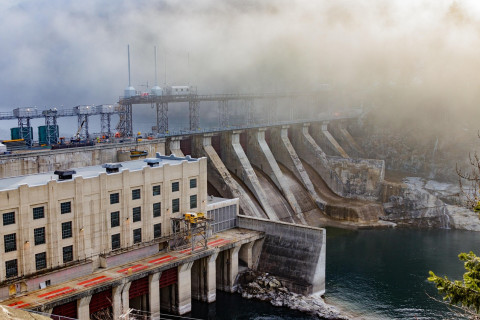
Modern economic corridors depend on far more than rail tracks. They require efficient ports, customs facilities, digital logistics systems, reliable power supplies and coordinated cross-border policies. Together, these elements create an investment ecosystem that extends well beyond transport.
This explains why international interest in the Lobito Corridor has accelerated. Investors are increasingly looking not only at mining projects but also at renewable energy, logistics, industrial real estate, engineering services and mineral processing — sectors that typically develop alongside major infrastructure.
Whether that transformation succeeds will depend on political stability, regulatory reforms, access to finance and continued investment in energy infrastructure. Railways can connect markets, but they cannot build industries on their own.
The Lobito Corridor is therefore entering a new phase. It is gradually becoming more than a railway. It is emerging as one of Central Africa's most important economic development platforms, where transport, energy and industrial investment are beginning to converge.
If that momentum continues, the corridor may ultimately export something more valuable than minerals alone. It could help Central Africa export industrial capacity.