Washington is expanding its energy and investment ties with Africa, using project finance, grid technology and critical-minerals partnerships to build a broader commercial presence across the continent.
That agenda will be on display at African Energy Week 2026 in Cape Town from October 12–16, where US Department of Energy Deputy Assistant Secretary Josh Volz is scheduled to participate. The event’s program also includes a dedicated US-Africa Energy & Investment Forum, bringing together American and African companies, investors and policymakers.
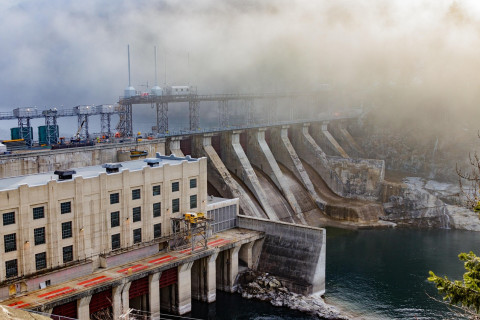
Recent projects show where that engagement is heading. On September 22, the US Trade and Development Agency signed an agreement to fund a feasibility study for hydropower and electricity distribution upgrades in the Democratic Republic of the Congo (DRC) and Zambia along the Lobito Corridor. The project is intended to improve power supplies for copper and cobalt mining operations while extending electricity access to more than three million people.
A day later, USTDA announced a separate agreement with Congolese company Buenassa Resources to fund a pre-feasibility study for a copper and cobalt refinery in the DRC’s Lualaba Province. The proposed facility would process minerals locally rather than leaving the country’s role largely focused on extraction, while creating opportunities for US companies to provide equipment and technical expertise.
Together, the two initiatives connect three parts of the same economic chain: power, mineral processing and export infrastructure. Reliable electricity is essential for mining and industrial activity, while local processing can increase the value captured before critical minerals move toward international markets. The Lobito Corridor, which links mineral-producing areas to Angola’s Atlantic port, provides the infrastructure backbone for that strategy.
Washington’s involvement also extends beyond critical minerals. In April, USTDA brought energy officials and private-sector representatives from the DRC, Ethiopia, Kenya and Uganda to the United States to explore partnerships with American companies working on transmission, distribution and AI-enabled grid systems. The program was designed to connect US technology providers with potential projects and procurement opportunities in African power markets.
Hydrocarbons remain part of the relationship. In March 2025, the US Export-Import Bank approved a second amendment to its 2019 direct loan of up to $4.7 billion for TotalEnergies’ Mozambique LNG project after the financing had been paused for four years. The package supports US goods and services for the project’s development and construction.
The financial capacity behind such deals has also expanded. The US International Development Finance Corporation received a six-year reauthorization through 2031, while its investment cap rose by more than 300% to $205 billion. The new authority also expanded DFC’s ability to invest in sectors including energy, critical minerals and information technology.
DFC is already putting that capacity to work. On September 16, it approved more than $8 billion in new investments globally, including transactions supporting infrastructure and critical resources in Africa. One of the announced projects is an equity investment in WIOCC Group to expand digital infrastructure across sub-Saharan Africa, while DFC also said it was supporting a critical-minerals project in West Africa.
American technology companies are another part of the equation. GE Vernova says its solutions are installed in more than 50 countries across the Middle East and Africa, including multiply power-generation and industrial sites in Nigeria. Its grid software has also supported the West African Power Pool, which completed its first full regional electricity-system synchronization trial in 2025.
For African economies, the expanding US role brings potential access to financing, technology and industrial partnerships. For Washington, the projects create commercial opportunities for US companies while strengthening access to strategic resources and infrastructure.
AEW 2026 will provide a useful test of how far that relationship has moved from policy statements to projects. The key question is no longer simply whether US capital and technology are available, but whether they can be matched with bankable African projects that reach financing, construction and operation.