For decades, Central Africa's energy wealth was measured by what lay beneath the ground: oil, natural gas, hydropower and vast mineral reserves. Yet the region's biggest obstacle has never been a shortage of resources. It has been the infrastructure needed to turn those resources into electricity, industrial production and sustainable economic growth.
That shift is becoming increasingly visible across the region.
In late 2025, Angola commissioned the Cazombo Photovoltaic Park, which at the time became Africa's largest autonomous off-grid solar installation. Just a few months later, the record passed to the nearby Luau Photovoltaic Park, another project delivered under the country's rural electrification programme. Together, the two facilities supply electricity to remote communities that had long relied on diesel generation or had no reliable access to power at all.
Neither project is large enough to influence global energy markets. Their importance lies elsewhere.
They reflect a broader transition in Central Africa's energy sector, where investment is increasingly directed not only toward extracting oil and gas, but also toward building the infrastructure needed to deliver energy to households, businesses and industry.
That distinction matters.
Africa holds significant undeveloped hydrocarbon reserves, yet continues to attract only a modest share of global upstream investment. At the same time, many countries in Central Africa still face unreliable electricity networks, limited transmission capacity and insufficient energy infrastructure. The challenge is no longer simply finding new resources, but creating the systems that allow existing resources to support broader economic development.
Similar trends are emerging across the region.
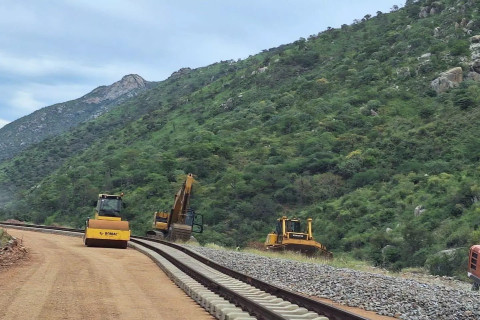
The Republic of the Congo has entered the LNG export market through the Congo LNG project, while Angola continues to expand both offshore oil production and renewable energy capacity. Meanwhile, the Lobito Corridor is evolving beyond a transport project. Alongside the rehabilitation of the railway, new investment is flowing into power infrastructure, logistics and industrial development, gradually transforming the corridor into a broader economic platform.
Although these projects differ in purpose, they address the same structural issue.
Pipelines connect gas fields to export terminals. Transmission lines carry electricity to consumers. Railways link mines with ports. Processing facilities allow countries to export higher-value products instead of raw materials alone. Without this infrastructure, abundant natural resources generate only a fraction of their potential economic value.
Recognising this challenge, African governments are also seeking new financing mechanisms. The African Energy Bank, expected to begin operations this year, is intended to support energy projects that have often struggled to attract commercial funding, particularly infrastructure designed to expand electricity access and strengthen regional energy systems.
Whether these initiatives deliver lasting economic benefits will depend on more than capital investment. Stable regulation, cross-border cooperation and effective project implementation will determine whether today's infrastructure projects become isolated successes or the foundation of wider industrial growth.
For much of the past two decades, Central Africa's energy story was written in barrels of oil and cubic metres of gas.
Increasingly, it is being written in power lines, rail corridors, solar parks and the infrastructure that connects resources with people.
The region has never lacked energy.
It has lacked the infrastructure to make that energy work for its economy.