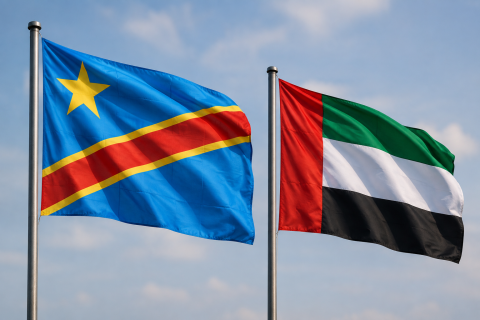
On June 27, the foreign ministers of the Democratic Republic of the Congo and Rwanda are expected to sign a US-backed peace agreement in Washington, marking the latest international effort to reduce tensions in eastern Congo after months of escalating violence.
The agreement links security commitments with closer economic cooperation around critical minerals—resources that have become increasingly important to global supply chains as demand for batteries, renewable energy technologies, and advanced manufacturing continues to grow.
For Washington, the initiative serves two objectives. It aims to encourage a more stable security environment in eastern Congo while supporting efforts to diversify access to critical minerals and reduce reliance on supply chains dominated by China.
For Kinshasa, the potential benefits are equally significant. Greater political stability could encourage foreign investment in the country's vast deposits of cobalt, copper, lithium, and coltan, while opening opportunities to develop more value-added processing inside the DRC.
Rwanda also has a clear interest in the process. Beyond improving regional stability, Kigali has positioned itself as a logistics, processing, and trading hub for minerals moving through East Africa. A more predictable security environment could strengthen that role.
Whether the agreement achieves its objectives, however, will depend on developments far from the conference rooms in Washington.
The M23 rebel group, which UN experts say receives support from Rwanda, remains in control of significant parts of North and South Kivu, including Goma and Bukavu. The movement is not a party to the Washington agreement, leaving one of the conflict's principal military actors outside the negotiating framework.
That creates an obvious challenge.
Political agreements can establish principles and create incentives, but lasting stability ultimately depends on conditions on the ground. Continued fighting, unresolved disputes over the presence of the FDLR militia, and the humanitarian situation in eastern Congo remain significant obstacles to any lasting settlement. At the same time, the economic dimension of the agreement reflects a broader geopolitical trend.
Competition for critical minerals has become an increasingly important element of global economic policy. The United States, the European Union, China, Gulf countries, and other major economies are all seeking more secure access to resources needed for the energy transition and advanced technologies.
The Democratic Republic of the Congo sits at the center of that competition. The country possesses some of the world's largest reserves of cobalt and significant deposits of copper, lithium, tin, tantalum, and other strategic minerals. For years, however, insecurity in the eastern provinces has complicated efforts to fully develop that potential.
Several American companies have already announced plans to expand investment in Congolese mining projects, reflecting growing interest in building more diversified and resilient supply chains for critical minerals. Those investments, however, ultimately depend on greater security and a more predictable business environment.
That is why the Washington agreement represents an important diplomatic milestone—but not a guaranteed turning point.
Its success will be measured not by the ceremony in Washington, but by whether violence declines, investment increases, and local communities begin to see tangible economic benefits from one of the world's richest mineral regions.
Peace agreements can create opportunities. Turning those opportunities into lasting stability remains the more difficult task.