For years, mining in the Democratic Republic of the Congo was almost synonymous with cobalt. Not anymore. As global demand shifts and market conditions evolve, the DRC is steadily strengthening its position as the world's second-largest copper producer after Chile. The country's copper output reached a record 3.5 million metric tons last year, reflecting continued expansion across some of the world's largest mining operations. The milestone confirms the DRC's growing role in supplying a metal that has become indispensable for electricity grids, renewable energy projects, electric vehicles, and digital infrastructure. The shift didn't happen overnight. After years of oversupply pushed cobalt prices sharply lower, mining companies simply followed the money, redirecting billions of dollars toward copper projects with stronger long-term prospects. For Kinshasa, the logic is equally straightforward. Copper has become a more stable source of export revenue and a more predictable foundation for economic growth than the increasingly volatile cobalt market.
The broader outlook for critical minerals only reinforces that strategy. According to the United Nations Conference on Trade and Development (UNCTAD), global demand for lithium is projected to increase by 350% by 2040, while demand for graphite is expected to rise by more than 135%. Copper may receive less attention than battery metals, but without it there is no large-scale electrification, no modern transmission networks, and no energy transition.
The industry's transformation is also reshaping the geopolitical landscape. Chinese companies, led by CMOC and Zijin Mining, invested heavily in the Congolese mining sector long before most Western competitors arrived and continue to dominate large-scale production. But Kinshasa no longer wants to put all its eggs in one basket. The government is actively seeking to attract more Western investment while maintaining existing partnerships with Chinese operators.
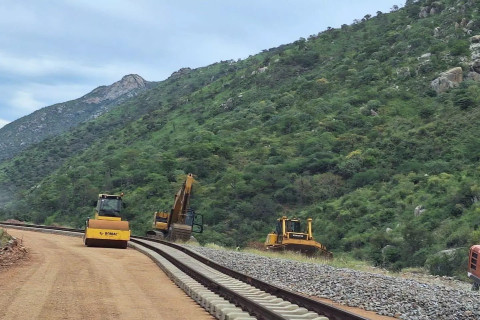
Washington has responded by deepening cooperation with the DRC through a strategic critical minerals partnership designed to strengthen supply chains for transition metals. At the same time, Western-backed investors are gradually expanding their presence through acquisitions and new mining projects. Infrastructure is becoming another key part of the equation. The Lobito Corridor, supported by the United States, the European Union, Angola, Zambia, and the DRC, is expected to provide a faster export route from the Copperbelt to Angola's Atlantic coast, reducing transport costs and offering an alternative to traditional logistics networks.
The direction of travel is becoming increasingly clear. The Democratic Republic of the Congo is no longer known only as the world's leading cobalt producer. It is rapidly establishing itself as one of the world's most influential copper suppliers. The next challenge is no longer simply digging more ore out of the ground, but creating more value at home through processing, manufacturing, and modern transport infrastructure that can keep a larger share of mining wealth inside the country.