West and Central African energy regulators and industry leaders are accelerating efforts to create a network of fuel hubs and pipelines that could reshape how refined petroleum products are traded across the continent, with Cameroon and its Central African neighbors emerging as a key focus alongside Nigeria’s push for a West African trading benchmark.
At this week’s West African Refined Fuel Market (WAFRFM) Conference in Abuja, regulators from across the region reiterated plans to build an integrated refined-products market and establish a regional fuel pricing benchmark.
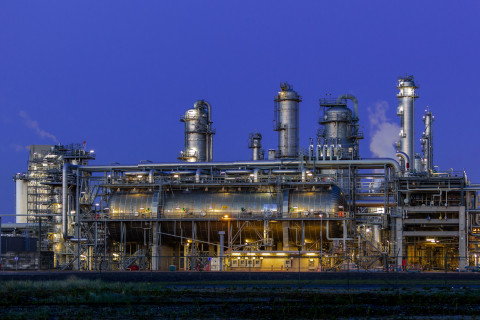
The discussions stressed that growing refining capacity, led by Nigeria’s Dangote refinery, must be matched by investment in pipelines, storage, ports and digital trading platforms so that prices reflect regional fundamentals rather than distant international benchmarks.
Nigeria’s Midstream and Downstream Petroleum Regulatory Authority has framed the initiative as a shift from Africa being a “price taker” to becoming a center for price discovery, warning that a reference price alone cannot make a trading hub without physical infrastructure and market liquidity.
Officials highlighted the need for harmonized regulations and product standards across West Africa to deepen cross-border trade and underpin a credible benchmark.
In Central Africa, Cameroon is positioning itself as both a fuel market and a logistics platform serving landlocked neighbors such as Chad and the Central African Republic (CAR). Nigerian conglomerate Dangote Group has presented a proposal to Yaoundé to build a petroleum products storage terminal that would bolster strategic reserves and potentially integrate a refined-products pipeline network to cut transport costs.
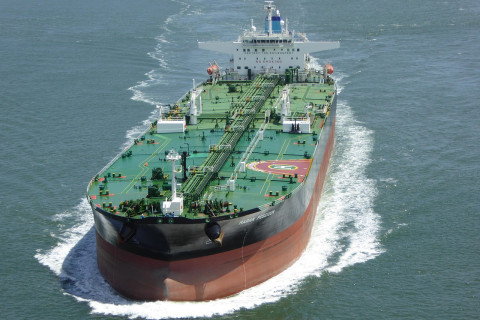
While the project remains at an early, exploratory stage with no final investment decision, a terminal on Cameroon’s coast would allow Dangote to keep fuel closer to Central African consumers rather than shipping every cargo directly from Nigeria. The country is already expanding its domestic storage capacity through new tank farms and terminals, increasing its attractiveness as a regional distribution point on the Gulf of Guinea.
Beyond individual terminals, Central African governments have endorsed an ambitious Central African Pipeline System (CAPS) that would knit together oil and gas infrastructure across much of the sub-region. The CAPS vision is for roughly 6,500 km of interconnected pipelines, storage depots, refineries and gas-fired power plants linking up to 11 countries, including Cameroon, Chad, CAR, Equatorial Guinea, Gabon, the Republic of Congo and the Democratic Republic of Congo (DRC).
A memorandum of understanding signed by several members of the Economic Community of Central African States (ECCAS) aims to facilitate transport, storage and distribution of fuels and liquefied natural gas, supporting future industrial hubs and easing the region’s reliance on imported refined products. The network would not only improve energy security but also anchor broader economic integration by supplying power plants and industrial projects across Central Africa.
The Central African moves intersect with Dangote’s broader plan to create twin refining hubs in West and East Africa, linked by storage and pipeline infrastructure. Building on the 650,000-barrel-per-day refinery at Lekki in Nigeria, the group has confirmed plans for a 700,000-bpd refinery in Lamu on Kenya’s Indian Ocean coast, which would supply markets in East and Central Africa and be financed through internal cash flow, bonds and an initial public offering.
Once fully expanded, Dangote aims to operate about 1.4 million bpd of capacity in Nigeria and 700,000 bpd in Kenya, creating a 2.1 million-bpd network that could channel fuels from the Atlantic to the Indian Ocean. A storage terminal in Cameroon, plugged into Central African corridors and potentially into CAPS, would give this network a strategic foothold in the heart of the continent and reinforce intra-African fuel trade under the African Continental Free Trade Area.