The Democratic Republic of Congo is entering a new phase of investment in its electricity sector as the government seeks to close one of the country's biggest infrastructure gaps. In the first quarter of 2026, the country mobilized about $650 million in private capital for energy projects, above the $500 million baseline recorded in 2024. The government has set an ambitious target of mobilizing $20 billion in private investment in the energy sector by 2030.
The scale of the ambition reflects the size of the problem. Only about 21% of the DRC's population has access to electricity, according to the World Bank, while the government aims to raise that share to 62% by 2030. The gap is particularly significant outside the country's main urban centers, where limited generation, transmission, and distribution infrastructure continues to constrain economic activity.
At the same time, the country's economy is expanding rapidly, largely on the back of mining. The World Bank estimates that the DRC's economy grew by 5.5% in 2025, with growth expected to average about 5.1% annually from 2026 through 2028. Copper and cobalt production remain central to that expansion, increasing the demand for reliable electricity while creating a strong economic case for investment in generation and transmission.
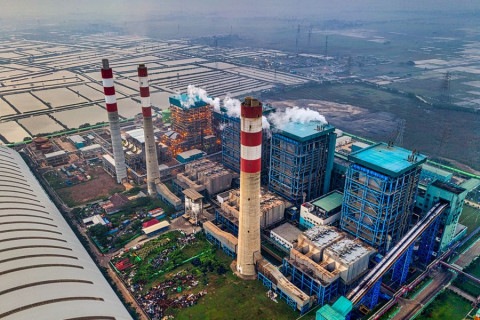
This creates a significant opportunity, but also a difficult test. The DRC has enormous hydropower potential, including the Inga complex, yet the country has struggled to translate that resource base into a reliable nationwide electricity system. Weak transmission and distribution networks, limited access to financing, and the financial constraints of the national utility have all restricted the ability to expand supply. The result is an economy where substantial mining investment can coexist with severe electricity shortages.
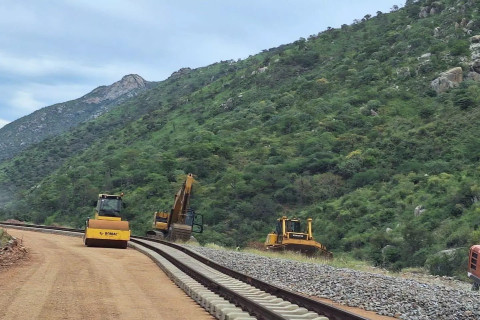
The government's strategy increasingly relies on private capital to close that gap. That approach could accelerate investment in generation and help reduce the burden on public finances, but financing power plants is only part of the challenge. New generation needs transmission lines to reach industrial centers and distribution networks to reach households and businesses. Without those connections, additional generating capacity can remain geographically isolated from the areas where electricity demand is growing fastest.
Mining could play an important role in solving this problem. The sector's large and relatively concentrated electricity demand can provide an anchor load for new power infrastructure, improving the commercial case for generation and transmission projects. The World Bank has identified stronger energy infrastructure as an important condition for expanding mining and, more importantly, for moving beyond the extraction of minerals toward greater domestic value addition.
That makes the DRC's current energy investment cycle about more than electricity access. If new projects can provide reliable power to mines, industrial facilities, and surrounding communities, they could help create the conditions for processing and manufacturing activities that generate more value inside the country. If investment remains concentrated in isolated generation projects without corresponding improvements in transmission and distribution, its wider economic impact will be much more limited.
The government's $20 billion private-investment target by 2030 is therefore only one measure of success. The more important test will be whether capital mobilized today produces additional generation, connects that generation to demand, improves reliability, and expands access to electricity.
For the DRC, the challenge is no longer simply finding investors willing to finance energy projects. It is turning that investment pipeline into an integrated electricity system capable of supporting households, mining, and the next stage of industrial growth.