DRC: When You Can't Sell Cobalt, Sell Something Else
Sometimes biggest economic story is not what country is doing — it is what country has stopped doing, and what it started doing instead.
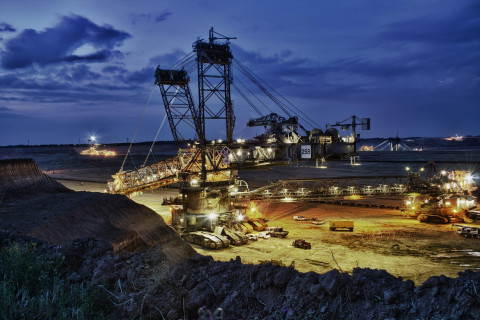
DRC's cobalt miners are pivoting hard toward copper as cobalt prices remain depressed under heavy oversupply. Copper demand is rising fast — driven by AI data centres, electrification and electric vehicles — while supply is tightening due to declining ore grades and mine closures elsewhere. Glencore recorded 19 percent increase in copper production in Q1 2026, while CMOC's preliminary net income climbed approximately 50 percent in 2025 to over 20 billion yuan, driven largely by elevated copper prices that hit around 14,527 dollars per tonne on London Metal Exchange.
DRC has replaced its 2025 cobalt export ban with strict annual quotas — 96,600 tonnes for both 2026 and 2027. Government enforces hard deadlines: unused Q1 2026 allocations must be shipped by June 30 or get forfeited to national strategic reserve. That deadline is two weeks away. Worth watching whether miners scramble to ship in coming days or simply write off the allocation.
Government is not just managing quotas — it is auditing what already happened. DRC exported approximately 3.4 million metric tons of copper in 2025, up nearly 10 percent from 2024, with cobalt exports around 220,000 metric tons — figures cited at cabinet meeting chaired by Tshisekedi on April 25. Government has separately moved to establish strategic cobalt reserve, positioning itself as active market participant rather than passive royalty collector. Alongside this sits a revenue audit, traceability mandate, and 100 million dollar US-backed mine security force announced April 27.
All of this converges this coming week. DRC Mining Week 2026 takes place June 17-19 in Lubumbashi, bringing together more than 1,300 delegates including Glencore subsidiary Mutanda Mining, MMG, Eurasian Resources Group and Barrick Gold. Average copper ore grades in Congolese Copperbelt reach 3 to 4 percent — well above global average, giving operators structural cost advantage few jurisdictions can match.
If you wanted to understand DRC's economic strategy for 2026 in one sentence: cobalt got cheap, copper got valuable, and Kinshasa is positioning itself to capture more of both — through quotas, audits, reserves and a security force, all at once.
Angola: Sonangol Turns 50, Prepares to Go Public
Half a century is a long time for any institution — especially one that has shaped, for better and worse, almost every aspect of Angola's economy since 1976.
Sonangol marked its 50th anniversary in March 2026 at moment of strategic transition. Founded in 1976, company has long stood at centre of Angola's political economy — shaping fiscal revenues, energy diplomacy and national development. Now it faces defining test: planned listing of up to 30 percent of its capital on stock exchange.
Sonangol is preparing for potential IPO in 2027, with 30 percent of shares available — aimed at unlocking access to wider capital pool and supporting transition into competitive upstream player. African Energy Bank, expected to launch in June 2026, could serve as critical platform for this transition.
While IPO preparations continue, Sonangol is also actively expanding beyond oil. On June 9, Swakop Uranium signed Project Development Agreement with Sonangol — major cross-border partnership to unlock critical minerals in the region, described by Sonangol as part of broader push to diversify its portfolio and expand presence in mining sector beyond hydrocarbons.
This is company that, for fifty years, was synonymous with oil. It is now simultaneously preparing to sell shares to the public, signing critical minerals deals with Namibian uranium companies, and building three new refineries. Whether this represents genuine transformation or simply diversification of a company too large and too central to the state to ever fully privatize remains, as always with Sonangol, an open question.
Cameroon: New Mines Open as IMF Delivers Its Verdict
Cameroon spent first months of 2026 hosting IMF mission and getting its economic homework graded. Grade: passing, with room for improvement.
IMF expects Cameroon's economy to grow 3.3 percent in 2026, after slowing to 3.1 percent in 2025 due to post-election disruptions. Inflation is projected to ease to 2.9 percent this year. IMF recommended introducing automatic fuel pricing mechanism and better targeting support to vulnerable groups — recommendation Cameroon has heard before and not yet fully acted on.
Cameroonian authorities, having adopted 2026 budget, expect more optimistic growth of 4.3 percent, driven by non-oil sector — particularly industry, agriculture, telecommunications and financial services. Current account deficit is expected to widen to 5.3 percent of GDP, mainly due to lower cocoa prices.
On ground, new mining is actually happening. Iron ore mining began at Grand Zambi site in Bipindi in early 2025, with first exports expected in second half of year. Bauxite mining at Minim Martap is expected to begin in 2026. These projects — one led by Cameroonian investor, other by Australian investor — are accompanied by construction of rail and road infrastructure.
Government is also organising 15th edition of Government Action Fair (SAGO) this June, featuring new "Village of the 10 Regions" highlighting investment-ready projects across country's territories, plus dedicated focus on innovation, digital transformation and green economy.Numbers from IMF and numbers from government do not quite match — 3.3 percent versus 4.3 percent is not small gap. But new mines are opening regardless of whose forecast proves correct, and that, more than any percentage point, is what changes facts on ground.
What This Week Actually Tells Us
Three different countries, three different commodities — cobalt and copper in DRC, oil and now uranium in Angola, iron ore and bauxite in Cameroon — but same underlying story. Each government is trying to do more than simply extract and export. Quotas, audits, strategic reserves, IPOs, diversification deals, new rail lines to new mines.
Whether any of this changes outcomes for ordinary people in these countries is separate question, and one that statistics from Lubumbashi mining conferences rarely answer. But compared to extraction model that has defined this region for decades, something is at least being attempted differently in 2026.