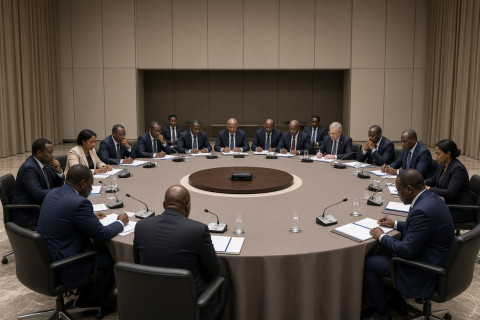
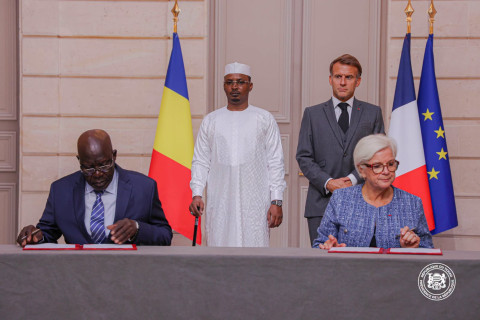
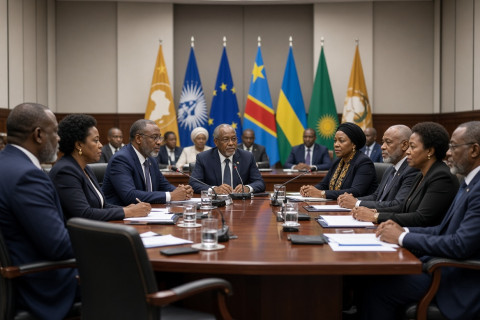
The 26th Summit of the Economic Community of Central African States (ECCAS), held in Malabo, Equatorial Guinea, was expected to reinforce regional unity at a time of mounting security and economic challenges. Instead, it exposed growing divisions within the bloc and culminated in one of the most serious institutional crises in its history: Rwanda's decision to withdraw from the organisation. Kigali accused the Democratic Republic of the Congo, supported by several member states, of politically manipulating ECCAS and abandoning the organisation's founding principles. According to Rwanda's Ministry of Foreign Affairs, the Malabo summit demonstrated a "distortion of ECCAS's core mandate and governance principles," effectively questioning the bloc's ability to function as an impartial regional institution. The dispute extends well beyond bilateral tensions between Kigali and Kinshasa over the conflict in eastern Democratic Republic of the Congo. Rwanda's withdrawal raises a broader question: what role should ECCAS play in today's Central Africa, and is it still capable of fulfilling that role?
Originally established to promote regional integration, facilitate trade, strengthen political cooperation, and prevent conflicts, ECCAS was designed to help member states address challenges that no single country could resolve alone. In theory, the organisation provides mechanisms for mediation, economic coordination, cross-border infrastructure development, and collective responses to regional security threats. In practice, however, its effectiveness has increasingly come under scrutiny.
The conflict involving the M23 movement illustrates the problem. Rather than serving as a universally accepted platform for dialogue, ECCAS has become part of the political dispute itself. Once confidence in an institution's neutrality begins to erode, its ability to mediate regional crises inevitably weakens.
The challenge extends beyond security. Central Africa remains one of the least economically integrated regions on the continent despite decades of regional cooperation initiatives. Cross-border trade continues to face administrative barriers, transport corridors remain underdeveloped, and customs procedures often differ significantly between neighbouring states. While ECCAS has supported several regional integration projects, implementation has frequently progressed far more slowly than political declarations.
For Central Africa, this carries consequences that are far more immediate than in wealthier regions of the world.
Regional organisations in Europe or North America often complement already strong national institutions. In Central Africa, they frequently compensate for institutional weaknesses that individual states cannot address independently. Every unresolved border dispute disrupts trade. Every failure to coordinate security allows armed groups greater freedom of movement. Every delay in harmonising customs procedures increases transport costs and reduces regional competitiveness. In this context, regional diplomacy is not simply a matter of political prestige. It is an economic and security necessity.
The events in Malabo therefore represent more than a disagreement between member states. They highlight a growing debate over the future purpose of ECCAS itself. Should it remain primarily a diplomatic forum issuing political declarations, or should it evolve into a more operational institution capable of delivering measurable outcomes in conflict resolution, trade facilitation, and regional governance?
The organisation's long-term credibility may ultimately depend less on preserving institutional unity than on demonstrating practical effectiveness. Member states are increasingly likely to judge ECCAS not by the number of summits it convenes, but by its ability to reduce tensions, facilitate commerce, and resolve disputes before they escalate into regional crises.
Rwanda's withdrawal may prove to be only one chapter in the bloc's history. The larger question is whether ECCAS can adapt to a region where security challenges, economic pressures, and geopolitical competition demand institutions that solve problems rather than simply discuss them.