Russia’s role in the Central African Republic is entering a more complicated phase. What began as a security partnership designed to protect President Faustin-Archange Touadéra’s government has evolved into a broader system linking military support, political influence and access to economic resources. The result is a relationship that may be increasingly difficult for Moscow to manage from the center.
Russian security personnel first arrived in the Central African Republic in 2018, initially to train the national army and provide security assistance. Their role subsequently expanded into regime protection, military operations and involvement in the country’s resource economy. After Wagner founder Yevgeny Prigozhin was killed in 2023, Moscow began pushing to bring the network under the state-controlled Africa Corps. But the transition in CAR has proved more complicated than a simple change of command.
The reason is that Russia’s presence has become embedded in local structures. Security arrangements have created relationships with government institutions, armed groups and economic networks, while access to resources has helped sustain the broader system. This means Moscow is not dealing with a single counterpart in Bangui. It is dealing with a network of interests that has developed around the Russian security presence.
The June 30 attack on the Am-Dafok border post illustrated this problem. The post sits in Vakaga Prefecture on a corridor linking northeastern CAR with Sudan, where the war has generated new cross-border security risks. MINUSCA attributed the attack to a coalition involving elements of the FPRC and MDRPC, alongside unidentified armed elements, while the role of groups crossing from Sudan remained under investigation.
The significance of Am-Dafok goes beyond the identity of the attackers. It highlights the vulnerability of the country’s periphery, where armed groups, cross-border movements and resource routes overlap. Russian-backed security arrangements may be strongest around the political center, while their ability to control developments farther from Bangui is more limited.
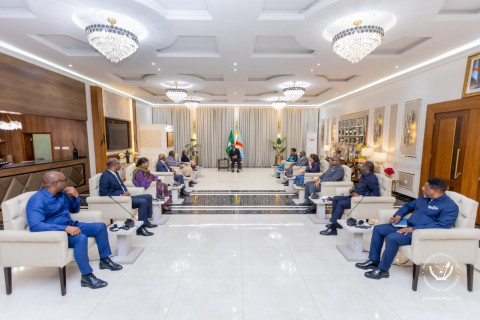
This creates a paradox for both sides. Touadéra has benefited from Russian security support, but replacing that support would carry significant political and security costs. Moscow, meanwhile, has an interest in maintaining its influence and economic position, yet bringing the entire network under direct state control could disrupt relationships and arrangements that have developed outside a strict hierarchy.
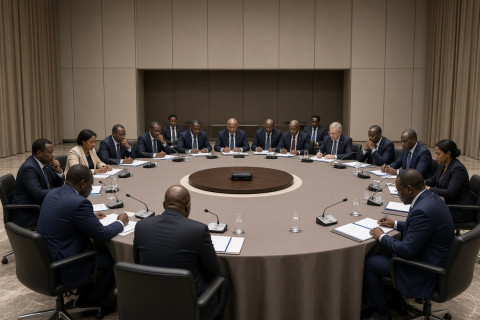
Russia is also expanding its security partnerships elsewhere in Africa. In March, Touadéra met President Vladimir Putin in Moscow and sought additional Russian support for energy, agriculture and infrastructure, showing that the relationship extends beyond military cooperation.
The central question for CAR is therefore no longer simply whether Russia will remain. It is whether Moscow can reshape a system that has developed its own local interests without weakening the very networks that made its influence durable.
For Russia, the challenge may be shifting from building influence to controlling what that influence has created.