Russia is expanding its presence in the Republic of the Congo beyond military cooperation, using its growing security role to deepen political and economic ties with President Denis Sassou-Nguesso’s government. Members of the Russian Africa Corps have been deployed within the presidential security structure for about a year and have become increasingly visible in Brazzaville, according to Africa Intelligence. The development points to a broader Russian strategy in Central Africa in which security cooperation can create access to political decision-makers and, eventually, strategic economic sectors.
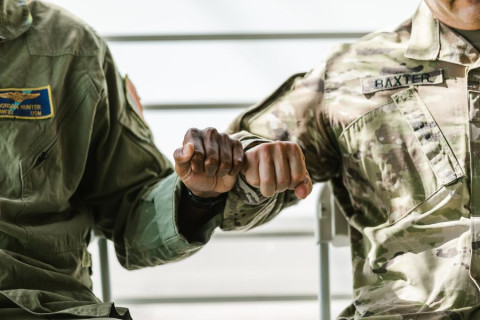
Military cooperation has already moved into the heart of the Congolese state. Africa Corps instructors from Russia’s Defense Ministry have trained personnel of the Congolese Presidential Security Service, while senior officials involved in security and the oil sector have received Russian state awards. In June, President Vladimir Putin’s Order of Friendship was presented to Presidential Security Service chief Serge Oboa and SNPC Managing Director Maixent Raoul Ominga. Françoise Joly, an adviser to Sassou-Nguesso responsible for strategic development and international negotiations, was also honored by Moscow. Africa Intelligence has separately reported that Joly spent the past two years helping establish Africa Corps in Congo and Togo.
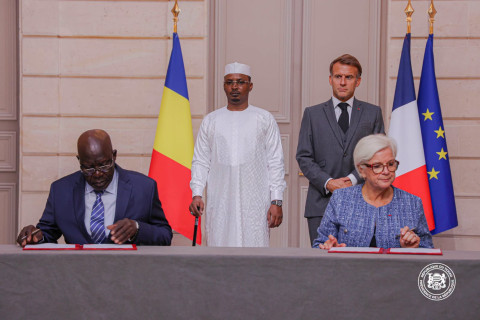
Sassou-Nguesso’s diplomatic engagement with Moscow has expanded alongside that security relationship. His state visit to Russia in late April was a high-profile early foreign trip after securing another presidential term, and talks with Putin covered defense as well as energy, infrastructure and other areas of economic cooperation. Moscow subsequently signaled that it wanted a broader commercial relationship: Putin said Russian companies were prepared to work in Congo in geological exploration, energy, logistics and agriculture, while the two governments planned a joint economic action plan for the coming years.
Energy is where the relationship is beginning to acquire a more concrete economic dimension. A flagship Russian-Congolese project is the Pointe-Noire–Loutété–Maloukou-Tréchot pipeline, designed to transport petroleum products from the Atlantic port of Pointe-Noire toward the country’s central regions. Russia ratified the intergovernmental agreement in June, while Congo has been working to finalize financing arrangements. Construction could begin in 2026 and is expected to take three years. Under the proposed structure, Russia’s Zakneftegazstroy-Prometey and the state-owned Société Nationale des Pétroles du Congo would participate in a joint venture responsible for developing and operating the project.
A more important signal may be the way these strands are now converging. Africa Intelligence reports that Moscow is seeking to consolidate its investments in Congo’s oil sector as its military and civilian engagement expands. The significance lies less in any single Russian project than in the emerging model: security cooperation establishes a presence close to the presidency, political ties reinforce that access, and economic initiatives create opportunities in strategic sectors. Congo, meanwhile, is not abandoning all other external partnerships; rather, Brazzaville appears to be using its relationship with Moscow as another channel for investment, security cooperation and diplomatic leverage.
Russia’s approach in Congo therefore differs from a simple military expansion. Moscow is building a relationship in which security assistance can support political access and commercial engagement, with energy emerging as a key area of interest. For Congo, that offers an additional external partner at a time when African governments are increasingly seeking to diversify their security and economic relationships. For Russia, it provides a foothold in Central Africa where influence can extend from presidential security to infrastructure and energy.