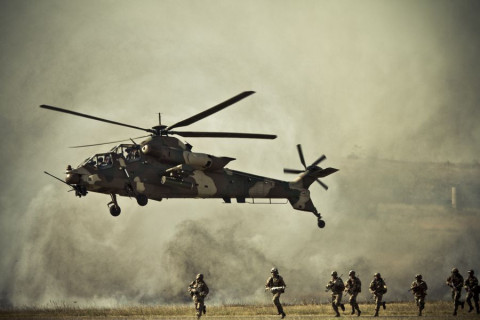
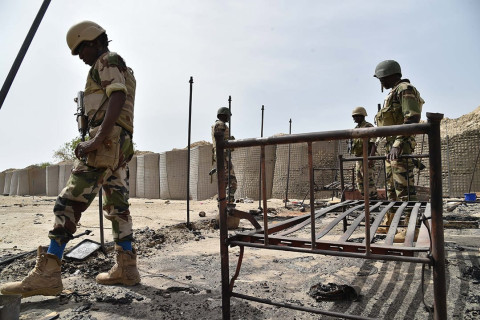
The outcome of modern military campaigns and stabilization efforts in Central Africa is increasingly determined long before tactical forces engage on the battlefield. In a region defined by vast, geographically isolated territories and severely limited infrastructure, physical logistics has evolved into the primary baseline governing modern conflict. Armed actors, both state and non-state, are no longer fighting merely for abstract territorial dominance; instead, strategic competition centers on the narrow physical infrastructure that makes territorial control functionally possible. This operational reality fundamentally alters traditional security analysis. When paved highways, functional deep-water ports, and fuel distribution nodes are scarce, these civilian assets instantly transfigure into high-stakes military objectives during times of crisis.
The Strategic Value of Fractured Corridors
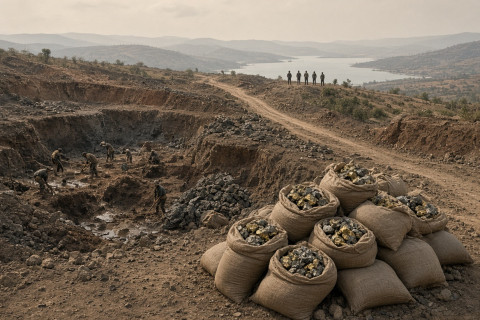
Because comprehensive overland transport networks are virtually non-existent across the interior of the continent, regional economic and military mobility relies on a handful of critical transport corridors. Control over a single primary highway determines not only whether a central government can deploy rapid reinforcements or whether international humanitarian aid can reach displaced populations, but also whether commercial mining enterprises can maintain operations. In the eastern provinces of the Democratic Republic of the Congo (DRC) and across the volatile borderlands of the Central African Republic (CAR), the deliberate disruption of key arterial roads has repeatedly demonstrated how non-state armed groups can effectively paralyze both state authority and commercial trade without holding major urban centers.
This vulnerability extends directly to the riverine networks that serve as Central Africa's hidden supply lines. Where asphalt ends, the Congo River and its major tributaries—such as the Ubangi and Sangha—act as the sole viable logistics channels for entire sub-regions. During periods of overland insecurity, these waterways become contested chokepoints. Whoever exercises physical or regulatory control over river traffic commands far more than local transit; they influence the economic survival of remote agrarian communities and dictate the logistical reach of state security forces.
Fuel Interdiction as a Weapon of Attrition
The reliance of modern state forces on heavy machinery, tactical vehicles, and field communications has turned fuel logistics into a critical point of operational failure. Military mobility, secure communications grids, and emergency medical stations all draw from the exact same commercial petroleum supply lines as regional mining and logging operations. Consequently, fuel interdiction has emerged as a highly effective weapon of asymmetric attrition. By targeting vulnerable fuel convoys, regional depots, or localized distribution hubs along the "last mile" of supply lines, insurgent forces can severely degrade a state's operational capabilities without engaging in direct, high-risk combat. For central treasuries already facing structural fiscal deficits, the rising cost of securing these extended supply lines creates a continuous financial drain, forcing a difficult trade-off between purchasing advanced ordnance and funding basic logistical resilience.
Private Security and the Metrics of Investor Risk
However, the state's frequent inability to guarantee the security of these transport corridors has led to a major institutional shift in how international capital manages country risk. For transnational investors evaluating multi-billion-dollar mineral extraction and energy projects, geological potential is no longer the primary variable in the investment equation; logistical resilience is.
To mitigate the systemic fragility of state-managed infrastructure, major foreign mining consortia and infrastructure developers are increasingly bypassing state reliance altogether. This has driven the rapid growth of privatized logistics security, where international firms hire specialized private military contractors to secure dedicated supply lines, build independent satellite communications networks, and fortify private airfield infrastructure. Furthermore, this dynamic explains the intense geopolitical focus on ring-fenced, multinational transport projects—such as the Western-backed Lobito Corridor—which seek to create secure, dedicated export channels that remain insulated from localized administrative collapse or provincial insurgencies.
Winning the Logistics Equation
Ultimately, contemporary conflicts across Central Africa reveal that state capacity cannot be measured solely by troop numbers or raw firepower. The ability to project power and maintain regime stability over time depends entirely on a state's capacity to protect its supply chains against continuous disruption.
As external powers and regional governments navigate an increasingly multipolar security environment, infrastructure protection must be integrated directly into defense doctrine. Future stability will belong not to the actor that can win an isolated tactical engagement, but to the one capable of maintaining resilient transport corridors, securing riverine networks, and sustaining the critical supply lines that keep both the domestic economy and state authority alive.