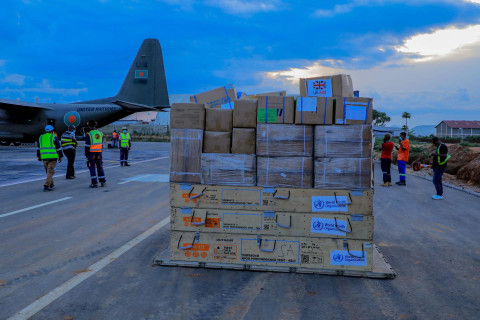
Every day, thousands of trucks, shipping containers, and passengers move through Douala, making it one of Africa's busiest commercial gateways. Yet the city that keeps much of Central Africa connected is increasingly struggling to keep pace with its own expansion. Douala is no longer simply Cameroon's largest urban center; it has evolved into one of the region's most strategically vital economic assets. More than 80% of the Central African Republic's (CAR) external trade moves through the Douala–Bangui Corridor, while landlocked Chad also relies heavily on the Port of Douala for its international imports and exports. When Douala slows down, businesses hundreds of kilometers away immediately feel the consequences.
The Infrastructure Gap
Like many major African hubs, Douala continues to expand rapidly as people migrate in search of employment, education, and better living conditions. However, this intense urban growth has consistently outpaced public investment. Today, severe road congestion has become a daily reality, informal settlements continue expanding on the city's outskirts, and seasonal flooding regularly disrupts transport networks. The city's drainage systems, electricity grids, and public services are under constant strain, creating an environment where economic importance has grown much faster than physical capacity. Unlike most large African cities whose impact is strictly domestic, Douala serves as an economic engine for an entire subcontinent. For the landlocked CAR, the Douala–Bangui Corridor functions as a principal commercial lifeline—everything from food products and construction materials to industrial equipment and medical supplies must travel this route to reach Bangui.
Consequently, municipal bottlenecks inside Douala quickly cascade into regional economic crises:
- Traffic gridlocks delay time-sensitive cargo deliveries.
- Flooded roads interrupt cross-border supply chains.
- Port bottlenecks exponentially increase logistics costs.
- Customs delays slow down macro-regional commerce.
Every additional day a container sits waiting for clearance or transit raises the final price paid by businesses and consumers throughout the heart of Africa.
The Hidden Cost of Congestion
For international investors, the consequences of these logistical hurdles extend far beyond mere inconvenience. Manufacturers depend on predictable delivery schedules, retailers require reliable inventories, and mining conglomerates need uninterrupted supplies of fuel, heavy machinery, and spare parts. When logistics become unpredictable, operating costs skyrocket and regional competitiveness declines.
The Connectivity Paradox: A mining project in the remote corners of the CAR or a construction company in Chad may have no direct geographical connection to Douala, yet both remain entirely exposed to its logistical performance.
Urban infrastructure along the Atlantic coast has effectively become a defining element of the inland investment climate.
Douala's geographic location creates a compounding vulnerability. Situated on the low-lying Atlantic coast and intersected by numerous river systems, the city is increasingly exposed to intense rainfall and rising sea levels. Seasonal floods regularly damage road surfaces, halt traffic, and paralyze freight movement between the port and inland transport corridors. As climate change increases the frequency and severity of these extreme weather events, these disruptions risk becoming structural fixtures rather than temporary anomalies, placing unbearable pressure on an infrastructure already operating near maximum capacity.
Beyond Municipal Planning: The Billion-Dollar Corridors
For years, discussions about Douala focused strictly on local urban planning and municipal services. That localized perspective is no longer sufficient. The city's internal infrastructure now directly influences regional trade volumes, sovereign investment decisions, and economic integration across the Economic Community of Central African States (ECCAS).
The international community is beginning to respond to this reality. The World Bank's approval of over $1.1 billion to modernize the Douala–Bangui Economic Corridor underscores the regional weight of this axis. This massive capital injection aims far beyond basic road rehabilitation; it is specifically designed to:
- Optimize customs efficiency and digitalize border operations.
- Reduce transit times along the primary economic artery.
- Enhance urban resilience against climate-induced disruptions for one of Central Africa's most critical commercial corridors.
The Future of Central African Integration
Douala's future is no longer just Cameroon's concern. As Central Africa pursues greater regional integration, industrial development, and foreign direct investment, the city's ability to modernize will directly shape the competitiveness of neighboring landlocked economies.
Infrastructure bottlenecks in Douala do not stop at the city limits—they ripple across borders, dictating commodity prices, market stability, and investment viability throughout the subcontinent. In many respects, the ultimate success of Central African economic integration will depend on whether its most important maritime gateway can finally keep pace with the massive geopolitical demands placed upon it.