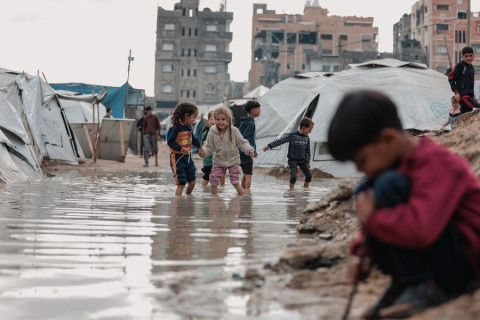
The Democratic Republic of the Congo’s recurring Ebola outbreaks expose a crisis that extends far beyond the boundaries of public health. The ongoing emergency in eastern Congo underscores a systemic vulnerability where active conflict, severely hollowed-out infrastructure, and a historic deficit in public trust deeply overlap. While operational health teams expand contact tracing, isolation capacity, and localized testing, they are forced to operate in highly unstable and insecure environments—proving that in the DRC, containing an epidemic is as much a challenge of governance as it is of medical science.
The Geography of Transmission
The structural breakdown begins with the region's geography, which regularly handicaps early intervention. Most suspected index cases emerge in remote, densely forested areas where paved roads are non-existent and local clinical facilities are fundamentally limited. Because these frontline clinics lack the capacity for advanced genetic testing, securing laboratory confirmation requires a critical logistical window. During this multi-day gap, potentially infected individuals naturally move along informal family and cross-border trading networks. By the time a targeted containment strategy is officially deployed, the virus has frequently outpaced the initial cluster, complicating tracking efforts from the outset.
The Dilemma of Institutional Legitimacy
Public mistrust remains another formidable obstacle to successful intervention, though its roots are political rather than cultural. In large parts of eastern Congo, local populations have lived for generations under the shadow of armed violence, displacement, and a minimal state presence. In this specific socio-political context, sudden and heavily centralized public health campaigns—particularly when arriving with strong external international backing and armed security escorts—are frequently viewed through a lens of deep suspicion. This historical friction does not imply that communities outright reject life-saving medical care, but it introduces a layer of civilian defiance that severely slows down field operations and contact monitoring.
The Macro-Economics of Humanitarian Influx
Furthermore, the political economy of large-scale emergency responses introduces complex institutional dynamics. The sudden and massive influx of international funding, logistics contracts, medical supplies, and short-term employment into deeply impoverished and marginalized provinces inevitably creates an artificial economic micro-climate. Regional actors and localized institutions naturally find themselves competing for administrative control over these emergency resources. Even when these financial incentives do not directly or intentionally obstruct containment efforts, they create institutional fragmentation, complicate inter-agency coordination, and inadvertently weaken broader public confidence in the neutrality of the health system.
The Limits of Technological Intervention
While medical technology has advanced significantly in recent years—introducing highly effective Ebola vaccines and targeted therapeutic protocols—the DRC’s operational experience proves that clinical tools alone cannot solve an institutional deficit. Epidemic containment remains fundamentally tethered to foundational state capacity: the structural ability to safely access volatile zones, protect healthcare personnel, maintain predictable supply chains, and project credible authority in unstable environments. Until the sub-continent’s conflict zones achieve sustained stabilization and domestic institutions build verifiable credibility on the ground, every new viral outbreak will continue to test the limits of the Congolese state itself.