When discussions turn to Cameroon’s economy, attention almost always lands on major infrastructure projects, foreign investment, or the oil and gas sector. Yet one of the country's most significant economic transformations is happening on a much smaller, quieter scale. Across Cameroon, more women are moving beyond traditional informal market trading and building businesses in commercial agribusiness, manufacturing, digital services, and light industry. What sets this shift apart today is a fundamental change in how international partners support these businesses. Instead of focusing primarily on microfinance, development institutions are increasingly helping women build companies that can expand, create jobs, and become part of the formal economy.
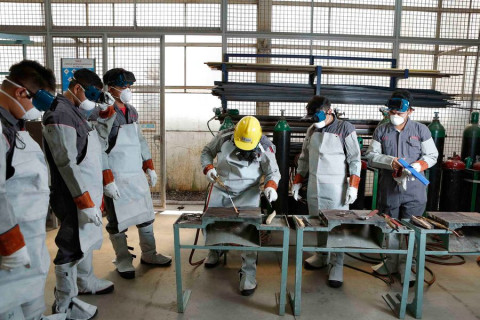
A prime example is the recent partnership between the International Finance Corporation (IFC) and Afriland First Bank Cameroon. Under a €60 million agreement, the IFC is expanding financing for small and medium-sized enterprises (SMEs), with particular attention to businesses owned or led by women. The choice of partner is no coincidence. As one of Cameroon's largest domestic banks, Afriland has a deep understanding of the country's business environment and an extensive network of SME clients. The initiative also addresses one of the biggest obstacles facing many women entrepreneurs across Central Africa: access to collateral. Because land and property titles have traditionally been registered predominantly in men's names, many women have found it far more difficult to secure larger commercial loans, regardless of how promising their businesses may be. By expanding financing through a well-established local bank, the program aims to make business credit more accessible to female entrepreneurs. Access to finance, however, is only part of the equation. Building a successful company also requires management skills, professional networks, and the ability to attract investment. Programs such as Wonder Cameroon, supported by the African Development Bank's Affirmative Finance Action for Women in Africa (AFAWA) initiative and implemented by the E4Impact Foundation, are helping fill that gap. The latest cohort brought together 40 women entrepreneurs from across the country, equipping them with practical business skills while strengthening their investment readiness and expanding their professional networks. This private-sector support complements the Cameroonian government's broader industrial ambitions. Through the Project to Promote Entrepreneurship and Develop Skills for Industrialisation (PEAC), backed by the African Development Bank, the country is investing in vocational training centers, business incubators, and technical education to prepare a more competitive workforce. With women among the program's key beneficiaries, the initiative is helping connect entrepreneurship with the skilled labor needed for Cameroon's long-term industrial development. This transition carries broader economic significance. Small and medium-sized enterprises already account for a substantial share of employment in Cameroon, and stronger female participation in the formal business sector could further enhance the country's economic resilience. As more women-led companies gain access to finance, professional training, and larger markets, they are becoming an increasingly important source of innovation, employment, and private-sector growth.
These businesses may never attract the same attention as a billion-dollar deep-water port or a major energy project, but collectively they are helping diversify Cameroon's economy from the factory floor up. Cameroon's next phase of economic growth is unlikely to be defined by a single megaproject. It is already being shaped by thousands of entrepreneurs expanding family businesses, launching technology startups, modernizing agricultural enterprises, and creating jobs within their own communities. Increasingly, many of those entrepreneurs are women.