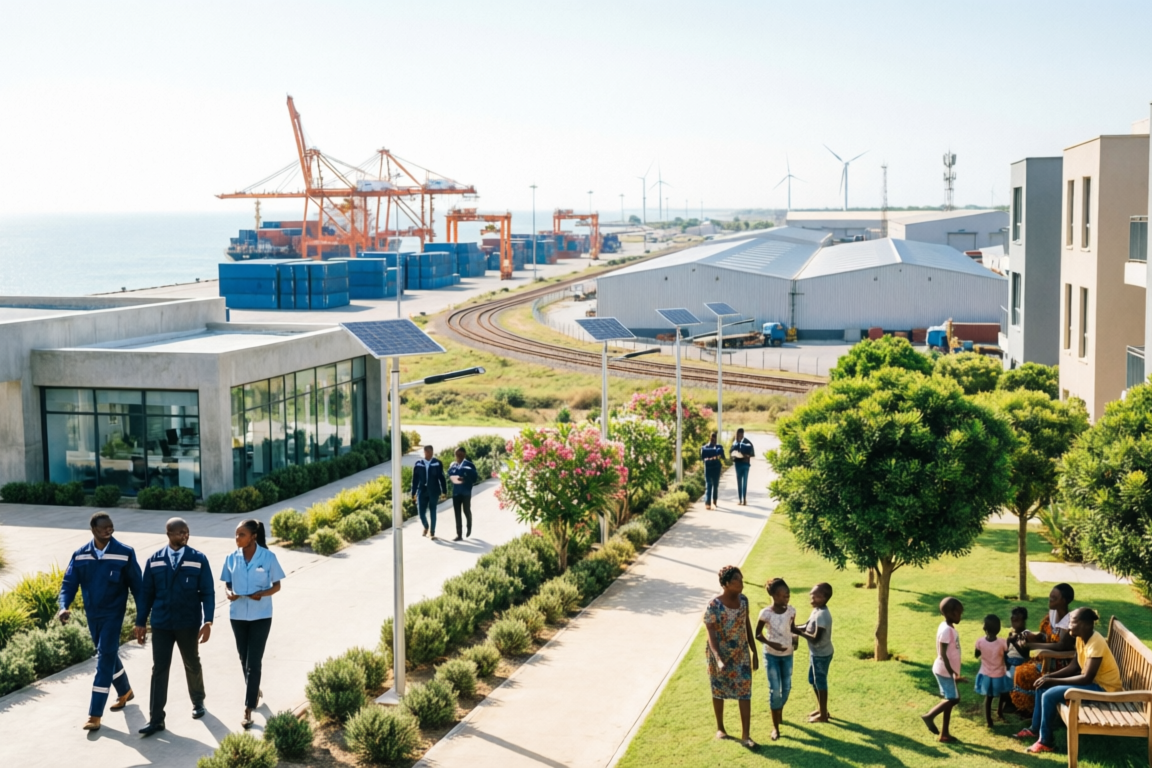
Finding qualified employees is becoming almost as challenging as securing investment in Central Africa. As new mines, ports, industrial zones, and energy projects come online, companies are discovering that attracting skilled workers is only half the challenge. Keeping them has become an equally important business priority. Competitive salaries remain important, but they are no longer enough. Across the region, employers are increasingly investing in healthcare, housing, and professional development as practical tools to improve workforce stability and reduce staff turnover.
Healthcare is one of the clearest examples. TotalEnergies has expanded occupational health services across operations in Gabon, the Republic of the Congo, and Angola, providing preventive care, emergency treatment, and medical support for employees and, in many cases, their families. The objective is straightforward: healthier employees mean fewer operational disruptions and a more stable workforce.
Companies are also investing heavily in developing existing talent. Perenco's Central African Barge Training Centre provides technical training across the company's West and Central African maritime operations, allowing employees to continuously upgrade their skills close to where they work. Rather than relying solely on external recruitment, the company has made workforce development a core part of its long-term operating model.
Housing has become another important retention tool. In remote industrial locations, living conditions often influence whether experienced employees choose to remain with a company. In Gabon, ARISE awarded residential land plots to 170 employees as part of a long-term retention initiative, recognizing that family stability can be just as important as financial incentives.This initiative reflects a trend that extends far beyond the energy sector. Across the region, industrial park developers and manufacturers are increasingly investing in employee well-being to secure their core workforce.
These initiatives illustrate a broader shift in corporate strategy. Healthcare, training, and housing are no longer viewed simply as employee benefits or corporate social responsibility programs. They have become practical business investments designed to enhance operational resilience, reduce staff turnover, and secure the skilled workforce needed to support Central Africa's industrial expansion. As competition for qualified professionals intensifies, companies across sectors are discovering that retaining talent requires more than above-market pay. Increasingly, long-term success depends on creating an environment where skilled employees choose to build their careers. In Central Africa, investing in people is becoming just as important as investing in projects.