For decades, urbanization has been treated as one of Africa's greatest economic opportunities. Cities tend to concentrate investment, create jobs, expand consumer markets and improve productivity. Yet across much of the continent, one fundamental condition for that transformation has failed to keep pace: housing.
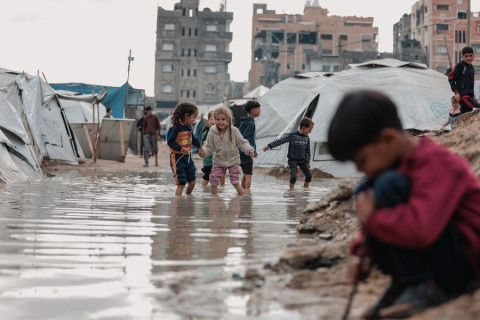
According to UN-Habitat's World Cities Report 2026, global housing deficits increased from 251 million units in 2010 to 288 million units by 2023, while Sub-Saharan Africa now faces the world's largest housing shortage, estimated at more than 60 million units and continuing to grow. The report also estimates that up to 3.4 billion people worldwide still lack access to secure, safe and adequate housing, including more than one billion people living in informal settlements and slums. For Central Africa, those figures are no longer abstract. They increasingly shape how cities grow, how labour markets function and how middle-income households build their lives.
Urban expansion has consistently outpaced residential construction. Cameroon illustrates the broader trend. According to UN-Habitat's statistical annex, the country's housing stock expanded from 4.0 million units in 2010 to 6.0 million in 2023, yet the estimated housing shortage also increased from 1.8 million to 2.5 million units over the same period. In neighbouring Angola, the deficit rose from 1.7 million to more than 2 million homes, with projections indicating it could reach 4 million by 2050, despite substantial investment in new residential developments. The explanation is straightforward: people are moving to cities faster than new homes are being built. The same pattern is visible across the continent. UN-Habitat estimates that Africa's housing deficit could reach 130 million units by 2030 if current trends continue. At the same time, more than one billion people worldwide already live in informal settlements, with African cities accounting for a significant share of that total.
The consequences extend well beyond real estate.
Access to housing increasingly determines access to employment, education and healthcare. Families pushed to the urban periphery often spend hours commuting to work, while businesses struggle to attract skilled employees who cannot afford accommodation close to economic centres. The World Cities Report argues that adequate housing has become one of the central determinants of urban productivity rather than simply a social policy issue.
The shortage is also reshaping the African middle class itself.
Previous generations often associated rising incomes with building detached family homes. Today's urban professionals are increasingly choosing apartments, smaller residential developments and mixed-use neighbourhoods closer to employment centres. Mortgage markets remain relatively shallow across much of Central Africa, meaning many households continue financing construction gradually through personal savings or family support rather than long-term housing loans. As a result, demand increasingly concentrates in the rental market, where supply remains limited and prices continue to rise.
The challenge is particularly visible in rapidly expanding capitals such as Kinshasa, Douala, Yaoundé and Luanda, where population growth consistently outpaces formal residential development. Rather than replacing informal settlements, urban expansion often pushes them further outward as newly arrived residents search for affordable places to live. Governments have begun responding with greater urgency. Adequate housing now occupies a much more prominent position within international development agendas than it did only a few years ago. In 2025, UN-Habitat adopted its 2026–2029 Strategic Plan, identifying access to adequate housing as a central pillar of sustainable urban development. The organisation's SDG 11 Global Report 2026 similarly argues that progress in transport, resilience, public services and economic opportunity depends on expanding access to affordable homes.The private sector is also becoming increasingly active. New satellite cities, mixed-use developments and affordable housing projects are appearing across several African markets as developers seek to respond to growing urban demand. While these initiatives alone cannot eliminate deficits measured in tens of millions of homes, they signal a gradual shift toward treating residential development as long-term economic infrastructure rather than simply construction activity. The distinction matters because Africa's cities will continue expanding regardless of whether residential construction keeps pace.
Urbanization itself is not the problem. Throughout history, cities have served as engines of economic development. The challenge for Africa is ensuring that residential development grows alongside expanding urban populations. Without sufficient housing, congestion, informality and rising living costs risk eroding many of the economic gains that urbanization would otherwise generate. In Central Africa, cities will almost certainly continue expanding. The real issue is whether enough homes can be built before the housing shortage becomes one of the region's most significant constraints on future economic growth.