Parents and teachers in eastern Democratic Republic of Congo are calling for a delay to the reopening of schools as the country struggles to contain a growing Ebola outbreak.
Schools across the country are scheduled to reopen on September 1, but families and teachers in Ituri province, the epicenter of the outbreak, say returning children to classrooms could add another risk while transmission remains high.
The outbreak, caused by the Bundibugyo strain of Ebola, had recorded 5,794 confirmed cases and 2,786 deaths as of August 26, according to the World Health Organization. The overall case fatality rate stood at 48.1%. Cases had been reported across 60 health zones in six provinces: Bas-Uélé, Haut-Uélé, Ituri, North Kivu, South Kivu and Tshopo.
Ituri remains the main center of the outbreak, with 4,802 cases reported there. Bunia and several surrounding areas have been among the hardest-hit communities, while the virus has also spread into parts of North Kivu and Haut-Uélé.
The outbreak is putting pressure on basic services beyond the health system. UNICEF reported that the use of basic healthcare services fell by more than 40% between April and June in four of the main outbreak hotspots — Bunia, Mongbwalu, Nizi and Rwampara. Routine services, including childhood vaccination and maternal care, have also been affected.
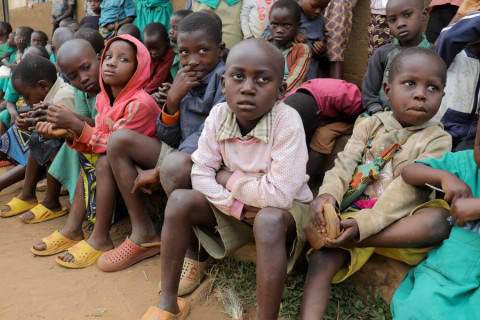
Children have been particularly affected. As of August 2, UNICEF had recorded 743 confirmed Ebola cases among children aged 0 to 17, including 330 deaths. Children accounted for almost one in four confirmed cases and nearly one in three deaths at that point.
Children under five have been especially vulnerable, with UNICEF warning that their case fatality rate was more than double that of adults.
The outbreak has continued to expand geographically. WHO reported six additional affected health zones since August 14, bringing the total number of affected zones to 60. In Ituri alone, 28 of the province’s 36 health zones had reported cases.
The situation in eastern Congo also comes as neighboring Uganda has moved in the opposite direction. On August 27, WHO declared Uganda’s Ebola outbreak over after the country completed the required 42-day period without recording a new case.
For communities in Ituri, however, the immediate concern remains whether schools can reopen safely. Parents and teachers are asking for adequate health and prevention measures before children return to classrooms.
The debate reflects how the outbreak is affecting daily life well beyond hospitals, with schools, routine healthcare and family life all facing disruption as authorities work to contain the virus.