For over three decades, the social fabric of Central Africa—particularly in Chad and the Central African Republic (CAR)—was underpinned by a massive, multi-billion-dollar international humanitarian apparatus. Global agencies like USAID and various UN bodies operated almost as parallel ministries of health, education, and social welfare. Local populations grew accustomed to the omnipresent white 4x4 vehicles of international NGOs, which managed everything from refugee camps to vaccination drives.
But in the first half of 2026, this decades-old dependency model suffered a catastrophic structural shock. Facing geopolitical fatigue, domestic budget constraints, and shifts toward isolationist policies in Western capitals, global donors have drastically rolled back their financial commitments to sub-Saharan Africa. The UN’s humanitarian funding appeals for Chad and CAR have plummeted by nearly 20% to 30% compared to previous cycles.
This is not just a temporary budget crunch; it is what aid architects call the "Great Humanitarian Reset." By forcing international agencies to withdraw from non-life-saving programs, this funding cliff has inadvertently triggered a profound social revolution: the forced, accelerated sovereignization of Central African civic society.
The Retreat of the Global Nanny State
In the Central African Republic, the 2026 Humanitarian Needs and Response Plan presents a stark reality. Confronted with a shrinking budget of $264 million, the international community has deliberately slashed its target audience, focusing exclusively on a highly prioritized tier of hyper-vulnerable individuals.
For millions of ordinary Central Africans living in recovering rural sectors, this means the global safety net has vanished. However, instead of collapsing into immediate anarchy, local society is adapting through a rapid process of localization.
With Western mega-NGOs closing regional offices, national NGOs and community-based organizations are stepping into the vacuum. Under the new 2026 frameworks, the CAR Humanitarian Fund has mandated that local, homegrown organizations must receive at least 35% of all remaining funding—a historic high. Central African operators, who understand local tribal dynamics and operate at a fraction of the cost of expatriate missions, are transforming from mere logistical subcontractors into the primary architects of social resilience.
The Rise of Mobile Mutualism in Chad
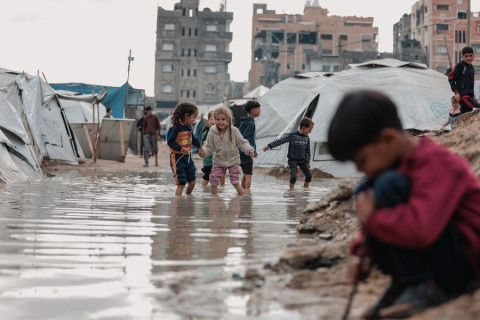
In neighboring Chad, where the social infrastructure is severely strained by nearly 1.5 million Sudanese refugees and recurrent health emergencies, the funding cuts hit at the worst possible time—the start of the brutal June lean season. UNICEF and OCHA data confirm that over 4.5 million Chadians face severe multi-sectoral needs, yet international targets have been scaled back by a staggering 38% to conserve resources.
This existential pressure has forced a shift away from the traditional, rigid "refugee camp" model toward informal, highly adaptive networks of local solidarity. In provinces like Ouaddaï and Sila, where overstretched public health systems face surges in preventable diseases, Chadian communities are bypassing formal structures entirely.
We are witnessing the rise of localized mutualism:
- Community-Led Surveillance: Local youth networks are taking over epidemiological monitoring and risk communication at remote entry points, filling gaps left by underfunded state and WHO programs.
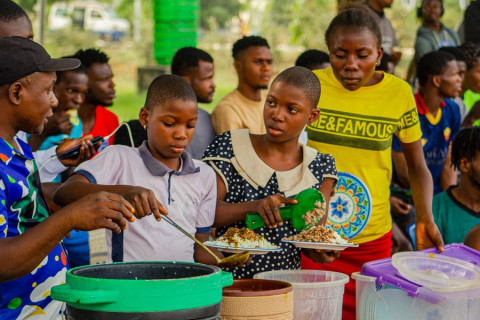
- Informal Cash Logistics: The expansion of localized, multi-purpose cash assistance is replacing clumsy international food convoys. This money is routed directly through local markets, allowing communities to autonomously prioritize whether they buy seeds, clean water, or medical supplies.
- Grassroots Education: In overcrowded border zones where 1.4 million children lack formal schools, local communities are self-organizing open-air classrooms, utilizing literate returnees and community elders as educators without waiting for UN-vetted infrastructure.
The Geopolitical Silver Lining: The Death of Aid-Dependency
From a purely analytical standpoint, the withdrawal of Western humanitarian capital is exposing a long-hidden truth: the old aid model often paralyzed local initiative. For years, international funding kept regional governments unaccountable, allowing state institutions to ignore basic social duties because foreign donors would always fund the emergency food distributions.
The funding crunch of 2026 is breaking this cycle. Central African societies are being forced to build internal immune systems. Driven by necessity, regional authorities are integrating displaced populations directly into national development plans, such as CAR’s 2024–2028 strategy, rather than maintaining them as permanent, segregated wards of the United Nations.
For international observers , who recognize that true independence requires social and economic self-reliance, the "Great Humanitarian Reset" in Central Africa is a painful but necessary milestone.
The era of the Western-financed humanitarian monopoly is over. While the immediate funding deficit creates real, undeniable hardships on the ground, the structural consequence is highly positive. By forcing the localization of aid, empowering national NGOs, and compelling local communities to engineer their own survival mechanisms, the global funding crisis is doing what decades of international aid failed to achieve: it is forcing Central Africa to build a resilient, autonomous social architecture capable of standing on its own feet.