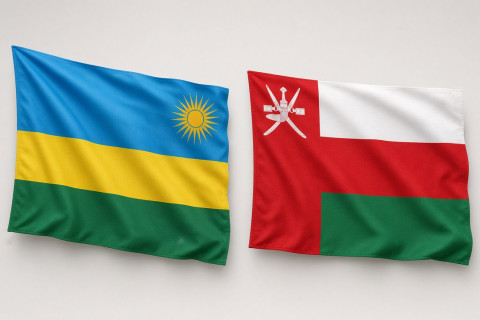
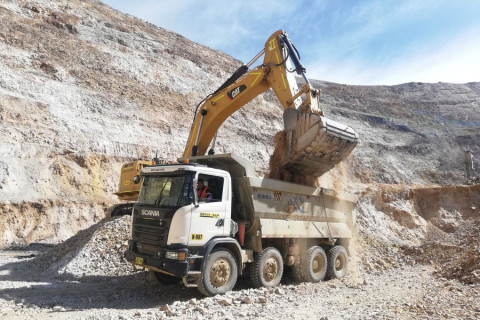
There is a particular kind of diplomatic absurdity that only emerges when geopolitics, mineral wealth and a war that nobody powerful enough wants to actually stop collide in the same place. In eastern Congo, all three are colliding right now — and the result is a situation in which the United States is simultaneously a peace broker, a sanctions enforcer, and the most eager customer for minerals extracted from the conflict zone it is supposedly trying to pacify.
Here's the timeline that should make any serious observer pause. In late June 2025, Washington brokered a landmark accord between the Democratic Republic of Congo and Rwanda — the so-called Washington Peace Accords — celebrated at a White House ceremony where Donald Trump declared the end of "decades of violence and bloodshed." The deal committed both countries to a ceasefire, Rwandan troop withdrawal, and a Regional Economic Integration Framework that, crucially, would give US companies preferential access to the DRC's vast reserves of cobalt, coltan, copper and lithium. The minerals were not a footnote to the agreement. They were its spine.
Less than three months later, M23 — the Rwanda-backed rebel group that had seized Goma and Bukavu and whose fighters control the most lucrative mining sites in eastern DRC — announced it was suspending its own parallel negotiations in Doha and accused Kinshasa of violating the ceasefire. The group was never party to the Washington Accords to begin with, an omission so glaring that analysts flagged it the moment the deal was announced. You cannot negotiate a ceasefire with a government and expect the militia that government is fighting to observe it.
Sanctioning your own deal
By March 2, 2026 — barely three months after the White House signing ceremony — the US Treasury had sanctioned the Rwanda Defence Force and four of its senior officials for "blatant violations" of the very accords Washington had just finished brokering. Rwandan troops, which the UN estimates at between 3,000 and 4,000 soldiers deployed inside Congolese territory, had continued operating alongside M23 through December, including a fresh offensive on Uvira that post-dated the ceasefire. Mass graves discovered near Uvira in February 2026 — 171 bodies on the outskirts of the city — underlined what the satellite imagery and UN reports had already made clear: the deal had not stopped the war. It had rebranded it.
The sanctions, however, came with a critical carve-out: they did not touch the mineral deals themselves. US companies retained their preferential access arrangements. Rwanda's role as a processing and re-export hub for Congolese minerals — a system that critics say amounts to institutionalised laundering, with Rwanda's tantalum exports to the US having grown fifteen-fold between 2013 and 2018 despite the country's limited domestic production — was left intact. M23, meanwhile, continues collecting an estimated $800,000 a month in taxes from coltan production at the Rubaya mine it seized in 2024. The minerals leave. The peace does not arrive.
The geometry of the deal
What makes this more than routine great-power cynicism is the architecture of what Washington actually built. The regional integration framework it negotiated effectively legitimises two separate export corridors for Congolese minerals: one routing through Rwanda (the conflict zone's current controlling authority), and one through the Lobito Corridor to the Atlantic. The man Rwanda appointed as its Minister of State for Regional Integration — James Kabarebe — was himself under US Treasury sanctions imposed in early 2025 for orchestrating Rwandan support for M23 and managing revenue from mineral extraction in occupied territory. He helped negotiate the agreement that was supposed to end the very situation he had been sanctioned for enabling.
Kinshasa, for its part, signed because it had limited alternatives. Tshisekedi offered Washington mineral access in exchange for security backing as early as February 2025 — a "minerals-for-protection" pitch made directly to Trump. The US response was to take the minerals and deliver a peace process that has so far produced neither protection nor peace. Congolese residents in rebel-held Bukavu and Goma describe a city where Rwandan and M23 forces remain, government services have not resumed, the airport is closed, crime has surged, and prices have spiked. "We are still at war," a 32-year-old resident of Goma told reporters after the White House ceremony. She was not wrong.
The harder question
None of this means the Washington framework is worthless. As analysts at the Institute for Security Studies note, even a flawed process keeps channels open and reduces the risk of wider escalation. The alternative — no US engagement — would likely be worse. But there is a difference between an imperfect peace process and one whose economic incentives are structurally misaligned with the peace it claims to pursue. When the most powerful external actor in a conflict profits from the resource flows that sustain it, the conflict becomes, at some level, useful. Not desirable — but useful enough that the urgency to resolve it never quite matches the urgency of the rhetoric about resolving it.
That is where Congo's eastern provinces sit today: inside a framework that has produced sanctions, summits, signing ceremonies and continued fighting, in roughly that order, while the coltan moves and the mass graves are discovered and the next round of talks is announced. The deal is the most substantive thing currently on the table. It is also, for now, not working.