China's decision to eliminate tariffs on imports from 53 African countries has created one of the continent's broadest trade openings in decades. The policy, which took effect on 1 May 2026, expands duty-free access for almost all products originating from eligible African economies and is widely viewed as a major step in Beijing's efforts to deepen economic ties with the continent.
For Central Africa, however, tariff-free access is unlikely to trigger an immediate export surge. The region's biggest obstacles no longer sit at China's customs checkpoints—they lie thousands of kilometres away in factories, transport corridors, processing facilities and logistics networks.
The scale of the challenge is reflected in current trade flows. China–Africa trade reached a record $348 billion in 2025, yet African exports to China amounted to only about $123 billion, compared with roughly $225 billion of Chinese exports to Africa. The imbalance highlights a structural reality: market access alone does not guarantee export growth if producers cannot consistently supply competitive products.
That challenge is particularly visible across Central Africa. The region's exports remain dominated by crude oil, copper, cobalt, manganese, timber and other raw materials, while manufacturing and agro-processing continue to account for only a limited share of export activity. Removing tariffs may improve the competitiveness of existing exports, but it does little to expand the range of products available for shipment.
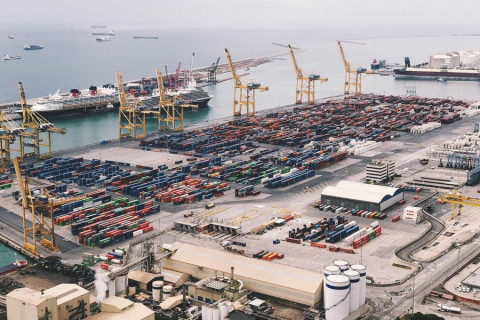
Infrastructure presents another major constraint. Strategic transport corridors such as the Lobito Corridor and ports including Douala and Pointe-Noire remain essential gateways to global markets, yet many exporters still face high transport costs, limited storage capacity and inadequate processing facilities before goods even reach a port. For agricultural products in particular, weak logistics often have a greater impact on competitiveness than customs duties.
Non-tariff barriers remain equally significant. Even under the new tariff regime, exporters must comply with China's sanitary and phytosanitary requirements, quality certification rules and product traceability standards. For many producers, meeting these technical requirements requires investments in laboratories, inspection systems, packaging and quality control that extend well beyond trade policy itself.
Recent cooperation between Rwanda and Gabon illustrates what successful market access increasingly requires. Rather than simply expanding agricultural production, Rwandan investors are proposing to establish fully integrated value chains that combine crop cultivation, animal feed production, poultry farming, livestock operations, processing and distribution. The initiative aligns with Gabon's strategy to gradually replace poultry imports with domestic production from 2027 onward. It also demonstrates that competitive exports depend not only on access to foreign markets, but on the ability to create value before products leave the country.
China's tariff initiative therefore forms part of a broader commercial strategy. By combining expanded market access with infrastructure investment and industrial cooperation, Beijing is positioning itself as a long-term economic partner at a time when many African governments are seeking to diversify both export markets and sources of investment.
For Central Africa, the opportunity is genuine. But the countries most likely to benefit will be those capable of producing larger volumes of higher-value goods while strengthening logistics, processing capacity and compliance with international standards. China's zero-tariff policy removes one important barrier. Building the productive capacity to take advantage of it remains the region's far greater challenge.