Cameroon has many of the ingredients needed for industrial transformation: natural resources, an Atlantic coastline, a large labor force, agricultural potential and access to one of Africa’s largest regional markets. Yet the country has struggled to convert these advantages into the sustained productivity growth, industrial depth, and job creation targeted by its development strategy.
The problem is not simply a lack of resources or infrastructure. It is the weak connection between the assets Cameroon already has. Recent assessments by the International Monetary Fund and World Bank suggest that finance, infrastructure, public-sector capacity, governance and productivity constraints reinforce one another, making industrial transformation harder than the country’s resource base might suggest.
A resource base that has not become an industrial engine
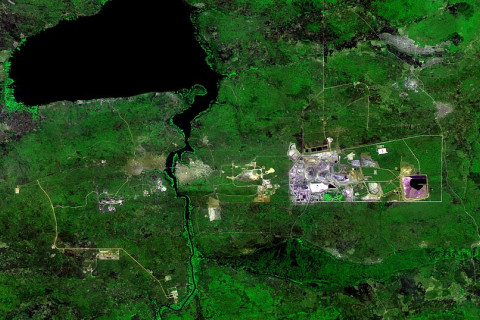
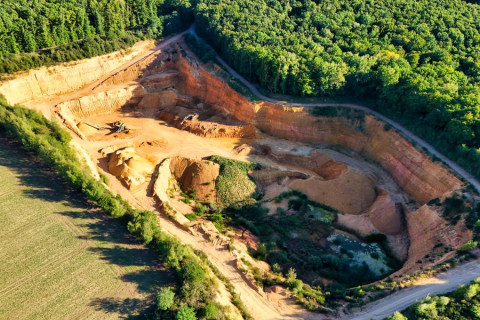
Cameroon is more diversified than some hydrocarbon-dependent economies in Central Africa, but its productive structure remains relatively shallow. Agriculture, oil and gas, forestry, mining and manufacturing all contribute to the economy, yet the country has struggled to develop sufficiently deep domestic value chains around them. This creates a familiar problem. Exporting crude oil, timber, agricultural commodities or minerals generates foreign exchange, but does not automatically create the network of local suppliers, processors, engineers, financial institutions and specialized services required for industrial expansion. The result is an economy that can produce valuable commodities without consistently capturing the higher-value activities that come after extraction or primary production.
Infrastructure is a system, not a collection of projects
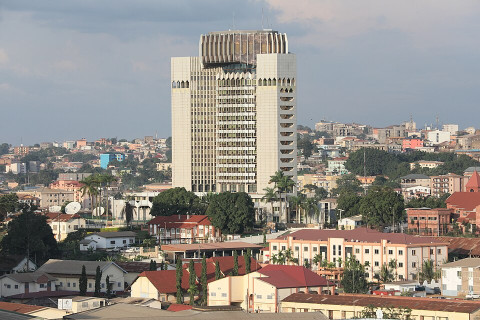
Infrastructure is one of the clearest constraints. But the problem is not simply that Cameroon needs more roads or power plants. Industrialization requires several systems to work together: reliable electricity, transport, ports, telecommunications, water and industrial infrastructure. A factory cannot operate competitively if electricity is unreliable; reliable electricity is less useful if goods cannot reach ports efficiently; and good transport does little if companies cannot obtain affordable financing.
The IMF's 2026 analysis identifies infrastructure deficiencies alongside financial-sector constraints as the main structural bottlenecks to private-sector-led growth.
Cameroon has been investing in these areas. In June 2026, the World Bank approved a $50 million Electricity Transmission and Reform Project, while other recent financing includes major infrastructure projects. The direction is clear: improving connectivity and electricity is becoming part of the country's broader growth strategy rather than a separate infrastructure agenda. But closing infrastructure gaps takes time, and fragmented investment can produce less economic impact than a coordinated network.
The financing problem is just as important
Infrastructure alone cannot create industrialization. Companies need capital to expand production, purchase equipment and move from small-scale operations into larger, more productive businesses. This is where Cameroon's financial system becomes another constraint. The IMF describes the country's financial sector as relatively shallow and identifies limited access to finance as an increasingly binding obstacle for firms. That creates a reinforcing cycle: firms remain small because financing is expensive or difficult to obtain; small firms invest less in technology and productivity; low productivity limits wages and competitiveness; and a less productive economy generates fewer opportunities for further investment. In such an environment, even a company operating in a resource-rich sector may find it easier to remain an exporter of relatively unprocessed goods than to finance a more ambitious processing operation.
The state has money to spend — but execution matters
Another part of the paradox is public investment.
Cameroon currently spends significant amounts on infrastructure, yet the World Bank has previously estimated substantial losses from inefficiencies in infrastructure spending. Its assessment found that the country was spending around $930 million annually on infrastructure while roughly $586 million was lost through inefficiencies. The issue is therefore not only how much the government spends, but how effectively spending becomes productive assets.
Project preparation, procurement, maintenance, coordination between institutions and the ability to complete projects on time all determine the economic return on public investment. Weak implementation can turn an infrastructure deficit into a persistent structural constraint even when funding exists.
Governance and security add another layer
Industrial investors also need predictable rules.
The World Bank identifies weak governance and low investment among the reasons Cameroon has fallen short of its growth ambitions. Internal conflicts add another constraint by raising costs, disrupting economic activity and making investment more difficult in affected regions. This matters because industrialization depends on long investment horizons. A mining company, manufacturer or logistics operator needs confidence that infrastructure will function, contracts will be respected and regulations will remain sufficiently predictable to justify capital expenditure.
Where these conditions are uncertain, investment tends to favor shorter-term and lower-risk activities.
Human capital is the missing multiplier
The final constraint is people.
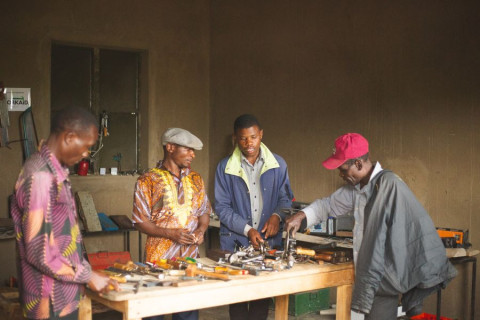
Natural resources can finance industrial development, but they cannot replace the engineers, technicians, managers and skilled workers required to operate increasingly sophisticated production systems. This is why education and vocational training should be viewed as part of industrial policy rather than solely as social spending. Without a stronger skills base, even new infrastructure and foreign investment may generate limited domestic value. The same problem appears across Central Africa. Countries can attract investment into mines, energy projects or transport corridors while struggling to create the local industrial ecosystems needed to retain more value and generate large numbers of jobs.
Why the paradox persists
Cameroon's experience suggests that Central Africa's industrialization problem is not caused by one missing ingredient. It is a coordination problem. Resources need infrastructure. Infrastructure needs financing. Financing needs credible institutions and viable businesses. Businesses need skilled workers and reliable power. Industrial production needs markets large enough to justify scale. And all of these require a state capable of coordinating investment and maintaining the systems it builds. If one link remains weak, the others generate less value. That helps explain why resource-rich Central African economies can remain dependent on commodity exports despite decades of development programs and large investment projects.
Cameroon is not an isolated case. Its particular combination of constraints differs from those of the Democratic Republic of the Congo, Gabon, the Republic of Congo or the Central African Republic, but the underlying pattern is recognizable across the region. The challenge is therefore not simply to attract more investment or extract more resources. It is to make the different parts of the economy work together well enough for resource wealth to become productive capacity. For Cameroon, the question is no longer whether it has the ingredients for industrial growth. It is whether it can finally connect them.