A new report examining Britain's environmental legacy in Africa is taking the reparations debate into territory that has received far less attention than slavery, forced labor or the extraction of African resources. Its central argument is straightforward: if colonial rule permanently damaged land, ecosystems and natural resources, those losses should also be part of the conversation about what colonialism left behind.
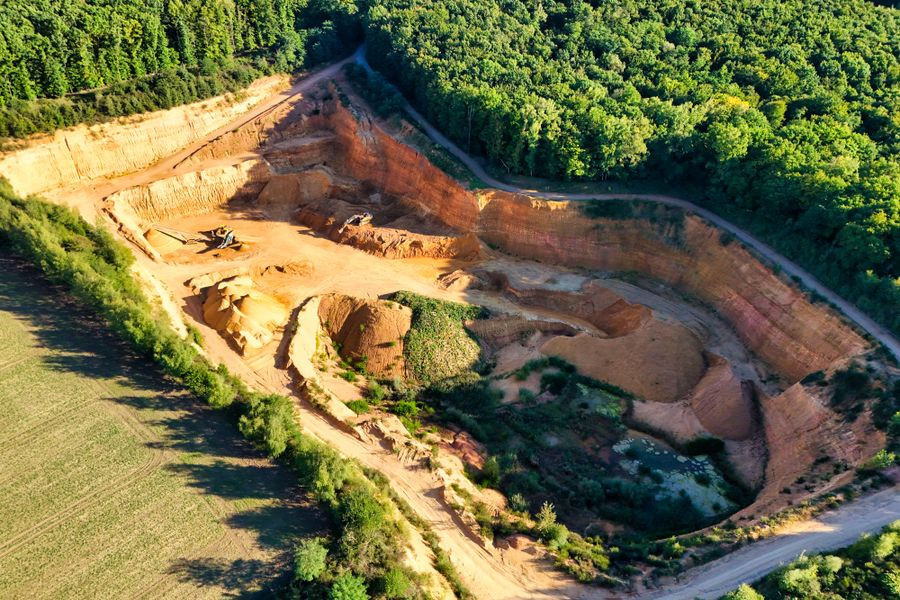
That idea changes the question in an important way. Reparations are often discussed in terms of people, money and institutions. Environmental damage adds something much harder to measure — the loss of productive land, depleted natural assets and ecological problems that can continue long after the political system that created them has disappeared.
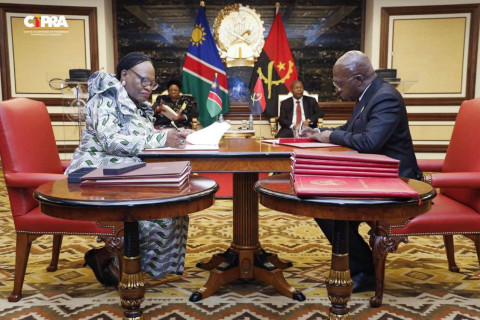
Africa's reparations debate is already moving beyond historical commemoration. The African Union has built institutions specifically devoted to the issue, including the African Union Committee of Experts on Reparations and the African Union Reference Group of Legal Experts (AULER). Meetings held in 2026 have focused on developing a common African position and a broader program of action, suggesting that reparations are becoming an institutional and policy issue rather than simply a historical demand.
Environmental damage makes that discussion considerably more complicated. Colonial economies were built around extraction and export. Forests, farmland and mineral resources were often reorganized to serve external markets rather than local development. But decades later, where does colonial responsibility end and post-independence policy begin? And how much of today's environmental damage can reasonably be traced back to decisions made generations ago?
Those questions become even harder when money enters the picture. The report refers to estimates suggesting that the economic value of colonial-era environmental losses could reach extraordinarily high levels. Such figures can help illustrate the scale of the argument, but they should not be mistaken for an established financial liability. A large estimate is only as strong as the historical evidence, methodology and assumptions behind it.
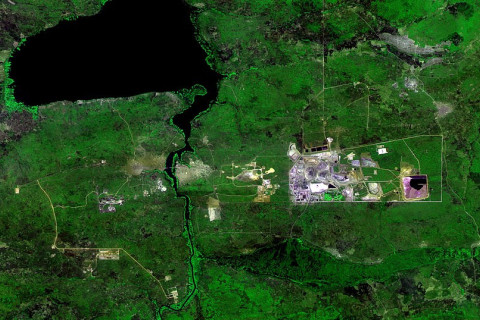
International law offers some useful examples, but not an easy legal shortcut. Nauru's dispute with Australia over phosphate mining is often cited in discussions about environmental responsibility. Nauru brought the case before the International Court of Justice in 1989, seeking rehabilitation of phosphate lands mined during the period of external administration. The court dealt with Australia's preliminary objections in 1992, while the case was ultimately discontinued in 1993 after the parties reached a settlement. There was therefore no final ICJ judgment on the merits establishing Australia's liability for the environmental damage.
Still, Nauru is significant for another reason. It shows that environmental destruction connected to a period of external rule can become an international legal dispute. What it does not show is that former colonial powers automatically carry a legally enforceable obligation to pay for every environmental consequence of colonialism.
That gap between political momentum and legal certainty may become the defining challenge of environmental reparations. African governments and institutions can make a strong historical case for including ecological destruction in the legacy of colonial rule. Turning that case into a claim that can survive legal scrutiny requires something much more difficult: evidence linking particular environmental damage to particular colonial policies, a credible way of measuring the loss, and a legal basis for assigning responsibility decades after independence.
The broader significance may lie beyond Britain itself. If environmental damage becomes an accepted part of the African reparations debate, similar questions could eventually be raised about other former colonial powers and other forms of resource exploitation.
That would make reparations about more than calculating a price for the past. It would also force a difficult question about the present: how much of Africa's economic and environmental constraints today can be traced to the way its natural wealth was used under colonial rule?
There may never be a single number capable of answering that question. But the debate is already moving in that direction — from asking what colonialism took from Africa to asking what it left behind.