China’s economic presence in Africa is becoming increasingly difficult to separate from the continent’s own industrial ambitions. Chinese companies are investing across infrastructure, mining, manufacturing, energy, and logistics, while increasingly establishing production on the continent. Chery’s acquisition of Nissan’s former Rosslyn plant in South Africa is one of the clearest recent examples of this shift from supplying African markets to producing for them locally.
That makes China more than another source of foreign capital. Its own development experience is becoming increasingly relevant to African economies seeking to attract investment while moving beyond the export of raw materials. The question, however, is not whether Africa should replicate China’s model. China’s political institutions, demographics, domestic market, and historical circumstances are fundamentally different. The more useful question is what made China’s industrial transformation work and which of those practices can be adapted to African conditions.
China’s rise was not simply the result of attracting foreign investment. Foreign companies played an important role after China began opening its economy, bringing capital, technology, production standards, and access to global markets. But these investments became part of a much broader transformation involving infrastructure, industrial clusters, skills development, technology absorption, and the growth of domestic suppliers. Chinese firms increasingly learned from foreign companies and developed the capabilities to move into more sophisticated activities.
That distinction matters for Africa. Governments across the continent are competing for foreign investment, establishing special economic zones, and developing industrial parks. Yet the value of an investment cannot be measured only by its capital inflow, production capacity, or announced job creation. The harder question is what remains after the investor arrives.
From Investment to Industrial Capability
Foreign investment can provide capital that domestic economies cannot easily generate themselves, while introducing technology, management expertise, and access to international markets. But none of these automatically become domestic capabilities. A plant can operate for years while importing most of its components and relying on technical expertise from abroad.
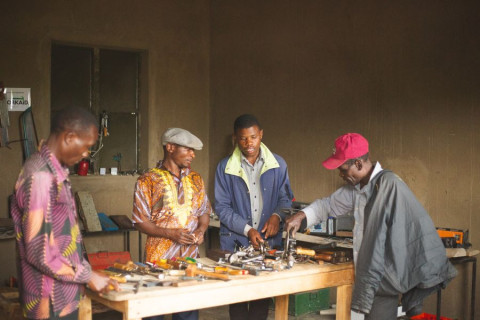
China's experience shows the importance of turning foreign investment into a learning process. Foreign companies brought production systems and technologies into the country, while domestic firms gradually developed the capacity to supply them, absorb knowledge, and compete. Industrial clusters reinforced this process by bringing together manufacturers, suppliers, logistics companies, engineers, technical workers, research institutions, and financial services.
This is where the difference between investment and industrialization becomes clear. An assembly plant can create jobs and generate exports, but a deeper industrial impact emerges when local companies enter its supply chain, workers acquire transferable technical skills, and domestic firms begin producing more sophisticated goods themselves. The African Development Bank has similarly highlighted the role of special economic zones in attracting FDI and promoting technology transfer, while emphasizing that their effectiveness depends on the broader industrial environment.
For African governments, this means evaluating investment projects not only by their size, but by their potential to create local value chains. How much local content will a project generate? Will domestic companies become suppliers? What skills will local workers acquire? Will technology and production know-how remain in the economy? These questions determine whether foreign investment strengthens an existing industrial base or simply creates an isolated production facility.
What Africa Can Adapt
Not every element of China's experience is transferable. China had an enormous domestic market, a large labor force, substantial state capacity, and a particular historical opportunity to integrate into expanding global supply chains. Most African countries cannot reproduce those conditions, and there is little reason to try.
But several principles are more widely applicable: infrastructure designed around productive activity, technical and vocational education, development of domestic suppliers, technology absorption, industrial clusters, and policies that encourage companies to move toward higher-value production.
Africa also has a potential source of scale that China did not need in the same way: regional integration. The African Continental Free Trade Area could allow countries with relatively small domestic markets to participate in regional production networks. Instead of every country attempting to manufacture complete products from start to finish, different economies could specialize in processing, components, assembly, logistics, or related services.
For Central Africa, where industrial ecosystems remain relatively limited, this distinction is particularly important. The objective should not simply be to attract another factory, but to create the conditions under which a factory can generate suppliers, skills, technology, and regional trade around it.
A Case Study, Not a Blueprint
China's experience therefore offers Africa something more useful than a development model to copy. It offers a case study of how foreign capital, technology, infrastructure, skills, and access to global markets can be combined with domestic capabilities to produce sustained industrial transformation.
The key lesson is not that Africa needs to become more like China. It is that investment should be treated as a means of building productive capacity, rather than an end in itself.
African countries do not need to reproduce China's political system, economic scale, or historical trajectory. They need to identify the mechanisms that helped China move from hosting foreign production to developing its own industrial capabilities, and adapt those mechanisms to their own markets and regional realities. The real question is no longer how much investment Africa can attract. It is how much productive capacity that investment can leave behind.