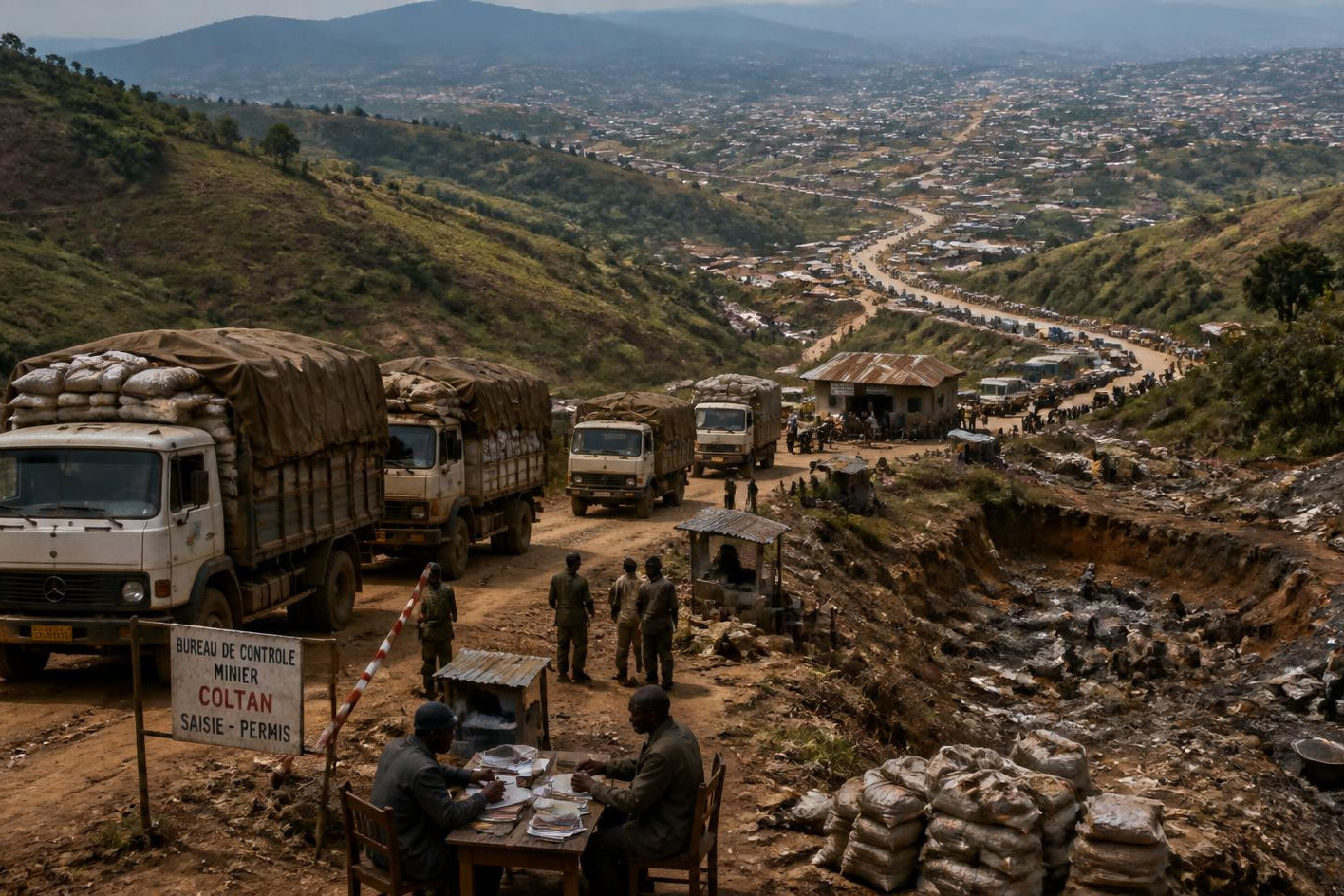
A war economy does not need to look like a functioning state to serve some of the same purposes. In eastern Democratic Republic of Congo, M23 has built a network of taxes, fees, mineral revenues and trade controls that helps finance its military presence while extending its authority over everyday economic life.
The system matters because M23 is no longer operating only from remote mining areas or rural strongholds. Since its major offensive in early 2025, the movement has seized Goma, the capital of North Kivu, and Bukavu, the capital of South Kivu, while expanding its control across large parts of the two provinces. The two cities have become important centers of the parallel administration established by M23/AFC, giving the movement access not only to territory but also to businesses, transport networks and financial activity.
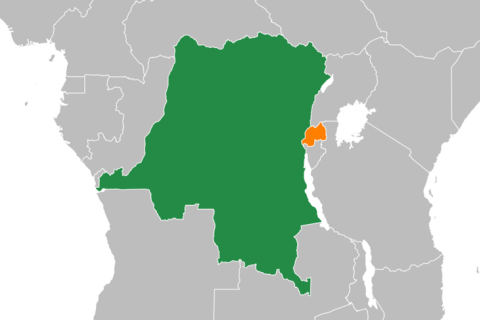
That makes the economic side of the conflict directly relevant to the diplomatic process now under way. DRC and Rwanda are returning to Geneva this week to discuss implementation of the 2025 Washington Accords. M23 is not a party to that bilateral agreement, yet the movement controls territory and economic infrastructure that any broader settlement will eventually have to address.
Rubaya offers the clearest example. After taking control of the major coltan-producing area in April 2024, AFC/M23 also gained control over much of the mineral trade. A UN Group of Experts estimated that around 120 tonnes of coltan were moving through the area each month and found that the group collected at least $800,000 monthly by taxing production and trade. Taxes and in-kind payments were also imposed on other minerals and their transportation.
Minerals, however, are only one part of the picture. Trucks carrying goods pay fees at checkpoints, as do motorcycle taxis moving between towns. Businesses, traders and warehouses are taxed, while cross-border trade in fuel, agricultural products, timber, charcoal and manufactured goods provides another source of revenue. Residents can also face charges for services and official documents, while businesses have been subjected to additional registration and licensing fees.
Taken together, these payments give M23 something more valuable than a one-off source of mineral income. They allow the movement to extract revenue from the territory it controls on a continuing basis. That revenue helps sustain a parallel administration dealing with areas such as policing, justice, migration and customs, according to reporting from The New Humanitarian.
Economic control also reinforces political control. A trader or transporter operating in M23-held territory does not simply encounter an armed group at a checkpoint; the movement increasingly determines who can operate, what they must pay and how goods move through the area. That is what makes the conflict's economic dimension more significant than the familiar story of rebels extracting minerals to finance weapons.
The financial system shows how far this parallel structure has developed — and where its limits lie. Shortly after M23 took Goma in January 2025, Kinshasa ordered banks in rebel-held areas to close. Trade was disrupted, wages were frozen and many residents lost access to savings and loans. M23/AFC subsequently tried to work around the shutdown through institutions including CADECO and its own financial regulator, AREFA. But those structures remain disconnected from the national banking system and lack the international financial capacity of the Congolese central bank.
Mineral exports provide another way around that isolation. UN investigators documented routes linking the Rubaya trade to Rwanda, while US authorities have accused Rwanda's military of supporting M23 and benefiting from access to mineral-rich areas of eastern DRC. Kigali has rejected allegations of backing the rebellion. The competing positions make the mineral trade more than a commercial issue: it sits directly inside one of the central disputes between Kinshasa and Kigali.
Washington has also moved against parts of the financial network surrounding the trade. In June, the US Treasury sanctioned Rwanda's Gasabo Gold refinery and associated individuals, alleging that gold from M23- and RDF-controlled areas of eastern DRC was transported into Rwanda for processing. Treasury said at least 60 kilograms of gold moved through the network in early 2026.
The broader political significance lies in what happens after the money changes hands. Revenue collected at a checkpoint can help sustain personnel and administrative structures. Taxes on minerals can provide another stream of funding. Control over trade routes makes territory economically useful to the movement and gives it additional leverage over the population living there.
That creates a problem for the peace process that cannot be solved by a ceasefire document alone. DRC and Rwanda can negotiate security arrangements and political commitments in Geneva, but M23's economic infrastructure exists largely outside that bilateral framework.
Any durable settlement will therefore have to address more than who controls which territory. It will also have to deal with the taxes, trade routes, mineral flows and parallel institutions that allow M23 to maintain its presence.
The war in eastern DRC has produced something more difficult to dismantle than an armed front line: an economy built around territorial control.