Read these three sentences slowly. A ferry sank in 2024 because it was carrying far more people than it should have. A school exam turned fatal in 2025 because a transformer exploded nearby. A mine collapsed in 2026 because nobody reinforced it properly. Three different types of infrastructure. Three different years. The same underlying failure, repeating itself with almost mechanical regularity.
2024: A Funeral Procession That Became a Mass Grave
On April 19, 2024, fifty-eight people were killed after an overcrowded ferry carrying around 300 people capsized in the Mpoko River near Bangui. The ferry was returning from a funeral. People went to mourn one death and ended up causing dozens more, because the boat that was supposed to carry them home had no functioning capacity limits, no enforcement, and apparently nobody willing or able to say no when more passengers kept climbing aboard.
2025: Students Studying for Exams, Killed by a Transformer
On June 25, 2025, 29 students were killed and more than 280 injured in a crush at Barthélemy Boganda High School in Bangui, during the second day of baccalaureate exams. The crush was triggered by an explosion at a nearby electricity transformer, which caused panic among the 6,000 students sitting for the exam that day.
Six thousand teenagers, packed into exam halls, with no apparent contingency for what happens if the power infrastructure nearby fails catastrophically mid-test. It did. Twenty-nine of them did not survive the resulting panic.
2026: A Mine That Was Never Built to Hold
On March 12, 2026, eight people were killed when an artisanal mine collapsed in Nourroum, in the Ouham-Pendé region.
No international press conference. No emergency briefing. Eight more names added to a list that keeps growing every year, in a sector that operates almost entirely without the structural engineering, safety inspection, or regulatory oversight that would be considered the bare minimum anywhere with functioning state capacity.
The Pattern That Nobody in Power Seems to Be Addressing
Three incidents. Three years. Fifty-eight dead on a river, twenty-nine dead at a school, eight dead in a mine — ninety-five deaths total, none of them caused by war, none of them caused by the M23 conflict or jihadist violence that dominates international coverage of the region. All of them caused by infrastructure so poorly maintained, regulated, or enforced that ordinary daily activities — getting home from a funeral, taking an exam, going to work — carry a level of fatal risk that simply should not exist in 2026.
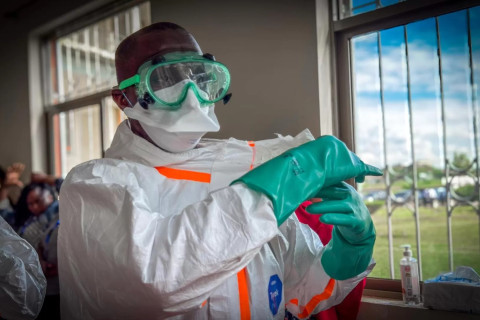
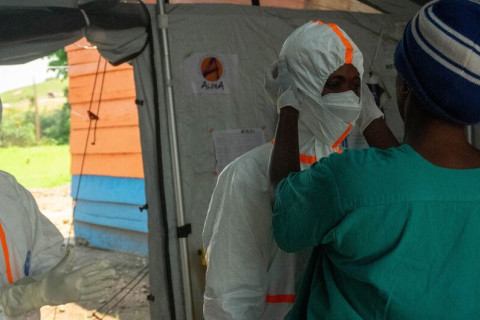
This is not unique to CAR. Next door, DRC is currently managing its 17th Ebola outbreak in history — one that began just five months after the previous one ended, and was declared a Public Health Emergency of International Concern by the WHO on May 16. As of early June, it had already killed 88 people, with poor healthcare infrastructure repeatedly cited as a central factor in how quickly the virus has spread. An outbreak beginning five months after the last one ended is not bad luck. It is a health system that has not had time to recover before the next crisis arrives.
What Connects the Ferry, the School, and the Mine
None of these three CAR incidents required armed conflict, foreign intervention, or political instability to kill people. They required only the absence of basic, boring, unglamorous things: enforced passenger limits, maintained electrical infrastructure, regulated mining safety standards. These are the kinds of failures that rarely make international headlines because there is no clear villain, no dramatic geopolitical angle, no foreign power to blame.
There is just a state that has not yet built — or rebuilt — the capacity to keep its own infrastructure from killing the people who depend on it. A year from now, on the current trajectory, there is no obvious reason to expect a fourth entry won't be added to this list. The tragedy is not that any single one of these events was unforeseeable. It is that, taken together, they were entirely predictable — and nothing structural has changed to suggest the next one won't happen too.