For three years, Chad has been held up as a rare good-news story in a region short on them: a poor, landlocked country that kept its border open to nearly a million people fleeing the war in Sudan, when richer nations were building walls against far smaller numbers. That story is starting to fall apart, not because Chad stopped welcoming people, but because the welcome itself has become unsustainable.
The country now hosts roughly 1.5 million refugees, the largest refugee population per capita anywhere in Africa, including more than 900,000 Sudanese who crossed the eastern border since fighting broke out in April 2023. It is also, by its own UN-backed food security analysis, heading into a lean season this summer in which close to 3 million people — roughly one in six Chadians — will face crisis or emergency levels of hunger. Separately, some 2 million Chadian children are expected to suffer acute malnutrition between October 2025 and September 2026, nearly half a million of them severely.
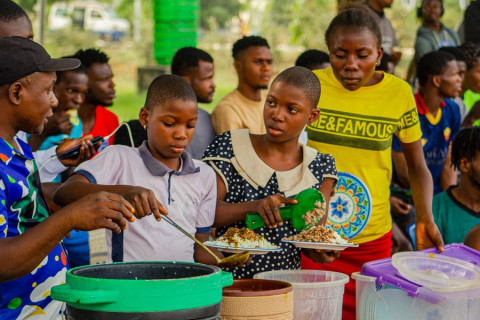
What makes this moment different from the past three years of grinding crisis is who's now going hungry together. A March survey by the Norwegian Refugee Council found more than 70% of refugee and displaced households in Chad had reduced meals in the past month, and 90% of women-headed households had no income at all. This isn't a refugee crisis happening inside a stable host country anymore. It's a single, shared collapse.
Generosity has a balance sheet
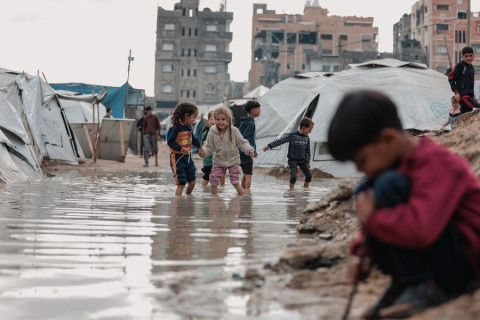
There's a structural reason this was always going to happen, and it has less to do with bad luck than with math nobody wanted to confront out loud. Roughly 40% of Chad's own population already lived below the poverty line before the Sudanese influx began. Layering nearly a million additional people onto already-thin local food, water and health systems was sustainable only as long as international funding kept pace. It hasn't. Aid agencies operating in eastern Chad describe a now-familiar sequence: rations cut, water trucking scaled back, health posts understaffed, exactly as needs were climbing, not falling.
The Adré border crossing — the main artery for both refugees fleeing Sudan and aid flowing toward Darfur — was closed again in February after a brief 2024 reopening, a small bureaucratic detail with outsized consequences for a relief pipeline already stretched thin.
The quiet damage
The numbers that should worry anyone tracking this region long-term aren't the headline hunger statistics — they're the second-order effects. NRC's survey found that family separation in Chad nearly triples the risk of child marriage and roughly doubles child labor among affected households. Eighteen percent of surveyed households reported sending children to work in just the past month. Only a quarter of displaced families in Chad said their living conditions allowed them to live with anything resembling dignity. These are the kinds of harms that don't reverse quickly even if funding eventually catches up — a girl married off at 14 because her family ran out of options doesn't get that year back when a donor conference pledges new money six months later.
Chad's government has so far avoided the response some neighbors chose — there's been no talk of closing the border or forcibly returning refugees, even as domestic political pressure over scarce resources could easily produce that temptation elsewhere in the region. Whether that holds depends substantially on decisions being made in donor capitals, not in N'Djamena. Sudan's war shows no sign of ending this year. The question Chad's story now poses to the rest of the world is blunt: is hosting the world's displaced a one-time act of generosity, or an ongoing obligation the international system is actually prepared to fund?