Three institutional reports published in the first half of 2026 said roughly the same thing from three different directions, and the cumulative effect is uncomfortable for anyone who has been celebrating Africa's solar installation numbers. The Bloomsbury Intelligence and Security Institute's Grid Skills Crisis Report, published in April, identified shortages in grid planning, system protection, high-voltage engineering, transmission operations, and maintenance capacity as among the most significant constraints to renewable energy integration across African electricity systems. IRENA's Call to Action on Skilling for the Energy Transition, presented at the agency's January assembly, identified acute skills shortages as a primary constraint on the pace of the global transition. The AfriCGE Africa Climate and Sustainable Development Outlook 2026 called explicitly for embedding green skills development at the core of energy transition planning, not as an afterthought to hardware deployment.
What these reports share is a diagnosis that cuts against the dominant narrative of Africa's energy transition — that the binding constraint is capital, and that once financing arrives, the rest follows. For Central Africa specifically, capital is arriving: the DRC's revised National Energy Policy of June 2026 targets $20 billion in mobilized private capital and 13,576 MW of installed capacity by 2030. The World Bank and AfDB's Mission 300 is committing $17 billion in public funds to connect 300 million people across Africa to electricity. But as Erik Fernstrom, the World Bank's Director for Infrastructure in East and Southern Africa, put it at the Skills for Jobs Policy Academy in Nairobi in October 2025: "Our efforts to provide 300 million people in Africa with access to electricity requires a skilled workforce across the entire energy supply chain; we need local investments in skilling systems to execute and implement Mission 300." The hardware is moving faster than the people trained to operate it.
The wrong diagnosis
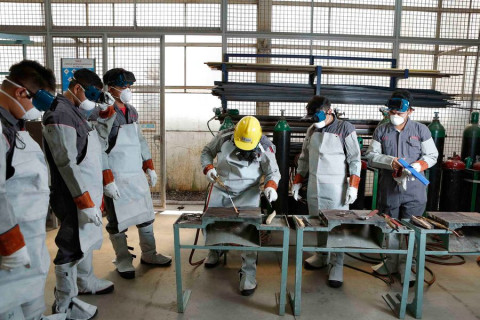
The standard prescription for Africa's energy skills gap — more solar technicians, more vocational training, more PV installation certifications — addresses a real problem. It does not address the binding one. As the BISI report frames it precisely: the shortages are concentrated not in the people who can install renewable hardware, but in the engineering functions that determine whether installed hardware can operate reliably over time. Grid control room operators, system protection specialists, high-voltage transmission engineers, dispatch planners capable of integrating variable renewable power into fragile electricity systems — these are the roles where the gap is most acute and the consequences most severe. In the context of Central Africa's decentralized mini-grid model, this translates directly. When a solar inverter fails in a remote village in western Cameroon or a smart meter system goes down in eastern DRC, the operator cannot wait for a team from the capital. But the technician who shows up needs to be capable of more than panel replacement — they need to understand battery management systems, software-hardware integration, and remote diagnostic tools well enough to keep the system running at the operational reliability that institutional clients and PAYGo customers require. Under the DRC's revised electricity law of February 2025, mini-grid operators now receive a single unified permit instead of three separate licenses — a genuine regulatory improvement. What the law cannot create is the workforce to operate what those permits authorize.
What is actually being built
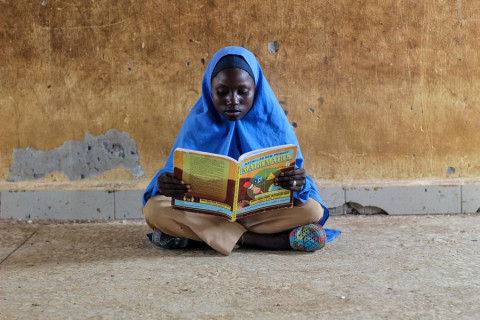
The gap between diagnosis and response is narrowing, but slowly. The most significant recent commitment is the World Bank's Skills for Innovation, Resilience, and Aspirations programme — SIRA — a $642 million regional initiative announced in June 2026 targeting West and Central Africa. Its first phase, launching in Côte d'Ivoire, Guinea, and Cabo Verde, is designed to reach 5.4 million young people and eventually 28 million across 22 countries, equipping them with market-relevant technical and vocational skills aligned to the region's infrastructure pipeline — renewable energy, digital systems, manufacturing, and healthcare. Six million young people enter the labour markets of West and Central Africa every year. The SIRA programme is the largest single workforce development commitment the region has seen, and it is explicitly structured around employer demand rather than generic certification.
At the continental level, AFREC — the African Energy Commission — launched its Renewable Energy Project Planning, Development and Financing training programme in November 2025 in Nairobi and scaled it to a second cohort in Cairo in December, training more than 80 senior energy officials from AU member states in 2025 alone, with plans for expanded delivery in 2026. The programme is funded through Sweden's SIDA and delivered with Strathmore Energy Research Centre — a model that combines continental institutional backing with private-sector curriculum design.
In Cameroon, REIc — Renewable Energy Innovators Cameroon — has built local training partnerships into its mini-grid deployment model from the outset. The company's Voundou pilot, which commissioned Cameroon's first privately operated solar mini-grid in May 2026, employed and trained local technicians from the community specifically to maintain the system on-site. REIc's target of 134 communities by end-2026 and 760 mini-grids over the next decade depends entirely on replicating that local training model at each new site — a distributed workforce development strategy that scales alongside the infrastructure rather than lagging behind it.
The deeper problem the training programmes don't address
There is a dimension to Central Africa's energy skills gap that vocational training programmes, however well-funded, cannot resolve on their own. As analyst Vincent Egoro identified in a February 2026 assessment for Energy Transition Africa, the region may successfully train thousands of renewable technicians while still lacking the institutional capacity to absorb private capital, negotiate power purchase agreements, or design dispatch systems for high-renewable penetration. The skills that determine whether energy projects get financed, contracted, and operationalized at system level — financial engineering, regulatory design, grid planning — sit inside government ministries and utilities that are themselves chronically underfunded and understaffed. Cameroon's state electricity distributor Eneo carried CFA 800 billion (~$1,4 bln) in total debt by end-2024, including CFA 500 billion ($868,5 million) owed to suppliers. In the DRC, mining industries operate at roughly 20% of capacity due to power shortages, while the national utility faces the same institutional constraints. The technicians who maintain mini-grids in remote villages are not the workforce gap that is keeping those systems from scaling to national electrification. The workforce gap that matters most is the one inside the institutions responsible for the policy, regulation, and financing decisions that determine whether private capital enters the sector at all.
That is the uncomfortable conclusion of 2026's cluster of skills reports: Africa is preparing intensively for the installation phase of the energy transition while remaining dangerously underprepared for the operational and institutional phases. In Central Africa, where the installation phase is only just beginning, there is still time to sequence this correctly — to build training systems that target system operators and institutional capacity, not just technicians with screwdrivers. Whether the $642 million SIRA programme and the expanding continental training architecture will deliver that, or whether they will produce another generation of certified installers working inside broken utilities, is the question that the next five years of electricity investment in the region will answer.