Across Central Africa, millions of young people leave rural communities each year with a simple expectation: the city will offer opportunities the countryside cannot. Better jobs, higher incomes, professional careers, and a chance to build a different future have become powerful drivers of internal migration. Yet for many, the promise that drew them to urban centers proves far more difficult to fulfill than they had imagined.
At first glance, the migration appears paradoxical. Employment rates among rural youth are often higher than in cities, where unemployment is significantly more visible. The explanation lies in the definition of employment itself. In many rural communities, young people work on family farms, tend livestock, or participate in subsistence agriculture. They are economically active, but their work frequently generates little income, offers limited productivity, and provides few opportunities for long-term advancement.
Cities, by contrast, represent possibility rather than certainty. They concentrate universities, government institutions, financial services, telecommunications, and emerging private industries. Even without a guaranteed job, they offer something many villages cannot: the belief that success remains achievable. For countless young people, moving to the city is less a calculation of immediate earnings than an investment in future opportunity.
Too often, reality unfolds differently.
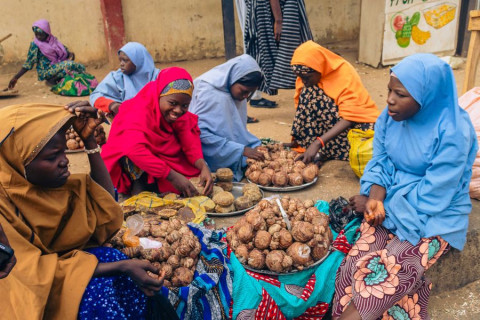
Formal employment has struggled to keep pace with the speed of urbanization. Many new arrivals eventually find work, but not the careers they envisioned. Instead, they enter the informal economy as street vendors, motorcycle taxi drivers, delivery workers, market traders, or casual laborers. These occupations provide income and often demonstrate remarkable entrepreneurial resilience, yet they rarely offer the stability, career progression, or financial security that originally motivated migration. This is not simply a labor market problem. It reflects a much broader structural imbalance.
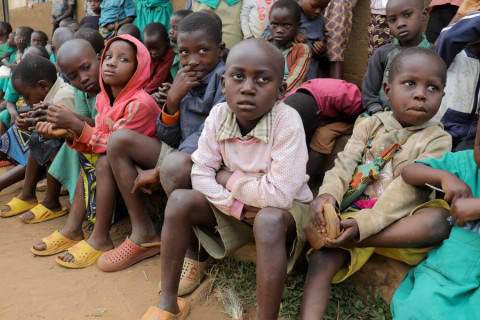
Central Africa is home to one of the world's youngest and fastest-growing populations. Every year, hundreds of thousands of young people reach working age, while the region's economies expand at a considerably slower pace. Investment has increased across sectors ranging from infrastructure and mining to energy and logistics, but the creation of productive, high-quality jobs has not matched the demographic momentum. As a result, urban economies are being asked to absorb a generation growing faster than formal employment can expand.
The consequences extend beyond individual livelihoods. Rapid urbanization places additional pressure on housing, transportation, education, healthcare, and public services while intensifying competition within already crowded labor markets. For governments, the challenge is no longer simply reducing unemployment. It is creating sufficient economic opportunities to keep pace with one of the fastest demographic transitions anywhere in the world.
This is why the movement from villages to cities continues despite the risks. Rural communities often offer employment without mobility. Cities offer mobility without certainty. Faced with that choice, many young people still choose uncertainty because it represents the only realistic path toward changing their circumstances. The future of Central Africa's urban economies will therefore depend on far more than attracting investment alone. Economic growth must increasingly translate into productive industries capable of generating skilled employment at a scale that matches the region's demographic reality. Infrastructure, education, digital services, manufacturing, and entrepreneurship all form part of that equation, but none will succeed in isolation.
Central Africa's greatest challenge is not that it produces too many young people. It is that opportunity is not growing fast enough to keep pace with them. Until that balance begins to shift, the promise that continues to draw millions toward the region's cities will remain beyond the reach of many who arrive believing their future is waiting there.