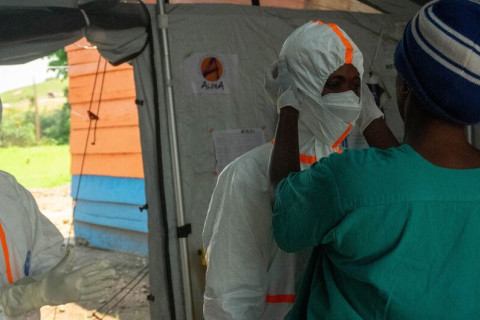
Central Africa is facing a growing paradox: as humanitarian needs mount across the region, the space for civil society organizations to operate is narrowing, threatening assistance to populations already vulnerable to conflict, displacement and other shocks.
In June 2026, Martha Pobee, the UN Assistant Secretary-General for Africa, told the Security Council that several countries in Central Africa were showing an “alarming trend” of tightening restrictions on civil and political rights, including civic space. The warning came amid continuing security and humanitarian pressures across the subregion.
The implications extend beyond the legal status of NGOs. Where state capacity is limited and conflict has displaced communities, civil society organizations and humanitarian agencies are among the actors providing basic services, from food and clean water to healthcare and protection.
The Access Gap
The Central African Republic illustrates the stakes.
Between February and June 2026, the UN recorded 44 incidents affecting humanitarian access. Twenty-seven were linked to insecurity, six involved bureaucratic constraints and illegal taxation, and 11 involved physical access difficulties. Operations in prefectures including Haut-Mbomou and Vakaga were particularly constrained. Funding shortages compound the problem. As of June 1, the country's 2026 humanitarian response plan was only 20.6% funded, with $54.3 million received against requirements of $264.1 million. Some of the most vulnerable programs were among the least funded. Gender-based violence interventions had received no funding against $12 million requested, while child protection had received only $39,000 against a requirement of $7.3 million.
The Chilling Effect
The problem is not limited to direct restrictions.
Complex administrative procedures, uncertainty over compliance requirements and security concerns can create a broader “chilling effect,” making organizations more cautious about where and how they operate.
In conflict environments, counterterrorism and anti-money-laundering requirements can also complicate humanitarian transactions and access to populations in areas controlled or influenced by armed groups. The result can be greater risk aversion: organizations postpone programs, reduce staff movements or avoid particularly difficult locations. That can narrow the reach of assistance precisely where needs are greatest.
The Development Cost
The consequences extend beyond emergency relief.
Civil society organizations across Central Africa also work in education, healthcare, environmental protection and programs supporting women and youth, often in areas where government services are limited. When these organizations face registration hurdles, funding restrictions or operational constraints, communities can lose access to services while accountability and communication between citizens and authorities weaken. This creates a broader development problem. The UN Economic Commission for Africa has identified shrinking civic space among the structural barriers affecting sustainable development on the continent and stressed the importance of stronger engagement between governments, civil society, business and local communities.
The Bottom Line
Governments have legitimate concerns about security, sovereignty and the regulation of foreign-funded organizations. But regulation becomes counterproductive when it prevents legitimate organizations from delivering humanitarian and development programs. For Central Africa, the challenge is therefore to make regulation predictable and proportionate without closing the operational space that communities depend on. In a region already facing conflict, poverty and weak public-service capacity, civil society is not simply a political actor. It is part of the infrastructure through which basic services reach people.
Shrinking that space risks turning a governance problem into a development problem.