Cameroon’s education crisis is no longer only about whether children can get back into classrooms. In the country’s conflict-affected regions, years of disrupted schooling are creating a deeper social problem: a generation of children is growing up with gaps in education, prolonged displacement, and experiences that make returning to normal learning increasingly difficult.
The crisis is most severe in the North-West and South-West, where conflict has disrupted education since 2016. UNICEF currently estimates that 865,029 school-age children in the two regions need education assistance. Across Cameroon, more than 1.5 million children aged 4 to 17 are in need of educational support because of crises affecting the North-West, South-West, Littoral, West, and Far North regions. The numbers, however, do not fully capture what is being lost. A child who misses several months of school may be able to catch up. A child who spends several consecutive years outside the education system faces a different challenge. Learning gaps accumulate, social connections are disrupted, and the prospect of returning to a conventional classroom becomes harder.
The Cost of Staying Out of School
Cameroon’s experience shows why prolonged school disruption can become a social issue rather than simply an education-sector problem. In the North-West and South-West, insecurity has affected children through displacement, school closures, and exposure to violence. UNICEF has warned that children who remain outside school face greater risks of exploitation, child marriage, early pregnancy, and recruitment by non-state armed groups.
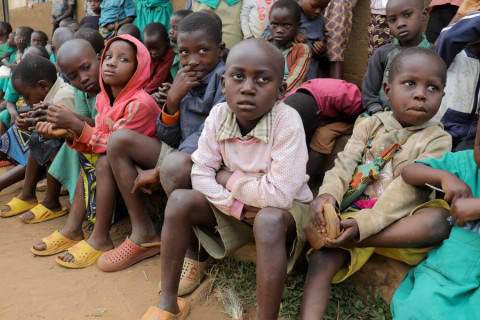
The consequences also extend into children's emotional and psychological development. In Yoke, in the South-West’s Muyuka subdivision, UNICEF reported in May that children affected by years of crisis were dealing with fear, displacement, school closures, and emotional distress. Temporary Learning Spaces there are combining education with mental health and psychosocial support to help children regain confidence and reconnect with learning. That is an important distinction. Returning a child to school is not necessarily the same as restoring that child's education. Some children need help rebuilding basic academic skills, while others need support to overcome the psychological effects of prolonged disruption. The longer the interruption lasts, the more difficult and expensive that recovery can become.
Reopening Schools Is Only the First Step
Cameroon has already experimented with ways to keep education going despite insecurity. Temporary Learning Spaces have provided children with safer places to study in communities where conventional schools cannot operate normally. UNICEF is also supporting teacher training, learning materials, school rehabilitation, digital learning, and measures aimed at protecting children from violence and early marriage. But these interventions highlight the scale of the challenge rather than resolve it. The problem is no longer simply a shortage of classrooms. It is the accumulated learning loss created by years of instability.
This is particularly important for children who have moved repeatedly because of conflict. Displacement can interrupt schooling more than once, making it difficult for children to follow a continuous curriculum. Girls face additional barriers: UNICEF reported this year that inadequate menstrual hygiene facilities and materials were contributing to absenteeism among girls in crisis-affected communities in the North-West and South-West.
The result is a cycle in which insecurity disrupts education, disrupted education increases vulnerability, and greater vulnerability makes it harder for children to return to stable schooling.
A Problem That Will Outlast the Conflict
The longer-term question is what happens to children who lose their formative school years even if the security situation eventually improves.
Education is one of the main ways young people acquire the skills needed to enter the labor market, build livelihoods, and participate in society. Missing years of schooling therefore creates consequences that can extend well beyond childhood. A student who returns to school after a prolonged absence may be physically back in the classroom but still several years behind peers of the same age.
That makes education recovery a much broader task than rebuilding schools. Cameroon will need to address learning gaps, provide accelerated or catch-up education where necessary, support teachers, and maintain psychosocial services for children whose schooling has been disrupted by violence and displacement.
The challenge is particularly difficult because the crisis is not over. The North-West and South-West remain affected by insecurity, meaning that education programs must operate while the conditions that caused the disruption in the first place persist. The Education Cluster continues to describe the situation as a protracted crisis involving attacks by non-state armed groups and state security forces, with civilians affected since the conflict escalated in 2016.
Cameroon Is Trying to Recover More Than Classrooms
The central problem, then, is not simply how many schools Cameroon can reopen. It is how much education can be recovered for children who have already lost years.
That distinction matters because the social consequences of educational disruption accumulate quietly. A school can reopen in a matter of months. Rebuilding a child's academic progress, confidence, social development, and prospects for employment can take years. Cameroon's education response is therefore becoming a test of whether the country can prevent a prolonged conflict from producing a lasting educational divide.
For Cameroon, reopening schools is only the beginning. The harder task is recovering the years children have already lost.