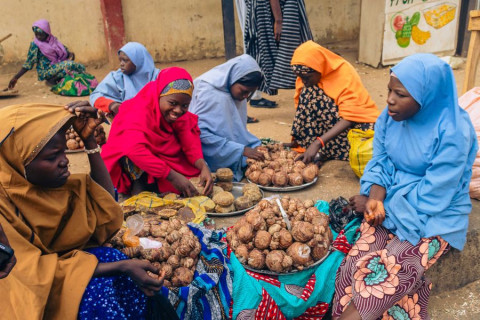
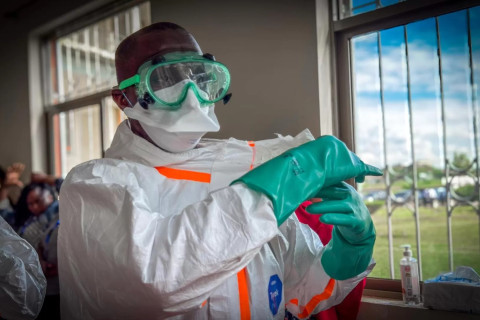
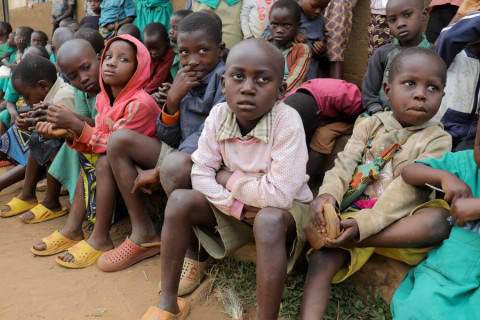
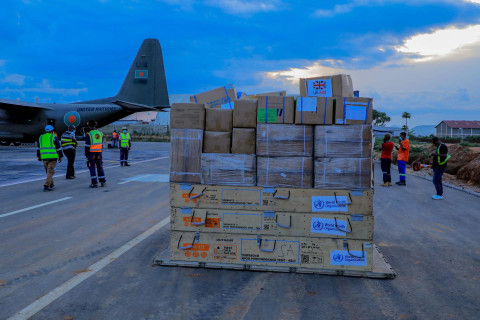
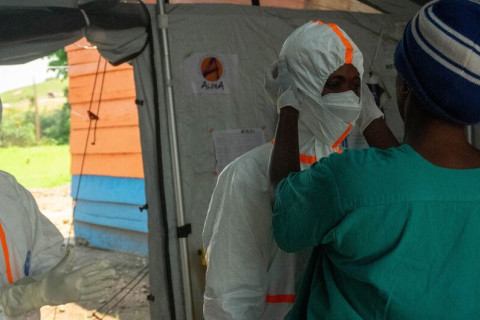
“This outbreak is no longer confined by borders,” Gilles Fagninou, UNICEF’s Regional Director for West and Central Africa, told reporters this week. He was describing something that has been building for months but has only now been named clearly for what it is: a cross-border cholera outbreak moving along two transmission corridors and now spreading simultaneously across six countries — Nigeria, the DRC, the Republic of Congo, Chad, Cameroon, and the Central African Republic.
Cholera is preventable and treatable, yet it is spreading anyway, driven by a combination UNICEF describes plainly: seasonal rains, flooding, population displacement, and the cross-border movement of people fleeing other crises entirely.
Where the Numbers Are Worst.
Nigeria carries the largest burden by case count: more than 50,000 cumulative cases and 338 deaths since January 1, concentrated in a major outbreak in Borno state. The DRC has recorded the highest number of deaths — nearly 700 among just over 30,400 cases. That puts the case fatality rate well above the 1% threshold WHO considers a sign of a serious cholera outbreak, underscoring the difficulty of ensuring timely detection and treatment in a country simultaneously managing the M23 conflict, an ongoing mpox outbreak, and a food crisis that has left millions facing acute food insecurity.
The age profile adds another layer to the crisis. In the Central African Republic, children under 10 account for 44% of all reported cases. In Chad, nearly two-thirds of infections are in children under 15. In Cameroon, the median age of a reported cholera patient is just 10 years old. In several of the affected countries, children therefore account for a substantial share of reported infections, adding pressure to health systems already struggling to meet basic needs.
Why the Same Countries, Again.
The geography is not coincidental. It follows the same fault lines as the region’s overlapping humanitarian crises. Chad is simultaneously managing more than 940,000 Sudanese refugees who have crossed its border since April 2023, placing additional pressure on water and sanitation systems in the eastern provinces where displacement is heaviest. The Central African Republic is absorbing tens of thousands of the same refugee population around Birao, in a country the Norwegian Refugee Council has separately identified among the world’s most neglected crises.
Cameroon expects 2.9 million people, including 1.5 million children, to require humanitarian assistance in 2026. Its humanitarian response remains severely underfunded, adding another constraint to efforts to contain outbreaks and maintain basic health services.
Displacement and cholera transmission reinforce each other in a specific, well-documented way: refugee and IDP settlements can place sudden pressure on local water and sanitation systems, while the same seasonal flooding that displaces people can contaminate the water sources on which they depend. A crisis that starts as a security or climate emergency can therefore become, within weeks, a waterborne disease emergency layered directly on top of it.
The Response, and the Funding Gap Behind It
UNICEF, working alongside the World Health Organization and the Africa Centres for Disease Control and Prevention (Africa CDC), is supporting a cross-border response: expanding access to safe water and sanitation, strengthening disease surveillance along the two identified transmission corridors, supplying treatment materials, and running oral cholera vaccination campaigns in the hardest-hit areas. The agency has appealed for $15 million in additional funding to scale up the response over the next six months.
That figure is modest by the standards of regional humanitarian crises — a fraction of the broader health response needs in the DRC and a fraction of the humanitarian appeals for Chad and Cameroon. The urgency is therefore less about the size of the appeal than the timing: cholera prevention depends on acting before transmission becomes entrenched.
Cholera is largely preventable through safe water, sanitation, hygiene and vaccination. That makes early intervention particularly important in a regional outbreak driven by population movement and deteriorating water and sanitation conditions.
What “No Longer Confined by Borders” Actually Means
Fagninou’s framing is not rhetorical. The outbreaks may be unfolding within separate national health systems, but the transmission risks do not stop at national borders. A regional outbreak spanning six jurisdictions cannot be contained effectively if each country responds in isolation.
That is why UNICEF’s response emphasizes cross-border coordination alongside surveillance, treatment, vaccination and water and sanitation measures. The objective is not simply to manage six separate national outbreaks, but to interrupt the transmission routes connecting them.
For a region where conflict, displacement, disease, and governance capacity interact and compound each other, the cholera outbreak is another instance of the same underlying pattern: crises in Central Africa increasingly do not stay contained within the borders drawn to organize the response to them.