Africa is entering a period in which two major demographic shifts are converging. The continent's population remains the youngest in the world, while its cities are expanding at an exceptional pace. More young Africans are moving into urban centers in search of education, employment and better opportunities, making the ability of cities to absorb and support this generation an increasingly important social and economic question.
The scale of urbanization is already substantial. According to the United Nations Department of Economic and Social Affairs, Africa's urban population reached about 720 million in 2025, up from roughly 300 million in 2000. By 2050, the number is projected to reach 1.47 billion, meaning that nearly 60% of the continent's population could live in urban areas. In sub-Saharan Africa, the urban share is expected to rise from 45.1% in 2025 to 60% by 2050.
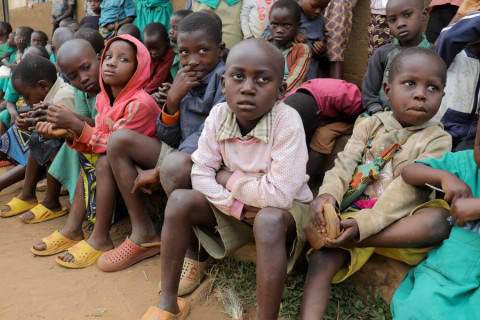
At the same time, Africa's demographic structure is fundamentally different from that of aging regions. More than half of its population is under 25, according to UN-Habitat. This means that the expansion of African cities is not simply about accommodating more people. It is increasingly about accommodating a predominantly young population entering adulthood, education systems, labor markets and urban life at the same time.
A new generation is moving into cities
Urbanization has long been associated with rural-to-urban migration, but Africa's current transformation is also being driven by population growth. As the number of young people increases, cities are becoming the places where a growing share of the continent's future workforce will live.
That creates opportunities. Cities concentrate businesses, universities, financial institutions, digital services and infrastructure, making them natural centers for entrepreneurship and innovation. A young urban population can also create a large consumer market and provide companies with a growing pool of workers.
But the economic benefits are not automatic. The ability of cities to turn population growth into higher productivity depends on whether they can provide the infrastructure, skills and employment opportunities required by a much larger urban workforce.
This is where the pressure is already becoming visible.
The jobs question
For Africa's young urban population, employment is likely to be one of the most important tests of urbanization. The ILO estimates that more than 53 million young people in sub-Saharan Africa are not in employment, education or training, representing more than one in five young people in the region. At the same time, Africa's youth labor force is projected to grow by 76 million by 2050.
The challenge is not simply creating jobs. It is creating enough productive and relatively secure employment to match the scale and aspirations of a rapidly expanding workforce.
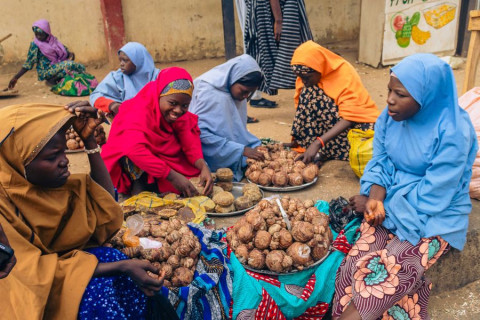
Many young urban workers already find opportunities in the informal economy, which provides essential livelihoods but often comes with low and unstable incomes, limited social protection and little access to finance. The continued expansion of informal employment can help cities absorb new workers in the short term, but it does not by itself provide the productivity gains needed for a broader improvement in living standards.
This makes the connection between urbanization and economic transformation particularly important. If cities become centers of productive industries, services and entrepreneurship, their growing populations can become an economic asset. If employment fails to keep pace, rapid urban growth can instead intensify existing social pressures.
Housing and transport are becoming economic issues
The pressure is not limited to the labor market. Millions of new urban residents also need affordable housing, reliable electricity, water, sanitation and transportation.
Housing is already one of the most visible constraints. Rapid population growth can push lower-income residents toward informal settlements and peripheral areas where access to jobs and basic services is more limited. The result is that the physical expansion of cities can outpace the development of the infrastructure needed to connect their residents to economic opportunities.
Transport is particularly important because it determines how easily people can reach workplaces, schools and markets. UN data released in 2026 show that sub-Saharan Africa has the lowest level of convenient access to public transport among the regions assessed. Public transport systems are also dominated by low-capacity modes, while higher-capacity rail and metro systems remain limited.
For young people entering the labor market, these are not simply infrastructure shortcomings. Long and expensive commutes can restrict access to jobs, while inadequate housing and public services can increase the cost of living and reduce the economic benefits of urban concentration.
The cities that grow fastest will not necessarily be the largest
Another important feature of Africa's urbanization is that the transformation is not limited to megacities such as Cairo, Lagos or Kinshasa. The latest UN urbanization data show that small and medium-sized cities are growing particularly quickly in Africa and Asia, while most cities worldwide remain relatively small.
This matters because the future of African urbanization will be shaped by thousands of cities and towns rather than only by the continent's largest metropolitan areas. Smaller urban centers can potentially absorb population growth more evenly and connect surrounding rural economies to markets, provided that infrastructure and services develop alongside them.
That creates an opportunity to avoid some of the pressures associated with uncontrolled expansion of a handful of megacities. But it also requires governments to think about urban policy beyond capital cities and major economic hubs.
A test of what African cities can become
Africa's urban transformation is therefore about more than population statistics. The continent is moving toward a future in which a growing share of its young population will live in cities, making urban areas increasingly important to employment, education, consumption and social development.
The scale of the transition leaves little room for cities to simply grow first and build later. Housing, transport, education, digital connectivity and employment will need to expand alongside population. The UN's latest urbanization projections show that the number of people living in African cities will roughly double between 2025 and 2050.
If African cities can turn that demographic pressure into productive employment, better services and broader economic participation, their young populations could become one of the continent's strongest assets. If urban growth continues to outpace the ability of cities to provide opportunities and basic services, the same demographic trend could deepen inequality and informality.
The next phase of Africa's demographic story will therefore be written increasingly in its cities. The question is not whether young Africans will move into urban life. It is whether their cities will be ready for them.