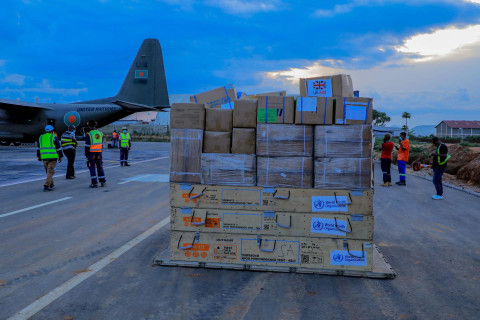
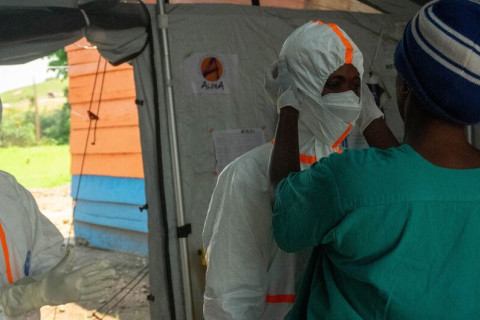
The Democratic Republic of the Congo (DRC) has been allocated 70,000 doses of the Ervebo Ebola vaccine as the country grapples with its deadliest Ebola outbreak in history.
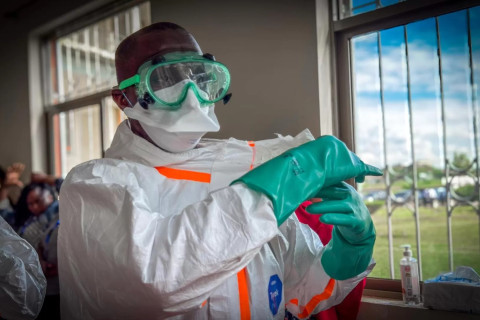
The World Health Organization (WHO) announced on August 20 that 20,000 doses would be used in a Phase 3 clinical trial to assess the vaccine’s effectiveness against Bundibugyo, while 50,000 doses would go to frontline health workers under guidance from WHO’s Strategic Advisory Group of Experts on Immunization (SAGE).
As of August 18, the outbreak had caused 2,476 deaths out of 5,208 confirmed cases, a case fatality rate approaching 50 percent. The virus has spread to six provinces - Ituri, Nord-Kivu, Haut-Uele, Tshopo, Bas-Uele and Sud-Kivu - and 56 health zones, with Ituri remaining the epicenter, accounting for the majority of cases and deaths.
WHO Director-General Tedros Adhanom Ghebreyesus reiterated that the situation remains a public health emergency of international concern.
Ervebo is licensed for the Zaire ebolavirus species, not Bundibugyo, and WHO officials caution that it is not yet clear whether it provides protection against the current strain. Early laboratory and animal data suggest it may offer some cross-protection, prompting the decision to deploy limited doses while a formal trial evaluates efficacy.
The global Ebola vaccine stockpile is managed by the International Coordinating Group on Vaccine Provision (ICG), which includes WHO, the International Federation of Red Cross and Red Crescent Societies, Médecins Sans Frontières and UNICEF, with funding from Gavi, the Vaccine Alliance.
The response is hampered by ongoing armed conflict in Ituri and Nord-Kivu, where fighting has displaced communities, disrupted health services and complicated contact tracing. In Nord-Kivu, M23 rebels announced transport restrictions on the Goma–Rutshuru–Kirumba corridor and suspended canoe traffic on Lake Edward to limit Ebola spread, reflecting how insecurity intersects with epidemic control.
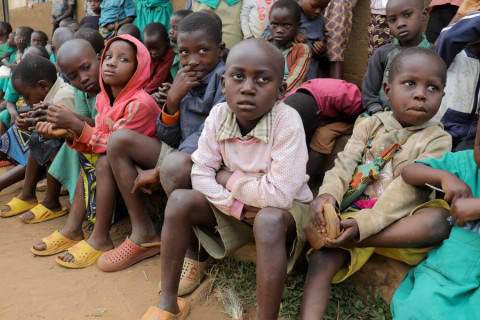
In Sud-Kivu, more than one million children are reported to be suffering from acute malnutrition, with stunting affecting about 58 percent of under-fives, according to provincial health officials.
Separately, the western Mai-Ndombe province is facing a cholera outbreak with 1,950 cases and 77 deaths since January, with local authorities warning of a lack of partner support for the response. Limited access to safe drinking water and poor sanitation continue to fuel waterborne diseases across the country, even as the Ebola emergency dominates international attention.
Health officials say the Bundibugyo outbreak is now the largest ever recorded for this strain and on track to become the biggest Ebola epidemic globally if transmission is not rapidly curbed.